
Select language
Electric Vehicle (EV) Overview and Operation
Get more range from your fleet EVs and charge them right. Online EV training for electric and hybrid drivers
$33 +GST per person ($37.95)
 4 x $8.25
Electric Vehicle (EV) Overview and Operation
Get more range from your fleet EVs and charge them right. Online EV training for electric and hybrid drivers
An electric vehicle (EV) looks like a petrol or diesel car, but it doesn't drive like one. It is quiet at low speed. It can slow down hard when you lift off the accelerator. And it needs charging, not fuel. Drivers who don't know this often get less range than they expect. They can run low on charge, or surprise people on foot who don't hear them coming.
This online EV driver training course shows drivers how to get the most out of their vehicle. It covers battery electric vehicles (BEVs), plug-in hybrids (PHEVs), hybrids and fuel cell vehicles. It is most useful for fleet drivers who have just been given an EV, or who share one as a pool car.
By the end, drivers know how to charge the vehicle, plan a trip around chargers and drive for the best range. They also know how to look after the vehicle and which hazards EVs have that other cars don't.
-
What is the EV Overview and Operation course?
The EV Overview and Operation course is DT Training's online EV driver training course. It teaches drivers how to charge, drive and look after a battery electric, plug-in hybrid, hybrid or fuel cell vehicle. It takes around an hour, and trainees get a certificate of achievement at the end.
-
Why do EV driver training?
EV driver training helps drivers get the range and safety an EV is built for. EVs are quiet at low speed, so people on foot and cyclists may not hear them. Regenerative braking slows the car when you lift off the accelerator. Charging needs planning that refuelling doesn't.
The New Zealand Government's guidance for fleets moving to EVs recommends an induction for first-time EV drivers. It covers how EVs differ from petrol and diesel vehicles, and how to charge them.
-
Who should do the EV driver training course?
The EV driver training course suits anyone who drives an electric or hybrid vehicle, or soon will:
- fleet drivers given an EV as a company vehicle
- staff who share an EV pool car
- fleet managers moving their fleet to EVs
- people thinking about buying an EV
- EV owners who aren't getting the range they expected.
-
What will I learn in the EV driver training course?
The EV driver training course covers eight short modules on owning and driving an electric vehicle. Trainees learn:
- the four types of EV, and their pros and cons
- EV features, controls and pre-drive checks
- charging cables, charging methods and charger etiquette
- EV hazards, including battery fires and quiet running near pedestrians
- routine maintenance and service intervals
- route planning and range estimates
- how to get the most range from each charge
- towing with an EV (optional module).
-
Does the EV course cover hybrids and plug-in hybrids?
Yes. The EV driver training course covers all four types of EV: battery electric (BEV), plug-in hybrid (PHEV), hybrid and fuel cell vehicles. The videos use a Hyundai BEV and a Mitsubishi PHEV, which work like most EVs on New Zealand roads. Controls and charging ports vary between makes, so drivers should also read the owner's manual for their own vehicle.
-
Is the EV driver training course suitable for mechanics?
No. The EV driver training course is for drivers, not mechanics. It covers safe driving, charging and basic checks. It does not teach anyone to service or repair the high-voltage system. Workshop staff, groomers and others who work on or around EVs need specialist EV safety training from an automotive training provider.
-
Do employers in New Zealand have to train staff to drive EVs?
The Health and Safety at Work Act 2015 (section 36) says a business must train and supervise workers so they can work safely. A work vehicle counts as a workplace. So if your drivers are new to EVs, the EV driver training course is a simple way to meet that duty. The Government's fleet guidance also recommends an induction for first-time EV drivers.
-
Is in-car EV training available as well as the online course?
Yes. The EV driver training course is online only, but TR Driver Training can provide in-vehicle EV training at extra cost. Call 0800 637 000 to arrange it. Government guidance suggests first-time EV drivers take a short drive and practise plugging in and unplugging. Many fleets do the online course first, then a short in-vehicle session.
-
Can a company use the EV driver training course to train all its drivers?
Yes. A company can use the EV driver training course to train all its drivers. Each driver needs their own course licence. You can assign the course, track progress and download reports. You can add other managers at no extra cost. Certificates are created when each driver finishes.
-
What do you get when you finish the EV driver training course?
Trainees get a certificate of achievement when they finish the EV driver training course. Managers can download it for their training records. There is no practical assessment, so the course does not issue an operator's certificate or ID card.
-
Why choose DT Training for EV driver training?
DT Training is part of TR Group, which runs electric trucks and electric company cars every day and is developing hydrogen-powered trucks. The EV driver training course draws on that experience of running EVs in a working fleet. TR Group's in-person training is delivered by TR Driver Training, a Category 1 Private Training Establishment (PTE)
-
How long does the EV driver training course take?
The EV driver training course takes around 1 hour, depending on the trainee. Trainees can stop and start, and spread the modules over several days. The towing module is optional. A manager can switch it off after purchase if your drivers don't tow with an EV.
-
How do I access and use the EV driver training course?
- You will need one course licence per person taking the course. You can't use one licence for several people.
- You will need a computer, smartphone or tablet with internet access to take the theory training.
- There are no prerequisites. You don't need an EV, a hybrid or even a driver licence to do the EV driver training course.
-
Can I take the EV driver training course in another language?
Yes. The EV driver training course has:
- video subtitles in 25 languages (choose the language in the video)
- questions you can view in 76 languages (use the language option at the top of the page; written answers must be in English)
- an English audio recording of every question
- documents in English.
Some captions are AI-generated and may have occasional errors.
$33 +GST per person ($37.95)
4 x $8.25

Course provided by DT Training
DT Training (DT Vehicle and Workplace Training) is New Zealand's largest provider of online vehicle and workplace training. Since 2010, it has offered courses in driver training, forklifts and machinery, dangerous goods, and health and safety. It is part of TR Group.
The towing module is optional and can be disabled once you have purchased the course if you don't need to tow using your EV.
Training modules
About electric vehicles
The types of electric vehicles, what it's like to own one and how to charge them-
Introduces the four types of electric vehicles, and outlines the environmental, operational, and financial advantages and disadvantages of EVs compared to conventional vehicles.2 minutes
-
Covers the exterior and interior features unique to EVs, including pre-drive checks, controls, displays, and safety systems, highlighting key differences from conventional vehicles.4 minutes
-
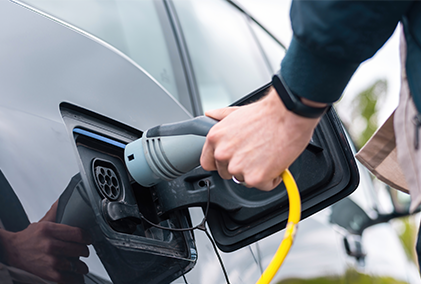
EV charging essentials, covering the different types of charging cables (Type 1, Type 2, CCS, CHAdeMO, and Tesla), proper cable care, how to locate and use charging stations, the charging process itself, home charging advantages, and charging etiquette for shared facilities.8 minutes
-
Key EV safety considerations, focusing on battery fire risks during crashes and charging, and the increased hazard to pedestrians and cyclists due to EVs' quiet operation at low speeds.2 minutes
-
Essential EV maintenance, including routine checks, service intervals, and troubleshooting of common issues.3 minutes
Driving and range
Turning your EV on and off, electric vehicle modes, charging on the road and at home, battery preservation, range, braking and regeneration, driving style and courtesy, and route planning-
EV route planning essentials, including range estimation, charger locations, and how terrain and driving conditions affect battery life.6 minutes
-
Range efficiency in EVs, explaining how various factors affect battery consumption including weather conditions, payload, aerodynamics, driving style, auxiliary systems, and tyre pressures, while providing practical tips for maximising range and handling low-battery situations.5 minutes
-
Towing with an EV Included, but optionalEV payload and towing considerations, covering weight limits, payload calculations while towing, and special considerations for regenerative braking when towing with an electric vehicle.2 minutes
Electric Vehicle (EV) Overview and Operation
Get more range from your fleet EVs and charge them right. Online EV training for electric and hybrid drivers
$33 +GST per person ($37.95)
4 x $8.25