
While the technical aspects of safely navigating water obstacles are paramount – you don’t want to damage your vehicle or get stranded in the middle – legal and environmental considerations are equally important. Understanding these factors ensures compliance with regulations and helps preserve our natural waterways for future generations.
Legal framework in New Zealand
In New Zealand, several laws govern river crossings for 4WD vehicles. Some river crossings are governed by the Resource Management (National Environmental Standards for Commercial Forestry) Regulations 2017, Subpart 4, clauses 36-45.
The Resource Management Act 1991 is particularly significant as it aims to promote sustainable management of natural resources, including waterways. Under this legislation, regional councils have the authority to regulate activities that might affect water quality or aquatic ecosystems.
The Health and Safety at Work Act 2015 also has implications for river crossings in work contexts. Employers must ensure that river crossing activities do not endanger workers, which includes providing proper 4WD training and equipment.
When you ford a river in a 4WD, there are some rules:
- The use of the ford must not cause a conspicuous change in colour or visual clarity beyond a 100m mixing zone downstream of the ford for more than 30 consecutive minutes after use of the ford.
- A new ford is not permitted in a river listed in a regional plan or water conservation order as a habitat for threatened indigenous fish or a fish spawning area.
If you are creating a new river crossing, the relevant regional council must be given written notice, as per clause 38.
Permits and permissions
Before attempting a river crossing, determine whether permission is required. Many waterways in New Zealand cross private land, and landowner consent may be necessary. Additionally, some rivers run through conservation areas or protected land, which may have specific restrictions or requirements for vehicle access.
It’s prudent to check with the relevant regional council before planning a trip that includes river crossings.
Environmental impact assessment
Each river crossing has potential environmental consequences. Before proceeding, drivers should assess these impacts and consider alternatives if the crossing would cause significant harm. Factors to consider include:
- Presence of spawning fish or nesting birds
- Fragility of the riverbank vegetation
- Potential for sediment disturbance and downstream effects
- Risk of contamination from vehicle fluids.
Many waterways support threatened native species like kōkopu, kōaro, and various invertebrates. Disturbance during breeding seasons can be particularly damaging to these populations.
Best practices for minimising environmental impact
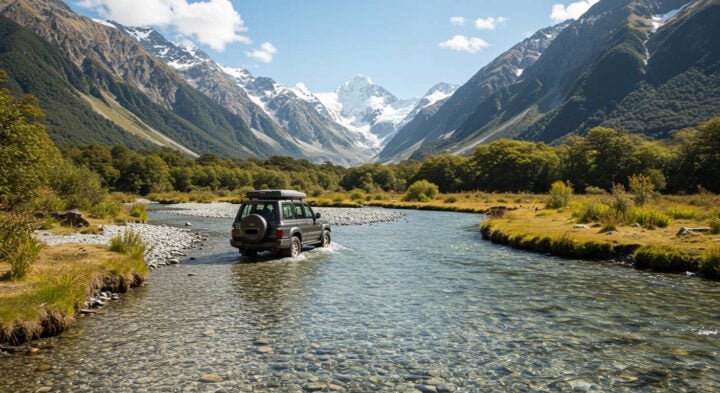
Choosing appropriate crossing points
Select established crossing points where the riverbed is firm and the banks are stable. Look for areas with a gravel bottom rather than silt or mud, as these are less likely to be disturbed during crossing. Avoid crossing at bends in the river where erosion is naturally more severe.
Timing considerations
Timing can significantly affect the environmental impact of a crossing. Consider:
- Avoiding crossings during fish spawning seasons
- Crossing during periods of lower flow when practical
- Scheduling crossings during daylight hours for better visibility of potential hazards or sensitive areas
Vehicle preparation
Proper vehicle maintenance reduces the risk of fluid leaks that could contaminate waterways. Before crossing, check for any leaks from the engine, transmission, or differential. Ensure that all drain plugs and breathers are secure and functioning correctly.
If wading depth exceeds wheel height, consider extending differential, gearbox, and transfer case breathers to prevent water ingress and potential fluid contamination. This modification not only protects your vehicle but also helps prevent oil contamination of the waterway.
Driving technique
The correct driving technique not only enhances safety but also minimises environmental disruption. Maintain a steady speed that creates a gentle bow wave without causing excessive wake or turbulence. Avoid revving the engine unnecessarily, as this increases the risk of fluid contamination and disturbs aquatic life through noise and vibration.
After exiting the water, drive slowly for the first few metres to allow water to drain naturally back into the waterway rather than being carried onto the banks or surrounding vegetation. This reduces erosion and contamination of adjacent land.
Post-crossing responsibilities
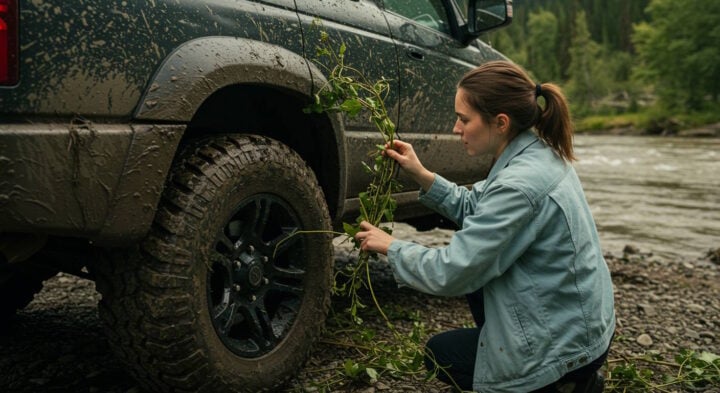
After completing a crossing, take time to check that no damage has been done to the riverbanks. If any tracks or ruts have been created, consider whether remediation is possible. Remove any debris that may have been dislodged during the crossing.
It’s also important to check your vehicle for any aquatic plants or organisms that might have attached themselves during the crossing. These could potentially be transferred to other waterways, contributing to the spread of invasive species.
Alternatives to river crossings
Sometimes, the most environmentally responsible decision is to avoid crossing altogether. Consider whether:
- There are bridges or formed crossings nearby
- The journey can be rerouted to avoid the crossing
- The trip can be postponed until conditions are more favourable.
Reporting and documentation
If you notice environmental damage at common crossing points, consider reporting this to the regional council or the Department of Conservation. Similarly, if you observe activities that seem to be causing unnecessary harm, such as vehicles creating new tracks or disturbing protected areas, reporting these incidents can help authorities address problems before they escalate.
For professional drivers, maintaining records of river crossings, including dates, locations, conditions, and any notable environmental observations, can be valuable for future planning and demonstrate commitment to responsible practices.
Conclusion
River crossings in New Zealand are subject to legal considerations and carry environmental responsibilities. By understanding the relevant legislation, obtaining necessary permissions, assessing potential impacts, and employing best practices, 4WD operators can enjoy access to our beautiful backcountry while helping to preserve it for future generations.
Remember that each waterway is a living ecosystem and a taonga (treasure) in the New Zealand landscape. Approaching river crossings with respect for both the legal framework and the natural environment ensures that we can continue to enjoy responsible off-road adventures in Aotearoa.


Darren has written over 3000 articles about driving and vehicles, plus almost 500 vehicle reviews and numerous driving courses. Connect with him on LinkedIn by clicking the name above