
Correctly interpreting load capacity specifications is one of the most critical aspects of crane operation, and something that is covered in-depth in truck loader crane training. Misinterpretation can lead to dangerous overloading situations, potentially causing equipment failure, damage to property, or even serious injury or death. This article examines how to properly understand and apply manufacturer load specifications for various types of cranes.
Understanding Load Charts
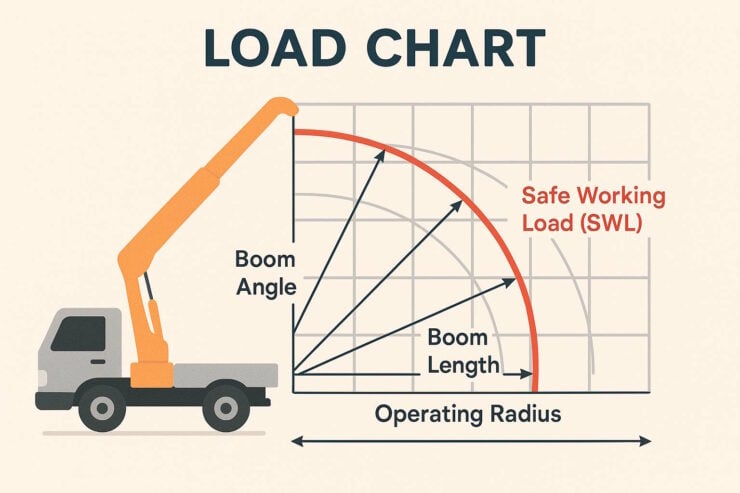
All cranes come with load charts or rating sheets that specify the maximum safe working load (SWL) under different operating conditions. These charts are not merely suggestions but critical safety information that must be strictly followed. According to New Zealand’s Health and Safety in Employment (Pressure Equipment, Cranes, and Passenger Ropeways) Regulations, operators must ensure equipment is “operated within the limits that it was designed to operate within.”
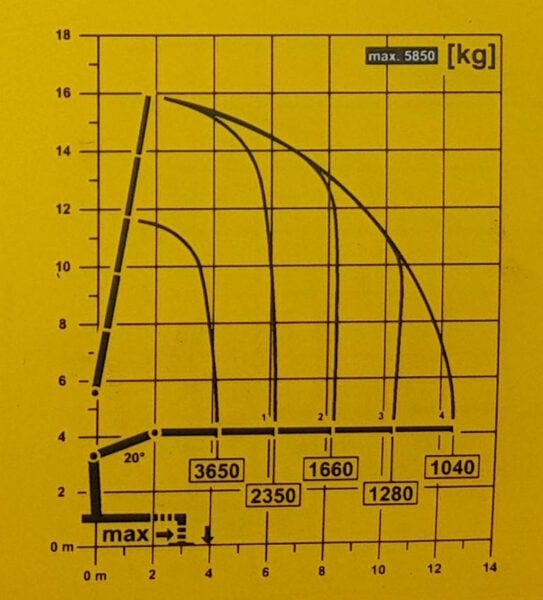
Load charts typically show three crucial variables: the angle of the boom, the working radius, and how these factors affect the load the crane can safely carry. The relationship between these variables means that the further the boom is extended horizontally, the less weight it can lift.
The Physics Behind Load Ratings
The fundamental principle behind crane load ratings is leverage. When you hold a light weight close to your body, you hardly feel its weight. However, holding the same weight with your arm fully extended creates significantly more strain. This demonstrates how the boom acts like a lever, with stress increasing as the load moves further from the centre of rotation.
This principle is reflected in all crane rating charts. For example, a Palfinger crane may have an absolute maximum lifting capacity of 5850 kilograms when the boom is closest to the centre. However, as the working radius increases to its maximum, the capacity may decrease to only 1080 kilograms (less than 20% of the theoretical maximum).
Critical Factors Affecting Load Capacity
Several factors influence the actual load capacity of a crane beyond what appears on the basic load chart:
Outrigger Extension
Load charts generally assume outriggers are fully extended. If not fully deployed, the crane’s stability is compromised, and the rating chart will be inaccurate. For truck loader cranes, stability tests should be conducted “on level ground in accordance with the crane manufacturer’s recommendations.”
Boom Configuration
The configuration of the boom—its length, angle, and any extensions—dramatically affects load capacity. Most modern cranes require operators to input the exact boom configuration into the crane’s computer to calculate the correct load limits.
Environmental Conditions
Wind, in particular, places additional stress on both the crane and its load. High winds increase the risk of overloading even when lifting within the crane’s technical capacity. As noted in New Zealand’s tower crane regulations, all cranes must be designed with maximum in-service and out-of-service wind speeds specified.
Stability Factors
Crane stability is calculated using specific factors depending on the type of crane. For mobile cranes, “rated capacity shall not exceed an upper limit of 78% of the tipping load for all cranes or such lesser limit as may be specified by the manufacturer. For free on wheels, it is to be not more than 66%.”
Tonne-Metre Rating
For truck loader cranes, the concept of “tonne-metre capacity” is particularly important. This is calculated by multiplying the minimum radius at which the crane can lift a load by the SWL in tonnes at that radius. For example, a crane with a tonne-metre rating of 15 might lift 1.5 tonnes at a 10-metre radius or 3 tonnes at a 5-metre radius.
New Zealand regulations require different safety devices and inspections based on these tonne-metre ratings, with stricter requirements for cranes above 0.9 tonne-metres.
Interpreting Dynamic Load Factors
Static load ratings only tell part of the story. Cranes in operation experience dynamic forces that affect their safe operation:
Impact Factors
Sudden movements, such as rapid starts or stops, can temporarily increase the effective load on a crane. Manufacturers build in safety margins for these occurrences, often referred to as “impact factors” in design specifications.
Load Moment Limiting
Modern cranes are equipped with load moment limiting devices that prevent operation beyond safe parameters. These devices consider both the weight being lifted and the radius, calculating the combined effect (the load moment) to determine if the operation is within safe limits.
Conclusion
Safely operating a crane requires thorough understanding of manufacturer load specifications. Operators must familiarise themselves with the specific rating charts for their equipment, understand how different variables affect load capacity, and always err on the side of caution.
As the New Zealand Approved Code of Practice for Cranes states, controllers must “ensure that every crane is operated in a safe manner by a competent person within the limits of its design.” This includes ensuring that all operators can correctly interpret and respect the manufacturer’s load capacity specifications.


Darren has written over 3000 articles about driving and vehicles, plus almost 500 vehicle reviews and numerous driving courses. Connect with him on LinkedIn by clicking the name above