• A TR Group Site
  • Help
  • Cart
Driving Tests DT logo small
Driving tests
  • Learner licence
    • Car
    • Motorbike
    • Heavy vehicle
    • Learner Licence Plus
  • Courses
  • Tourist
  • Resources
  • Learn
  • Resources
  • Learner licence
    • Car
    • Motorbike
    • Heavy Vehicle
    • Learner Licence Plus
  • Your courses
    • Enrolled courses
  • View all courses
  • Tourist
  • Resources home
  • iOS application
  • Android application
  • Contact us
  • Terms and conditions
  • Privacy
  • Home
  • /
  • Resources
  • / Off-road/4WD

Off-road and 4WD driver training in New Zealand

There is no off-road driving licence and no 4WD certificate anyone is required to hold in New Zealand. Unit standards for light 4WD operation do exist, but none is mandatory, and unlike forklifts, cranes and elevating work platforms, no code of practice or guideline sets out a training standard. What does apply is section 36 of the Health and Safety at Work Act 2015: if people drive off-road as part of their work, the business must ensure they’re competent to do it. This is the category where the least is required and the most people are killed.

What the law requires: workers competent for the work they do (HSWA 2015, section 36).

What is not required: any licence (other than class 1 car if driving on the road), certificate or refresher interval. Eight light 4WD unit standards exist, but none of them is mandatory.

On private land: no driver licence is needed to drive on private property, including farm tracks.

The critical control: rollover protection with the seatbelt worn. Rollover is the leading killer across farm and off-road vehicles.

Do you need a licence to drive off-road in New Zealand?

Not on private land. Driver licensing applies to roads and places the public has access to, so nobody needs a licence to drive a ute across a farm, a forestry block or a private worksite. There’s also no off-road driving certificate, no 4WD ticket and no unit standard anyone is required to hold. That said, the moment the vehicle touches a public road (including gravel roads and formed access roads the public can use) normal driver licensing applies.

Does health and safety law apply to off-road driving for work?

Yes, and this is the part people miss because there’s no certificate to point at. Under section 36 of HSWA 2015, a PCBU must ensure workers aren’t put at risk by the work they do, and that includes ensuring they’re competent to operate the vehicle in the conditions they’ll meet. A farm manager, a conservation team leader and a utilities supervisor all carry the same duty as a warehouse manager running forklifts. The difference is that no document tells them what good looks like, so they have to work it out and record their reasoning.

What does WorkSafe actually expect of companies whose drivers drive off-road??

Three things, broadly. Choose the right vehicle for the task, because WorkSafe’s own vehicle selection guidance treats an untrained or inexperienced driver as a factor that narrows which vehicles are safe to use. Make sure operators are trained or experienced enough to do the job. And use the protective equipment the vehicle has – always wear the seatbelt where a roll-over protective structure is fitted, and keep the structure itself sound.

Is 4WD training a legal requirement?

No. But it changes what you can defensibly do. WorkSafe’s guidance on choosing a vehicle for the job explicitly factors driver capability into whether a vehicle is appropriate for a task. An untrained driver on soft or muddy ground moves a vehicle from acceptable into caution territory. So training isn’t a compliance box. It’s what widens the range of terrain, conditions and vehicles your people can safely be sent into, and what you’d point to if you ever had to explain your decision to send someone.

What's the biggest risk in off-road driving?

Rollover. Every year a couple of hundred single-vehicle rollovers happen on New Zealand roads, and that figure excludes farm and off-road incidents entirely. On farms, tractors alone account for an average of more than five deaths a year, with rollover one of the three dominant patterns alongside runover and PTO entanglement. Off-road, the contributing factors are consistent: side slopes, wet ground, loads carried too high, speed on unfamiliar tracks and drivers who don’t know where their vehicle’s stability limit sits.

How long is off-road training valid for?

Nothing prescribes an interval, because nothing prescribes the training. Forklift has three years from its code of practice; elevating work platforms have three years from the WorkSafe guidelines; off-road driving has no equivalent document. If you set a refresher cycle, you’re setting it on your own judgement: how often people drive, in what conditions, and what your incident record looks like. Two to three years is a reasonable default, but it’s yours to justify rather than something you can point at a rule for.

Are there unit standards for off-road 4WD driving?

Eight of them, and none is compulsory. They cover pre-start vehicle checks (17676), driving on unsealed surfaces (17678), knowledge of operating a light 4WD off-road (17976), developing an off-road driving plan (17977), operating a light 4WD off-road (17978), fitting and removing vehicle chains (18138), developing a recovery plan and recovering a vehicle (20620), and on-road light 4WD driving (20848). They exist because someone built them, not because anything requires them. Some employers and contract terms specify them; most don’t. Knowing the numbers is useful when a client asks for “the unit standard” without naming one.

Can off-road driver training be done online?

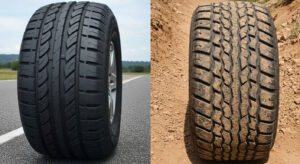
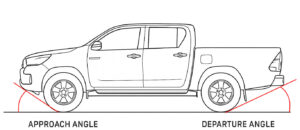
The knowledge component can, and there’s a great deal of it. The theory covers vehicle categories and configurations, approach, departure and ramp-over angles, ground clearance, traction control and drive modes, transmissions and transfer cases, transmission wind-up, axle articulation, centre of gravity, load management, tyre selection and pressures, and terrain-specific technique for hills, descents, rock, mud, sand, side slopes, snow, ruts and water crossings — plus recovery equipment and technique, convoy procedures, emergency response and post-trip inspection. What online can’t provide is seat time on a wet side slope. The realistic pattern is theory first, then supervised practice in the conditions the person actually works in, which is why practical training is available separately.

Do you need to wear a seatbelt off-road?

Yes, and this is where a lot of off-road driving goes wrong. For light vehicles, like utes, it stops you being thrown from the vehicle. Where a vehicle has a roll-over protective structure, the seatbelt is what keeps the occupant inside the protected zone — the structure on its own does very little for an unbelted driver. WorkSafe’s position on tractors is unambiguous: always wear the seatbelt if a ROPS is fitted. The same logic applies to side-by-sides, which offer better protection than a quad precisely because they combine seatbelts with a certified structure.

What about side-by-sides, quads and tractors?

Different vehicles, different risks, and the vehicle choice is itself a safety decision. A side-by-side fitted with seatbelts and a certified roll-over protective structure, used within its design limits, gives better protection off-road than an unenclosed vehicle like a quad or a two-wheeler. Tractors carry their own hazard set and their own WorkSafe guidance, and tractor drivers using public roads need at least a class 1 licence. The common thread is that the owner’s manual sets the limits and the manual is the document most rarely read.

What are the rules on river crossings?

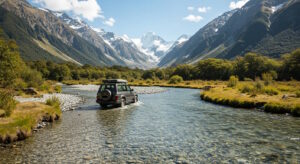
Regional council plans and the Resource Management Act govern disturbance of riverbeds, and crossing a waterway can require consent depending on the region, the watercourse and what you’re doing. On public conservation land, Department of Conservation rules apply on top. So a crossing that’s technically achievable can still be unlawful, and the technique question — depth, bed condition, entry and exit angles, water flow — sits alongside a compliance question that varies by where you are.

Do you need a WOF or registration for an off-road-only vehicle?

Not if it genuinely never leaves private land, though it still has to be safe to operate under HSWA. Vehicles that use public roads, even briefly and even on gravel, generally need to meet the same requirements as any other road vehicle. Farm vehicles have some specific allowances, and tractors driven on the road need to be in a condition that would broadly meet warrant of fitness standards, with correct signage and within width limits. The “it’s only a farm ute” assumption is where this one usually comes unstuck.

What records should an employer keep?

Whatever demonstrates you thought about it. There’s no prescribed record because there’s no prescribed training, which makes documentation more important rather than less. Useful records include which vehicles are assigned to which tasks and why, what training or assessment each driver has had, what conditions they’re authorised to drive in, when vehicles were inspected and their protective structures checked, and any incident or near-miss. If something goes wrong, the absence of a required certificate isn’t the problem. The absence of any evidence you considered competence is.

What is off-road driver training often paired with?

Because off-road driving is often done in utes, light vehicle load security is relevant.

What it’s also called

Off-road driving, 4WD, four-wheel drive, 4×4, light 4WD, L4WD, off-road driver training, 4WD training, advanced 4WD, four-wheel drive course, ute training, farm vehicle training, side-by-side, UTV, ATV, quad, quad bike, farm bike and all-terrain vehicle. “Light 4WD” is the term used in workplace and fleet contexts to distinguish utes and SUVs from heavy off-road plant.

Sources

  • Health and Safety at Work Act 2015, section 36
  • WorkSafe New Zealand, Choosing the right vehicle for the job
  • WorkSafe New Zealand, Use the right farm vehicle
  • WorkSafe New Zealand, Safe use of tractors
  • WorkSafe New Zealand, Using your side-by-side safely
  • WorkSafe New Zealand, Managing work site traffic good practice guidelines
  • Land Transport (Road User) Rule 2004, for road use
  • Regional council plans and the Resource Management Act, for waterway crossings

Off-road driving is the odd one out in workplace training. There’s no certificate to chase, no expiry date to diarise and no auditor asking to see paperwork — and it’s one of the few areas where people are still routinely killed doing something nobody thought needed training. If your people drive utes to remote worksites, cross farm tracks, or work on slopes and soft ground, the questions worth asking are whether the vehicle suits the task, whether the driver knows where its limits are, and whether anyone has written that down.

Light 4WD Off-road Training — 3.5 to 5 hours, six months’ access. Vehicle capability, terrain technique, recovery, stability and workplace legal requirements. Modules that don’t apply to your operation can be switched off, and video subtitles are available in 25 languages with questions in 76 — useful where your rural workforce isn’t all first-language English.

All car and light vehicle courses

Practical in-vehicle training is available through TR Driver Training on 0800 637 000.

Additional resources and reading

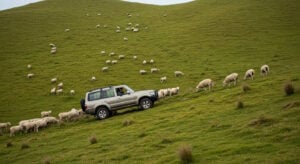
A silver off-road SUV driving up a steep green hillside surrounded by a large flock of sheep. The driver, visible through the window, navigates the rugged terrain as sheep graze and move across the grassy landscape.

Manual vs Automatic: Which Works Best in Rural Driving

When purchasing a vehicle for rural conditions, the transmission type can significantly impact your driving experience. Historically, manual transmissions were the preferred choice for off-road and rural driving, offering greater control in challenging conditions. However, advancements in automatic transmissions have…
Read more ›

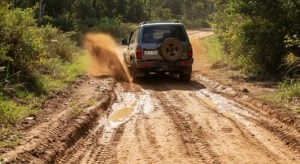
A rugged off-road SUV drives down a muddy dirt road, kicking up a spray of dirt and water as it moves through a puddle. The vehicle is surrounded by lush green vegetation under bright sunlight.

Electronic Traction Control Systems: How They Help Rural Workers

Electronic Traction Control (ETC) systems have revolutionised the way rural workers navigate challenging terrain in light four-wheel drive vehicles such as utes. Understanding how these systems function and their practical applications can help rural workers maximise safety and efficiency in…

Read more ›

Stability when Driving and Using Vehicle: Avoiding Rollovers

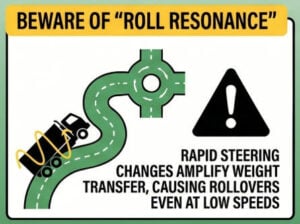
Stability, moments, and tipping points Every year, a couple of hundred single-vehicle rollovers happen on New Zealand roads. That figure doesn’t count forestry trucks in the bush, excavators on building sites, or quad bikes on farms. These are vehicles on…

Read more ›

A silver off-road SUV driving up a steep green hillside surrounded by a large flock of sheep. The driver, visible through the window, navigates the rugged terrain as sheep graze and move across the grassy landscape.

Ascending Techniques for Steep Farm Tracks

Ascending steep farm tracks in a light 4WD vehicle requires specific skills and techniques to ensure both safety and success. New Zealand’s farming landscape features numerous challenging inclines that can test even experienced drivers. From experience, you don’t want to…

Read more ›

Tyre Management for Extended Rural Work Periods

In New Zealand’s varied rural terrain, tyres face significant challenges from rough gravel roads, muddy farm tracks, rocky outcrops, and river crossings. Understanding how to manage your tyres effectively can make the difference between completing your work efficiently and facing…

Read more ›

Approach and departure angles: what they mean for worksite access

When accessing worksites in remote or challenging terrain, considering your vehicle’s approach and departure angles means you won’t inadvertently create an entrance that is impassible to certain vehicles. What are approach and departure angles? Approach and departure angles are measurements…

Read more ›

A Toyota SUV fords a shallow, clear river surrounded by lush forest and dramatic snow-capped mountains under a bright blue sky. The scene captures the spirit of adventure and off-road exploration in a pristine alpine environment.

River Crossings: Legal and Environmental Considerations

While the technical aspects of safely navigating water obstacles are paramount – you don’t want to damage your vehicle or get stranded in the middle – legal and environmental considerations are equally important. Understanding these factors ensures compliance with regulations…

Read more ›

Suspension Systems and Their Impact on Load Carrying

The suspension system of a light 4WD vehicle like a ute/pickup serves multiple functions beyond simply providing a comfortable ride. Different suspension designs affect your vehicle’s load-carrying capabilities, and being sensitive to this helps ensure both safety and vehicle longevity…

Read more ›

Breaking Over Angle: What It Means for Accessing Rough Terrain

When navigating rough terrain in a light 4WD vehicle, understanding the vehicle’s clearance capabilities is essential. One of the most critical measurements that determines your ability to clear obstacles is the break-over angle. This is an important concept when you…

Read more ›

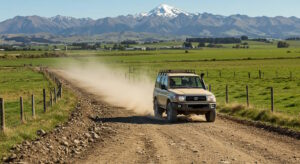
A beige Toyota Land Cruiser drives along a dusty, unpaved road in a vast rural landscape, kicking up a cloud of dust. Lush green fields stretch on both sides, enclosed by wooden fences, with a backdrop of majestic snow-capped mountains under a clear blue sky. The scene conveys a sense of adventure and remote exploration.

4WD Maintenance Schedules for Heavy Rural Use

Light 4-wheel drive (L4WD) vehicles operating in rural New Zealand face unique challenges that urban vehicles simply don’t encounter. These vehicles often travel across farm tracks, gravel roads, through streams, and over rough terrain on a daily basis. This heavy…

Read more ›

A drone captures a stunning aerial shot of a 4x4 vehicle driving along a winding dirt track through rolling coastal sand dunes. The golden grasses contrast with the soft, untouched sand on the right, creating a striking natural landscape. The remote and rugged terrain highlights the sense of adventure and exploration.

Sand Driving Techniques for Coastal Conservation Projects

In New Zealand’s coastal conservation efforts, 4WD vehicles often play a role in accessing remote areas for monitoring, restoration, and research. However, driving on sand presents challenges that require specific techniques and 4WD training to ensure both safety and environmental…

Read more ›

Understanding Your Ute’s Ground Clearance: What Really Matters

For ute owners, understanding what ground clearance really means and how it affects your vehicle’s performance can make the difference between conquering challenging terrain and getting stuck. What is Ground Clearance? Ground clearance refers to the minimum distance between the…

Read more ›

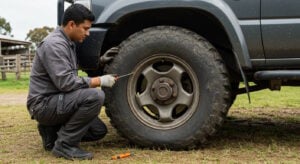
A mechanic in a dark gray work uniform kneels on the grass while using a tool to check or adjust the tire pressure of a rugged off-road vehicle. The large, mud-covered tire and the rural setting with farm structures in the background suggest a maintenance check before or after an off-road adventure.

The Rural Technician’s Guide to Tyre Selection

Selecting the right tyres for rural work vehicles is a critical decision that impacts safety, efficiency, and operating costs. For technicians working in diverse rural environments, understanding how to match tyre characteristics to specific operational needs is essential knowledge, and…

Read more ›

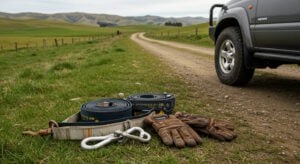
A set of off-road recovery gear, including tow straps, shackles, and gloves, is laid out on the grass beside a rugged SUV parked on a dirt road. Rolling green hills and a winding path stretch into the distance.

Essential 4WD Recovery Equipment for Rural Professionals

Working in rural areas often means navigating challenging terrain and encountering situations where your 4WD vehicle might become stuck or immobilised. Having the right recovery equipment on hand can mean the difference between a minor delay and being stranded for…

Read more ›

SUV driving on a dusty mountain road through a lush valley with snow-capped peaks in the background.

Fuel Efficiency Techniques for Remote Site Access in Off-Road Vehicles

Accessing remote sites in New Zealand often involves traversing challenging terrain while carrying tools, equipment and personnel. These journeys can consume significant quantities of fuel, leading to increased operational costs and environmental impact. By implementing strategic fuel efficiency techniques, organisations…

Read more ›

Recent Resources
  • Can your dangerous goods load go through the tunnel?
  • What should you check before leaving the yard with dangerous goods?
  • What do truck drivers need to know about General Access Limits?
  • First aid for burns: thermal, chemical, and electrical
  • How to issue a permit-to-work for excavation
  • Recognising and managing shock using workplace first aid
  • How to control severe bleeding in a workplace incident
  • How to issue a hot work permit in a permit-to-work system
  • How to help someone who is choking: first aid tips
  • Can you be fined for not providing workplace first aid training?

Licences and Courses

  • Car
  • Motorbike
  • Heavy Vehicles
Car
  • Core
  • Behaviour
  • Parking
  • Emergencies
  • Road position
  • Intersection
  • Theory
  • Signs
Motorbike
  • Bike-specific questions
  • Core
  • Behaviour
  • Parking
  • Emergencies
  • Road position
  • Intersection
  • Theory
  • Signs
Heavy Vehicles
  • Class 2
  • Class 3-5
  • Core
  • Behaviour
  • Parking
  • Emergencies
  • Road position
  • Intersection
  • Theory
  • Signs

Vehicle and workplace training

  • About
  • Resources
DT Driver Training TR Group
About
  • About us
  • Contact us
  • Privacy Policy
  • Terms and Conditions
Resources
  • Homepage
  • Driving Tests Android App
  • Driving Tests iPhone App
  • Getting your learner licence
DT Driver Training TR Group
Copyright 2010-2026 DT Driver Training Ltd, PO Box 12541, Penrose, Auckland, 1642. All rights reserved. Questions and images are used with permission from NZTA; question answers are proprietary.