
SAMPLE is an acronym for the six pieces of information that matter most when you’re assessing a conscious patient: Signs and symptoms, Allergies, Medications, Past medical history, Last meal and drink, and Events leading to the incident. Take a SAMPLE history once you’ve dealt with anything immediately life-threatening through DRSABCD. It gives you and the paramedics a structured picture of what’s going on, which is often the difference between a fast accurate diagnosis and a guessing game in the back of the ambulance.
SAMPLE matters most for medical emergencies where the cause isn’t obvious. For trauma incidents (someone’s hand caught in a chain drive, for example) the events are usually self-evident. For a worker who’s suddenly pale, sweaty, short of breath and clutching their chest, what you find out in the next two minutes will shape what happens next.
We go through sample in more detail in our online first aid refresher training. Below is an overview.
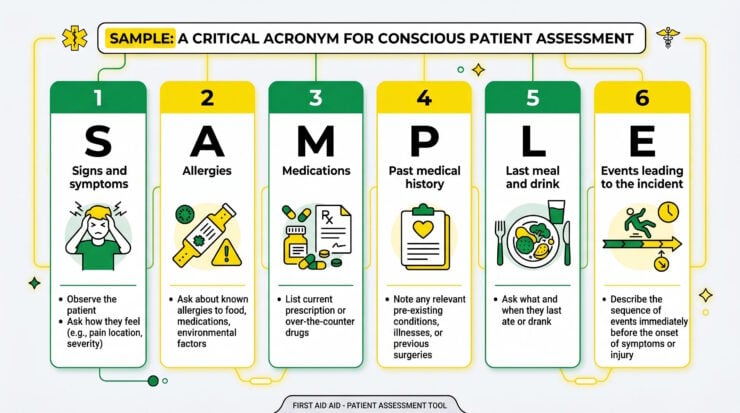
S: Signs and symptoms
Signs are what you can see: pallor, sweating, rapid breathing, swelling, an irregular pulse, blue or grey lips. Symptoms are what the patient tells you: pain, nausea, dizziness, numbness, tingling, shortness of breath.
Ask specific, open questions. “Where is the pain?” “Describe it. Is it sharp, dull, crushing, burning?” “Does it move anywhere else?” “On a scale of 1 to 10, how bad?” “When did it start? Was it sudden, or did it build up?” Closed yes/no questions get you less. The patient’s own words are often the most useful information you can pass on.
A: Allergies
“Do you have any allergies?” Check for a Medic Alert bracelet or necklace; some people carry an Anaphylaxis Action Plan in their wallet. Allergies matter because the patient may need medication at the hospital and an allergy is a contraindication for many drugs. They also matter because the current emergency might itself be an allergic reaction (anaphylaxis to a wasp sting at a depot, latex in a glove, food eaten at smoko).
M: Medications
Ask what medications they take, what they’re for, and when they last took them. Prescription medications tell you about existing conditions: a worker on warfarin or other anticoagulants will bleed differently from someone who isn’t. Someone on insulin or metformin is diabetic. Beta-blockers, statins, blood pressure medication all point to cardiovascular history.
Ask about over-the-counter medication and supplements too, including recreational drugs if it seems relevant. People are often reluctant to mention drugs in front of an employer; reassure them you’re asking so the paramedics have the full picture, not to get them in trouble.
P: Past medical history
“Has this ever happened before?” “Any major operations or illnesses?” “Any conditions a paramedic should know about?” Past medical history puts current symptoms in context. Chest pain in a 28-year-old with no cardiac history is different from chest pain in a 58-year-old who had a stent fitted two years ago. Headache in someone with a known migraine pattern is different from a sudden first-time headache.
L: Last meal and drink
Ask what they last ate and drank, and when. The medical reasons are practical. If surgery is needed, the anaesthetist needs to know about a recent meal because of aspiration risk. If a diabetic patient feels strange and hasn’t eaten, hypoglycaemia is the likely cause. If they’ve consumed alcohol, certain drugs interact with that. If they’ve eaten something unusual, food poisoning or allergic reaction comes onto the list.
E: Events leading to the incident
“What were you doing just before this started?” Events tell you the trigger and timeline. For an injury, this is usually obvious. For medical conditions, it can be revealing. Was the patient exerting themselves? Had they just stood up suddenly? Were they exposed to fumes, chemicals, heat, or cold? Did they hit their head earlier in the day and not think much of it?
A workplace scenario
A truck driver on a meal break in the cab radio dispatcher to say he doesn’t feel right. By the time the depot supervisor reaches him he’s sitting on the cab step, sweating, looking grey, breathing fast. He’s conscious. You’ve done your DRSABCD: scene safe, alert and confused, breathing okay. Now you sit down beside him and run SAMPLE.
Signs and symptoms: he’s shaky, sweating, says he feels “wobbly” and a bit confused. No chest pain. No shortness of breath beyond mild anxiety. Skin is cool and damp.
Allergies: none he’s aware of. No Medic Alert visible.
Medications: he takes metformin and Lantus for type 2 diabetes.
Past medical history: type 2 diabetes for about 10 years. No heart problems.
Last meal: he had breakfast at 5am. It’s now 12:30pm. He took his usual morning insulin. He hasn’t had lunch yet because the run took longer than expected.
Events: he’s been driving for six hours, just pulled into a rest area, and felt the symptoms come on in the last 10 minutes.
That picture points strongly to hypoglycaemia: a diabetic patient who took insulin, missed a meal, and is now sweaty, shaky and confused. You give him something sweet (he’s conscious and can swallow), you call 111, and you have a clear, structured handover ready when the paramedics arrive. Without SAMPLE, you might still have stumbled into the right answer, but you’d be guessing. With it, you know.
Write it down
Under pressure, people forget things they’ve just been told. Either jot the information down yourself, or have a bystander do it for you. Date, time, what the patient said, vital signs (pulse rate, breathing rate, AVPU), and any changes over time. Hand the paramedics a piece of paper with the SAMPLE history on it and you’ve given them a real head start.


Darren has written over 3000 articles about driving and vehicles, plus almost 500 vehicle reviews and numerous driving courses. Connect with him on LinkedIn by clicking the name above