
Shock, in the medical sense, is what happens when the body’s circulatory system fails to deliver enough oxygenated blood to vital organs. Heart, brain, kidneys and other organs start to fail. It’s life-threatening, and if you don’t recognise it early and act, the patient can deteriorate rapidly while still appearing to talk to you. Almost any serious injury or illness can trigger it.
This is medical shock, not emotional shock. The latter is a stress response and isn’t usually dangerous on its own. The former is a physical emergency that can kill within an hour or two if untreated.
Types of shock and what causes them
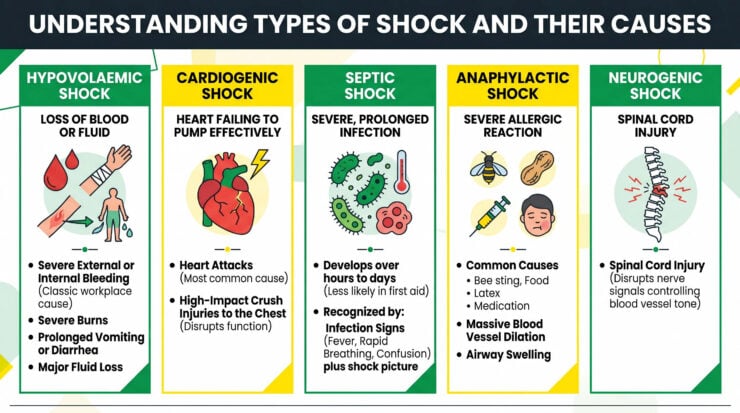
Hypovolaemic shock is caused by loss of blood or other fluid. Severe external or internal bleeding is the classic workplace cause. Severe burns, prolonged vomiting or diarrhoea, and major fluid loss can also cause it.
Cardiogenic shock is caused by the heart failing to pump effectively. Heart attacks are the most common cause. High-impact crush injuries to the chest can also disrupt the heart’s function.
Septic shock is caused by severe, prolonged infection. Less likely to present in a first aid setting because it usually develops over hours to days, but it’s recognised by signs of infection (fever, rapid breathing, confusion).
Anaphylactic shock is a severe allergic reaction (bee sting, food, latex, medication) that causes massive blood vessel dilation and airway swelling. We cover anaphylaxis separately.
Neurogenic shock is caused by spinal cord injury disrupting the nerve signals that control blood vessel tone.
Why shock is hard to spot early
The body is good at compensating. When the brain detects falling blood flow, it tightens blood vessels in the skin and gut to push blood toward the heart and brain, and it speeds up the heart to pump what blood remains faster. This compensation works for a while. The catch is that during that compensation phase the patient can look relatively normal. They may even be walking and talking. Then the compensation runs out and they collapse.
Fit, healthy young workers compensate longer than older or unwell people. A 25-year-old can lose a litre of blood and still be walking around. The mechanism of injury matters as much as the patient’s current appearance. If a worker has fallen from height, been crushed, been in a vehicle incident, or has any significant blood loss, treat for shock even if they look fine.
Recognising shock
Early signs (the compensation phase): pale, cool skin (blood is being shunted away from the skin to the core); skin that feels cold and clammy or sweaty; rapid breathing; rapid pulse that often feels weak; nausea, possibly vomiting; mild dizziness; thirst; anxiety or restlessness.
Late signs (compensation failing): cold, moist skin that may look bluish, especially around lips and fingertips; confused or slurred speech; severe thirst; drowsiness, listlessness, decreasing level of consciousness; eventually unconsciousness. Without intervention, death follows.
Important nuance: pulse rate. In most forms of shock the pulse speeds up and weakens as the body tries to compensate. In cardiogenic shock (heart attack-driven), the pulse can be slow and weak, because the heart itself isn’t functioning properly. Slow pulse with shock symptoms after chest pain is a strong indicator of cardiogenic shock.
First aid management
Treat the cause where you can. Stop external bleeding with direct pressure. Manage burns by cooling. Help an anaphylaxis patient use their adrenaline autoinjector. Address the underlying problem and the shock often follows.
Position: lying down. This makes it easier for blood to reach the brain. The traditional advice to elevate the legs (around 30cm) is reasonable in hypovolaemic shock if you’re sure there’s no leg, spinal, or abdominal injury that would make leg elevation harmful. If there’s any doubt, lying flat is fine. If the patient becomes unconscious but is still breathing, recovery position.
Warmth: cover the patient with a blanket, jacket, or whatever’s available. Loss of body heat speeds the slide into shock. Don’t cook them, but don’t leave them shivering on concrete either.
Reassurance: talk to them. Stress and anxiety push pulse and breathing up and burn through limited oxygen reserves. A calm voice is genuine first aid in this context.
Don’t give anything to eat or drink. They may need surgery and an empty stomach is safer for anaesthesia. Moisten their lips with a damp cloth if they’re very thirsty.
Monitor continuously. Pulse rate, breathing rate, level of consciousness (use AVPU). Note the times. If they deteriorate, call 111 back to update. If they stop breathing normally, start CPR.
A workplace scenario
A maintenance technician falls about three metres down a cage ladder while working on a pressure tank.
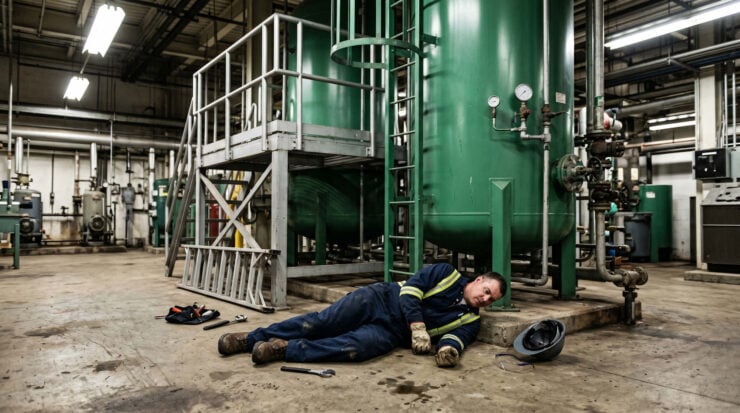
He gets up. He insists he’s fine. He’s walking, talking, embarrassed. The yard supervisor sits him down anyway and gets him a chair.
Over the next 10 minutes she notices changes. He’s gone pale. His skin is cool and slightly damp. His breathing is faster than it was. When she asks him how he’s feeling, he says he’s “a bit dizzy.” His pulse, when she finds it in his wrist, is fast and feels weak. He hasn’t lost any visible blood.
She calls 111. “Fall from height of about three metres, conscious, alert when I reached him but he’s deteriorating now. Pale, cool, fast weak pulse, dizziness.” While the ambulance is coming she gets him lying flat on a blanket on the floor of the office, covers him with another jacket, and stays with him talking calmly. He says he feels worse. He’s now slightly confused about what happened. She tells the dispatcher he’s deteriorating.
The paramedics find internal bleeding from a ruptured spleen. The technician survives because someone recognised compensated shock and called for help before the compensation failed. Treating the mechanism of injury as serious mattered more than the patient’s initial appearance.


Darren has written over 3000 articles about driving and vehicles, plus almost 500 vehicle reviews and numerous driving courses. Connect with him on LinkedIn by clicking the name above