• A TR Group Site
  • Help
  • Cart
Driving Tests DT logo small
Driving tests
  • Learner licence
    • Car
    • Motorbike
    • Heavy vehicle
    • Learner Licence Plus
  • Courses
  • Tourist
  • Resources
  • Learn
  • Resources
  • Learner licence
    • Car
    • Motorbike
    • Heavy Vehicle
    • Learner Licence Plus
  • Your courses
    • Enrolled courses
  • View all courses
  • Tourist
  • Resources home
  • iOS application
  • Android application
  • Contact us
  • Terms and conditions
  • Privacy
  • Home
  • /
  • Resources
  • / First Aid

First Aid Training Requirements in New Zealand

Every New Zealand workplace must provide first aid. Regulation 13 of the Health and Safety at Work (General Risk and Workplace Management) Regulations 2016 requires adequate first aid equipment, access to that equipment and to first aid facilities, and access to an adequate number of trained first aiders. It doesn’t say how many, and it doesn’t name a qualification. Both are for you to work out based on your risks.

What the law requires: adequate equipment, facilities and access to trained first aiders (GRWM Regulations 2016, regulation 13).

What is optional: NZQA unit standards, a specific provider, a specific course length.

Refresher interval: two years for a first aid certificate.

What is not allowed: charging workers for first aid provision. A PCBU must not impose a levy or charge on a worker for anything provided in relation to health and safety.

Do you legally need first aid training in New Zealand?

Your workplace does. Under regulation 13 of the GRWM Regulations 2016, a PCBU must ensure that an adequate number of workers are trained to administer first aid, or that workers have access to an adequate number of other trained people. That second option matters: a small office next door to a medical centre may satisfy the duty differently from a remote forestry crew. What you can’t do is provide a stocked first aid kit and nothing else. Equipment, facilities and trained people are three separate requirements and all three have to be met.

How many first aiders do you need?

There is no national ratio. WorkSafe’s position is that you assess your own workplace, taking account of the nature of the work, the size and layout of the site, the number of workers and how spread out they are. You must involve your workers in that assessment. Commonly cited figures like one first aider per fifty workers in a low-risk office are industry rules of thumb, not law, and they don’t survive contact with shift work. If you operate around the clock, coverage has to exist around the clock. A single first aider working weekdays leaves you short on nights and weekends, and when they go on holiday.

Do first aiders need NZQA unit standards?

No. Nothing in the Act or the Regulations requires unit standards. They become compulsory only where some other rule imposes them: a sector regulation, a licensing condition, or a client’s contract terms. Outside those cases, the test is whether your first aiders are actually capable of administering first aid, not which paperwork they hold.

Can first aid training be done online?

Yes. No New Zealand law requires first aid training to be delivered in a classroom or to include a practical assessment. What the law requires is that people are trained to administer first aid. Online training is legitimate, and for some purposes it’s better: it costs less, needs no scheduling, and lets you train a whole workforce rather than the two people you could spare for a day. What online training cannot do is award unit standards, because those require practical assessment by an accredited assessor.

How long is a first aid certificate valid?

Two years. That’s not set in legislation; it’s the interval training providers use and WorkSafe references, and it’s what auditors and clients will expect. After two years a first aider should do refresher or revalidation training.

Which industries actually require unit standards?

Sectors with their own regulations or licensing regimes. Early childhood education services must have staff holding a current first aid qualification under the early childhood regulations. Electrical workers need a first aid course to renew an EWRB practising licence. Aviation, policing and some healthcare and outdoor recreation roles have their own requirements.

What's the difference between level 2 and level 3 first aid?

Level 2 covers providing first aid and basic life support to a casualty: the DRSABCD approach, CPR, AED use, bleeding, burns, fractures, choking and the common medical conditions. Level 3 adds less common injuries and illnesses, plus managing the situation rather than just the patient: multiple casualties, directing bystanders, scene safety and handover to emergency services. Most workplaces need level 2 capability across a lot of people. In higher risk workplaces, level 3 is useful for whoever is nominated to take charge.

What does the DT first aid course cover?

The full range of level 2 content, plus a number of the less common injuries and illnesses that usually only appear in a level 3 course. It does not cover emergency management (taking charge of a scene with multiple casualties and directing others). It’s designed to give a whole workforce genuine capability at a price that makes training everyone realistic.

What else does the first aid duty involve?

Telling workers what’s available. All workers must be given clear information about the location of first aid kits, the names and locations of first aiders, where the first aid room is if there is one, and the procedure for getting help. That information should be given at induction, when the nature or location of their work changes, when first aiders change, and at regular intervals as a reminder.

What it’s also called

Workplace first aid, first aid certificate, first aid ticket, level 2 first aid, foundation first aid, New Zealand First Aid Certificate, comprehensive first aid, revalidation, refresher, CPR certificate, first response. The names vary by provider; what matters is which unit standards, if any, a course assesses and whether the content matches the risks in your workplace.

Sources

  • Health and Safety at Work Act 2015, section 36
  • Health and Safety at Work (General Risk and Workplace Management) Regulations 2016, regulation 13
  • WorkSafe New Zealand, First aid at work quick guide
  • NZQA unit standards 6400, 6401 and 6402
  • Australian and New Zealand Committee on Resuscitation (ANZCOR), CPR refresher guidance

Working out what your workplace needs starts with the risk assessment, not the course brochure. A low-risk office and a remote roading crew have the same legal duty and completely different answers to it. Work out how many people need capability, where they need to be, and what your shift pattern actually looks like, then choose training that fits.

First aid course — online theory covering level 2 content plus additional injuries and illnesses.

Additional resources and reading

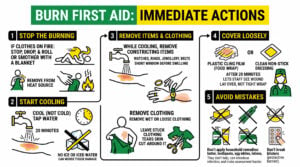
First aid for burns: thermal, chemical, and electrical

Burns are common workplace injuries: hot exhaust manifolds on trucks, welding sparks, kettle scalds in lunchrooms, hot oil on a fryer, hot bitumen, hot brake discs, chemical splashes, electrical contact. The first aid response is similar across most thermal burns…
Read more ›

Recognising and managing shock using workplace first aid

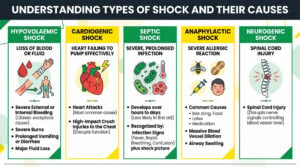
Shock, in the medical sense, is what happens when the body’s circulatory system fails to deliver enough oxygenated blood to vital organs. Heart, brain, kidneys and other organs start to fail. It’s life-threatening, and if you don’t recognise it early…

Read more ›

How to control severe bleeding in a workplace incident

Severe bleeding is one of the fastest-killing workplace injuries. An adult has roughly five litres of blood; losing about 40 percent (around two litres) causes irreversible shock without rapid medical intervention. From a major artery laceration, that loss can happen…

Read more ›

How to help someone who is choking: first aid tips

Choking happens when something blocks the airway, partially or completely. It’s most common during meals (a piece of meat, a chunk of bread, a marble in a child’s case) but can also involve dust, vomit, or any foreign object that…

Read more ›

Can you be fined for not providing workplace first aid training?

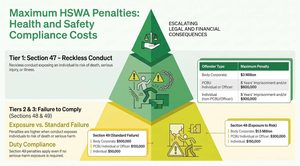
We couldn’t find any New Zealand prosecution in which inadequate first aid provision was the sole or primary charge. However, first aid deficiencies arise as a contributing or aggravating factor within broader “failure to ensure health and safety” charges. The…

Read more ›

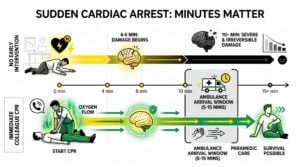
How to use an AED in a workplace cardiac arrest

An automated external defibrillator (AED) is a portable device that analyses the heart’s electrical rhythm and delivers a shock if the heart is in a rhythm that can be shocked back to normal. CPR keeps oxygenated blood moving; an AED…

Read more ›

Adult CPR: technique and what actually matters

CPR (cardiopulmonary resuscitation) is the manual technique that keeps oxygenated blood flowing to the brain and vital organs when the heart has stopped pumping effectively. It buys time. It doesn’t restart the heart by itself in most cases; that usually…

Read more ›

When to call 111 from your workplace

In any workplace emergency where someone is unresponsive, seriously injured, or seriously unwell, the rule is simple: call 111 immediately. The harder calls are the situations in the middle: a worker who looks unwell but is still talking, a cut…

Read more ›

Workplace First Aid Responsibilities in New Zealand

Do you have a first aid kit? Have you checked it recently? Has it run out of any items? Office first aid generally has lower-risk outcomes compared to workshop or construction first aid, for example, so have you chosen the…

Read more ›

Using SAMPLE to gather patient information for a first aid assessment

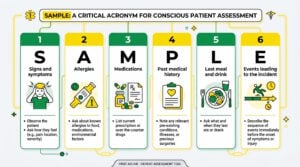
SAMPLE is an acronym for the six pieces of information that matter most when you’re assessing a conscious patient: Signs and symptoms, Allergies, Medications, Past medical history, Last meal and drink, and Events leading to the incident. Take a SAMPLE…

Read more ›

The recovery position: when and how to use it

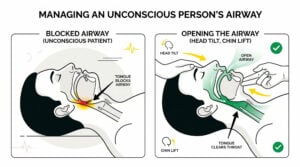
The recovery position is a stable side-lying position used to maintain a clear airway in someone who is unconscious but breathing normally. It works by using gravity. When an unconscious person lies on their back, the tongue relaxes and can…

Read more ›

How to check responsiveness using the AVPU scale in first aid

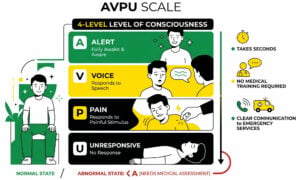
AVPU is a four-level scale for describing a patient’s level of consciousness: Alert, Voice, Pain, Unresponsive. It takes seconds to assess, requires no medical training, and gives you a clear way to communicate the patient’s state to emergency services. Anything…

Read more ›

Scene safety and the DRSABCD action plan

Every emergency response starts with the same question: is it safe to approach? Getting that wrong is how first aiders become casualties. DRSABCD is the action plan that puts scene safety first and works through the rest in the order…

Read more ›

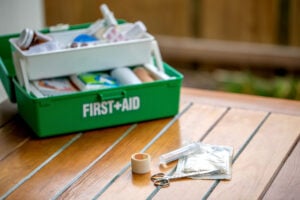
First aid kits and workplace readiness

Regulation 13 of the Health and Safety at Work (General Risk and Workplace Management) Regulations 2016 requires every PCBU to provide adequate first aid equipment, ensure workers can access it, and ensure there are enough trained first aiders. The word…

Read more ›

Protecting yourself from infection when giving first aid at work

Every time you provide first aid, you’re potentially exposing yourself to blood-borne pathogens. Hepatitis B, Hepatitis C, and HIV can all be transmitted through contact with infected blood and body fluids. You won’t know someone’s infection status when you’re kneeling…

Read more ›

Recent Resources
  • Can your dangerous goods load go through the tunnel?
  • What should you check before leaving the yard with dangerous goods?
  • What do truck drivers need to know about General Access Limits?
  • First aid for burns: thermal, chemical, and electrical
  • How to issue a permit-to-work for excavation
  • Recognising and managing shock using workplace first aid
  • How to control severe bleeding in a workplace incident
  • How to issue a hot work permit in a permit-to-work system
  • How to help someone who is choking: first aid tips
  • Can you be fined for not providing workplace first aid training?

Licences and Courses

  • Car
  • Motorbike
  • Heavy Vehicles
Car
  • Core
  • Behaviour
  • Parking
  • Emergencies
  • Road position
  • Intersection
  • Theory
  • Signs
Motorbike
  • Bike-specific questions
  • Core
  • Behaviour
  • Parking
  • Emergencies
  • Road position
  • Intersection
  • Theory
  • Signs
Heavy Vehicles
  • Class 2
  • Class 3-5
  • Core
  • Behaviour
  • Parking
  • Emergencies
  • Road position
  • Intersection
  • Theory
  • Signs

Vehicle and workplace training

  • About
  • Resources
DT Driver Training TR Group
About
  • About us
  • Contact us
  • Privacy Policy
  • Terms and Conditions
Resources
  • Homepage
  • Driving Tests Android App
  • Driving Tests iPhone App
  • Getting your learner licence
DT Driver Training TR Group
Copyright 2010-2026 DT Driver Training Ltd, PO Box 12541, Penrose, Auckland, 1642. All rights reserved. Questions and images are used with permission from NZTA; question answers are proprietary.