
In New Zealand’s coastal conservation efforts, 4WD vehicles often play a role in accessing remote areas for monitoring, restoration, and research. However, driving on sand presents challenges that require specific techniques and 4WD training to ensure both safety and environmental protection. Understanding how to navigate sandy terrain responsibly is essential for conservation project success while minimising ecological impact.
Understanding Coastal Sand Environments
Sand is one of the most challenging terrain types encountered during conservation work. The constantly shifting nature of coastal dunes and beaches creates an unstable driving surface that demands specific vehicle handling approaches. Before attempting to drive on sand for conservation projects, it’s important to recognise that sand environments are highly sensitive ecological systems. Dune formations can take decades to develop naturally, and vegetation that stabilises these systems is often fragile and slow-growing.
Vehicle Preparation
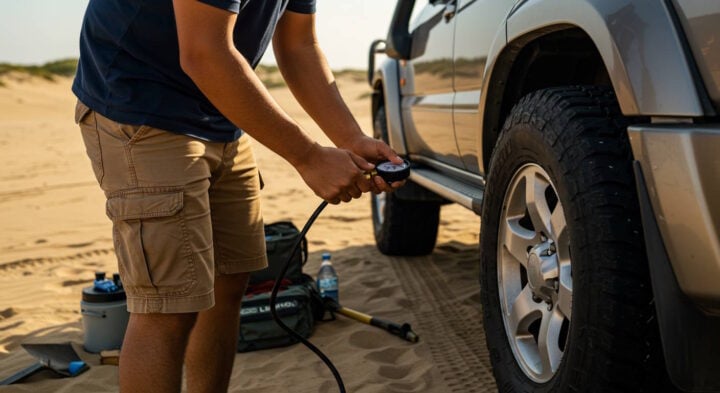
Tyre pressure adjustment is perhaps the most critical preparation step. Reducing tyre pressure significantly (typically to 40-60% of normal operating pressure) increases the tyre footprint, improving flotation and reducing rolling resistance. This adjustment helps prevent your vehicle from digging into the sand and becoming stuck.
For conservation work vehicles, it’s advisable to carry a quality tyre pressure gauge and portable compressor for reinflation after leaving sandy areas. Remember that reduced tyre pressure creates different handling characteristics, so reduced speed is necessary. Never drive at highway speeds with deflated tyres, as this can lead to tyre damage or failure through overheating.
Driving Technique Fundamentals
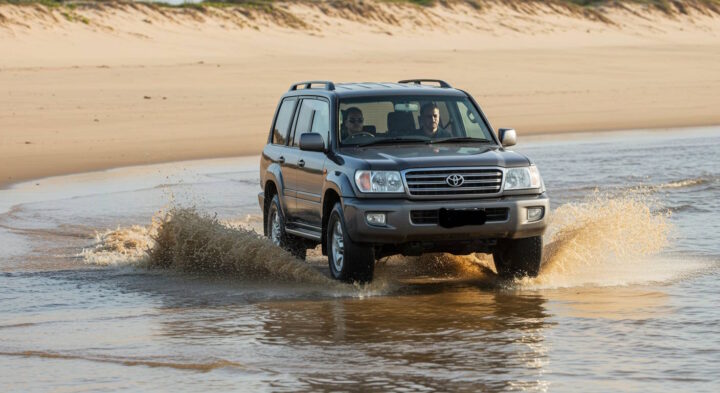
When operating on sand for conservation activities, several fundamental techniques should be employed. Drivers should move at a steady speed that maintains momentum without excessive wheel spin; stopping and starting again is where most vehicles become bogged.
Acceleration and braking should be applied smoothly and gradually. Sharp inputs can cause wheels to dig in rather than roll over the surface. Gentle steering inputs are also important, as aggressive turning can cause the front wheels to dig in and potentially lead to the vehicle becoming stuck, or even rolling.
Navigating Dunes and Coastal Features

For those involved in conservation projects that require navigating dune systems, additional considerations apply. Always drive directly up or down slopes rather than traversing them at an angle, which risks rollover. Before ascending any dune, conservation teams should walk the intended route to check for hazards and ensure a clear exit at the top.
When descending dunes, use engine braking rather than the foot brake where possible, as this provides a more controlled descent with less risk of sliding. Maintain a straight line down the slope to prevent the vehicle from turning sideways, which could lead to a rollover.
Environmental Protection Practices
Conservation projects must prioritise environmental protection when driving on sand. Always stay on established tracks where they exist. Creating new tracks damages vegetation and can initiate erosion processes that destabilise dune systems. Avoid driving on any vegetated areas, as even sparse vegetation plays a critical role in dune stabilisation and coastal ecosystem functions.
Be aware of nesting sites for shore birds and other wildlife. In New Zealand, many coastal bird species nest directly on beaches and dunes, making their nests vulnerable to vehicle traffic. Conservation projects should include pre-survey work to identify sensitive areas before driving operations commence.
Recovery Techniques
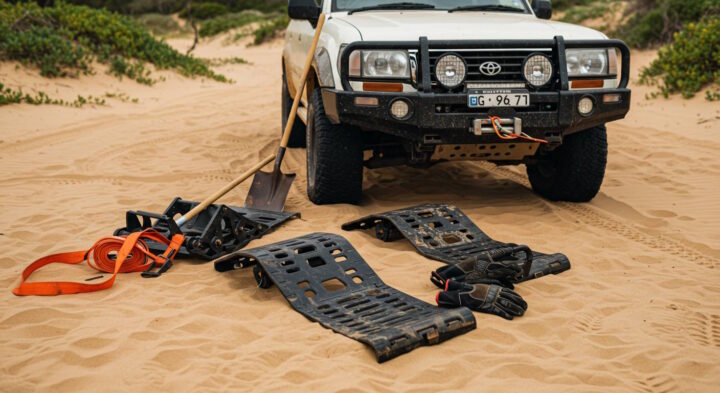
Despite the best preparations, vehicles can become stuck in sand. Understanding proper recovery techniques is essential to minimise both environmental damage and project delays. If forward progress ceases, avoid the instinct to apply more throttle, as this typically worsens the situation by digging the vehicle deeper.
Instead, try reversing along your existing tracks, where the sand has already been compacted. If this fails, reduce tyre pressure further if possible. For more serious bogging, recovery boards placed under the drive wheels can provide the traction needed to extract the vehicle with minimal disruption to the surrounding area.
Post-Drive Procedures
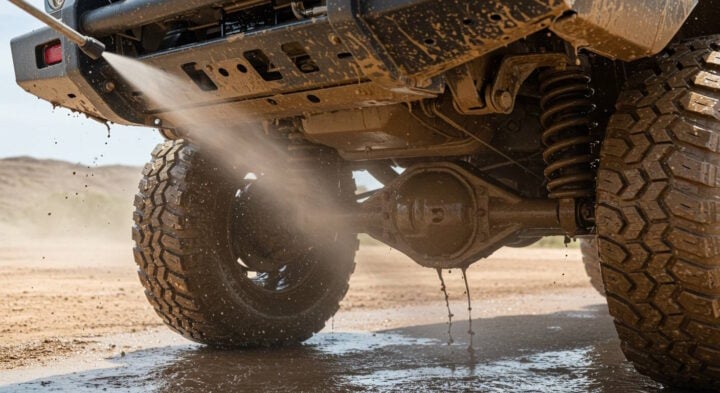
After completing conservation work that involved sand driving, proper vehicle maintenance is essential. Thoroughly wash the undercarriage to remove salt and sand, which can cause accelerated corrosion. Pay particular attention to brake components, as sand can adversely affect braking performance.
Re-inflate tyres to recommended pressures before returning to sealed roads. Driving on highways with deflated tyres is dangerous and will damage both tyres and potentially wheel rims. It’s also wise to inspect the vehicle for any sand accumulation in critical areas such as radiators or air intakes.
Training and Preparation
Conservation organisations should ensure that staff and volunteers receive appropriate training in 4WD driving techniques before undertaking projects requiring sand driving. This training should cover not only driving techniques but also environmental awareness and emergency procedures specific to coastal environments.
Projects should be planned with tidal information in mind, as rising tides can quickly inundate beach areas being used for access. Always carry appropriate communications equipment, as cellular coverage in remote coastal areas can be unreliable.
Conclusion
Responsible sand driving techniques are essential for the success of coastal conservation projects while minimising environmental impact. By understanding the unique challenges of sand driving and implementing appropriate techniques, conservation teams can access remote areas efficiently while protecting the very ecosystems they aim to conserve. With proper preparation, training, and respect for coastal environments, 4WD vehicles remain valuable tools in New Zealand’s ongoing coastal conservation efforts.


Darren has written over 3000 articles about driving and vehicles, plus almost 500 vehicle reviews and numerous driving courses. Connect with him on LinkedIn by clicking the name above