A permit-to-work system is only as reliable as the discipline behind it. Auditing is how your organisation confirms the system is actually working, not just on paper, but on the ground where the tools are out and the work is happening. When the system falls short, auditing drives the corrective action that fixes it.
Auditing is part of your role, not something that only belongs to the safety team – you can learn it in greater depth in this permit to work training course.
Why auditing matters
Every permit represents a set of decisions. Someone identified hazards, assessed risks, selected controls, verified isolations, and communicated conditions. Auditing tests whether those decisions were sound and whether they are being carried through into practice. Without auditing, there is no way to know whether the system is protecting people or whether it has become a paperwork exercise that everyone completes but nobody follows.
Auditing also catches drift. Over time, shortcuts become habits. A risk assessment that was thorough on the first permit gets copied with minor changes for the next ten. An isolation check that was done properly in the first week gets reduced to a glance at the lock from across the room by the third month. Auditing identifies this drift before it leads to an incident.
The three levels of audit
Most organisations structure their permit auditing across three levels, each with a different scope and frequency.
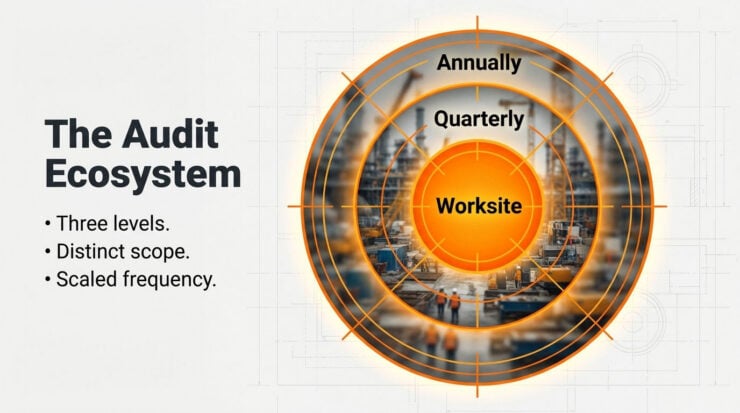
At the worksite level, a sample of active or recently completed permits is reviewed on a weekly or fortnightly cycle. The minimum sample is typically 10 percent of permits issued in the period. Someone other than the issuing Permit Issuer checks the documentation and, where possible, visits the worksite. They are looking at whether the hazard identification and risk assessment are adequate for the actual work being done, whether the permit has been authorised by the correct people, whether the documentation is legible and complete, and whether the required safety equipment is present and functional at the site. A Permit Issuer cannot audit their own permits. Independent verification is the whole point.
Higher-risk permits should be prioritised for audit. A confined space entry or a high-voltage isolation warrants more frequent auditing than a low-risk cold work permit on an exterior fence line.
At the quarterly level, a more thorough review is conducted by at least two people, typically including a site manager or health and safety advisor. This level looks beyond individual permits to the system as a whole. Have the worksite audits been completed on schedule? Have corrective actions from previous audits been closed out? Is the documentation current at all permit control locations? Are the management systems that support the permit-to-work system functioning properly?
At the annual level, a full audit is conducted by the health and safety team or an independent party. This confirms that the system is being applied consistently across the organisation, reviews training records and competency assessments, evaluates documentation and coordination facilities, and benchmarks the system against current legislation and industry good practice.
Some organisations also conduct formal external audits on a three-yearly cycle, led by an independent accredited auditor. These provide an outside perspective on system effectiveness and help identify gaps that internal auditors may be too close to see.
What you check
When you audit a permit at the worksite level, the questions are practical.
- Has the risk assessment identified the actual hazards present at the site, or is it a generic document that could apply to any job?
- Are the controls listed on the permit being followed on the ground?
- Are isolations in place and secured with locks and tags?
- Is the safety equipment specified on the permit available and working?
- Are all required signatures complete?
- Is the permit still within its validity period?
Walk to the worksite and look. An audit that only reviews the paperwork back at the permit station will miss the things that matter most. The form may say harnesses are required; the workers on site may not be wearing them. The isolation certificate may list four locked isolation points; one of the locks may be missing. The atmospheric test record may show readings within limits at 8 a.m., but no entries since. These are the kinds of gaps that worksite audits are designed to find.
Responding to findings
If you find non-compliance, record it and initiate corrective action. The severity of the finding determines the response. A documentation gap, such as a missing signature or an incomplete field on the form, may need the permit re-endorsed. A missing piece of PPE requires the worker to get the right equipment before continuing. A missing isolation lock requires work to stop immediately until the isolation is verified.
Where findings indicate a pattern rather than an isolated lapse, the response must address the root cause. If you are consistently finding that risk assessments across multiple permits are generic and do not reflect the actual work, the problem is not one Permit Receiver cutting corners. It is likely a training gap, a time-pressure issue, or a culture where the risk assessment is treated as a box to tick rather than a tool to think with. That needs a system-level response: revised training, clearer expectations, or a change in how permit applications are reviewed before issuing.
Findings must be tracked to completion. An audit that identifies problems but never leads to change has no value. Your organisation’s procedures will define how corrective actions are recorded, assigned, and followed up. The quarterly and annual audits should begin by reviewing whether previous corrective actions have been completed.
Peer review
Peer review is separate from formal auditing. One Permit Issuer reviews a permit completed by another, not to check compliance, but to learn from each other. It is a development activity. The reviewing issuer looks at how the permit was put together, how the risk assessment was structured, how the controls were selected, and how the documentation was completed. Both parties benefit: the reviewer sharpens their own practice by examining someone else’s work, and the issuer under review gets constructive feedback they would not otherwise receive.
Peer reviews should be documented and any improvement opportunities fed back into the organisation’s continuous improvement process.
Closing the loop
Every gap an audit finds is a point where the system could fail. Closing those gaps is part of your job as a Permit Issuer, both when your permits are reviewed and when you are doing the reviewing. The purpose of auditing is not to assign blame. It is to make the system stronger, one finding at a time.


Darren has written over 3000 articles about driving and vehicles, plus almost 500 vehicle reviews and numerous driving courses. Connect with him on LinkedIn by clicking the name above