
Most serious incidents in permit-to-work systems do not involve a single permit failing in isolation. They involve two or more activities that were each safe on their own but created a lethal interaction when they ran at the same time in the same space. Managing concurrent and conflicting works is one of the most important things you do as a Permit Issuer, and it is the area where the coordination role matters most. This is covered in permit-to-work training.
What makes work conflicting
Two permitted activities conflict when one creates a hazard for the other. The conflict may be obvious or it may be hidden until you look at both permits together.
Consider a site where one crew has a permit to pressure-test a repaired water main in a service trench while a second crew is permitted to install cable ducting in the same trench, twenty metres further along. If the pressure test fails and the repaired joint blows out, the trench floods. The cable installation crew is working at a depth of 1.5 metres in that trench. Neither JSA identified the other team’s work as a hazard because neither Permit Receiver knew the other job was happening. The information to prevent it was sitting in the permit register. Nobody checked.
Conflicts do not have to involve dramatic failures. A team using a diesel-powered concrete saw in a yard generates exhaust fumes and airborne silica dust. A second team is permitted to work on a rooftop air-handling unit thirty metres away. If the air intake for that unit draws in the dust and fumes from the cutting operation, the second crew is exposed to a respiratory hazard that did not exist when their permit was issued. Again, both permits are individually sound. The problem only appears when you consider them together.
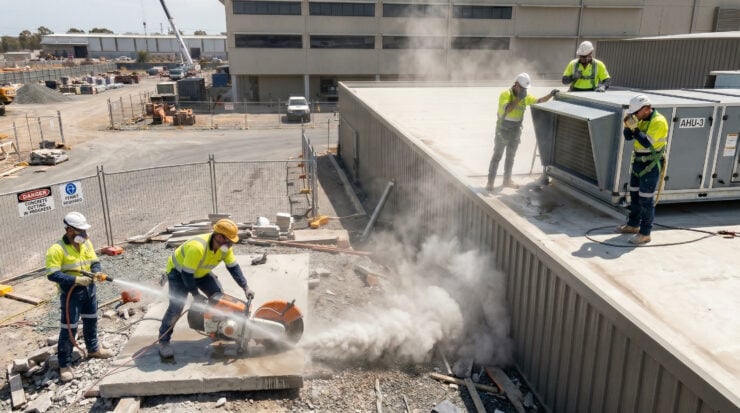
Checking the register before issuing
Before you issue any new permit, check the register and the permit location board to identify existing work that could conflict with the proposed activity. This is not optional and it is not something you do only when you suspect a problem. It is a standard step in the issuing process, every time.
Look for spatial overlap first. Are there active permits in or adjacent to the proposed work area? Then consider process connections. Will the new work affect the same equipment, pipework, electrical circuits, or services as an existing permit? Then consider environmental interaction. Will one activity generate sparks, dust, noise, fumes, vibration, or water that could affect another?
If you identify a potential conflict, you have several options. You can sequence the work so the conflicting activities do not overlap in time. You can establish physical separation or exclusion zones between the two work areas. You can adjust the controls on one or both permits to account for the interaction. Or you can decide that one job must wait until the other is finished. The right choice depends on the nature and severity of the conflict.
When two permits are active in the same area, both Permit Receivers must be informed of each other’s work. If one team’s activity changes in a way that affects the other, both teams need to know immediately. Record the cross-reference on both permits so there is a clear audit trail showing that the interaction was identified and managed.
Shift handover
Shift handover is one of the most vulnerable points in the permit system. The outgoing Permit Issuer holds a complete mental picture of what is happening on site: which permits are active, which are suspended, what stage each job is at, what hazards are present, what isolations are in place, and whether there are any unresolved concerns. If that picture does not transfer to the incoming Permit Issuer, the system has a gap.
Walk the incoming issuer through each active and suspended permit. Do not rely on the register alone. Explain any nuances that the paperwork does not capture: a crew that is behind schedule and may need a permit extension, a piece of plant that had an intermittent fault during testing, a Permit Receiver who raised a concern about ground conditions that has not yet been resolved. The incoming issuer signs to acknowledge they have accepted responsibility for all active permits.
If the Permit Issuer changes during the validity period of a permit, the incoming issuer must review the permit conditions, inspect the worksite, and confirm the conditions are being met. They carry the same obligations as the person who originally issued the permit.
When the Permit Issuer is temporarily unavailable
If you need to leave the site temporarily, your organisation must have arrangements in place to cover your responsibilities. Many organisations appoint a Permit Issuer Designate for this purpose. While you are unavailable, no new permits may be issued unless the designate is in place and has been briefed on all active permits. If no designate is available, all active permits must be suspended until an authorised Permit Issuer returns.
Change of Permit Receiver
If the Permit Receiver changes during the life of a permit, the outgoing Receiver and the Permit Issuer must brief the incoming Receiver on all aspects of the work. The incoming Receiver signs the permit to confirm the handover, and the change is recorded. The incoming Receiver carries the same responsibilities as the person they are replacing.
Revalidation
At the start of each new shift or working day, permits that are continuing must be revalidated. You inspect the worksite, confirm that conditions have not changed, and verify that isolations are still in place and effective. If conditions have changed, the permit may need to be amended or cancelled and reissued. If unchanged, you and the Permit Receiver sign the revalidation section and work recommences.
Revalidation is not a formality. It exists because conditions change overnight. Weather shifts. Other work starts or finishes. Plant status changes. A permit that was valid at 4 p.m. yesterday may not be valid at 7 a.m. today. The revalidation inspection is your check that everything the permit was based on still holds.
Emergency work
There will be situations where work is urgently needed and the normal permit timeline cannot be followed. Even then, the permit process still applies. What changes is the timeframe, not the standard. You and the Permit Receiver conduct the hazard assessment and agree on controls in compressed time, but you do not skip steps. Only people with the knowledge and competence to manage the risks should undertake emergency work. If a full written permit cannot be completed before work begins, your organisation’s procedures will define how this is managed. In all cases, documentation must be completed as soon as practicable after the work starts.


Darren has written over 3000 articles about driving and vehicles, plus almost 500 vehicle reviews and numerous driving courses. Connect with him on LinkedIn by clicking the name above