
If you’ve seen a modern sleeper cab then you’ll know how luxurious they can be. It’s not uncommon for drivers that do long journeys to have a flat-screen TV, microwave, gaming console, refrigerator and laptop available to them. Keeping the creature comforts in the cab means that drivers don’t need to deviate to stop at a motel while on the road. This efficiency in journey time and route choice saves time and fuel, but the electronics do need power, as does any lighting, heating and air conditioning in the cabin.
This power can be supplied by batteries, but usually some form of engine idling will be required to either maintain or recharge the battery. This leads to increased fuel costs, air pollution in truck parks and noise pollution that can reduce the quality of sleep that other drivers get.
Based on the average idle time of drivers, reducing it by 10% reduces overall fuel consumption by about 1%. This makes for a real saving not only for the driver’s fuel budget but also means less environmental impact.
Battery-power heating, ventilation and air conditioning (HVAC)
Battery power means zero vibration, zero emissions while it’s being used and minimal noise. Power can come from an externally mounted battery, a battery mounted in the tractor unit or external power (if available). These types of HVAC units are relatively maintenance-free.
The disadvantages of these units (if not run on external power) are:
- they will run out of power eventually if not recharged using a diesel generator or the engine (harsh weather conditions such as extreme cold or heat can cause this)
- the batteries add to the weight of the truck
- a large-capacity alternator is required
Some systems allow the batteries to be recharged using regenerative braking, like on many hybrid vehicles; this reduces the overall fuel use required to keep the batteries topped up.
Diesel auxiliary power units
A diesel APU can be used to provide power to the cabin when the main engine is switched off. They are more efficient than the truck’s engine as they are designed for this purpose, and they are quieter; fuel use varies depending on the load (i.e. how much electrical power is required).
They can operate while the truck has fuel, so they are better for longer stops in harsher climates.
Diesel APUs require more maintenance than a battery-powered HVAC and they are more expensive to install.
Fuel-powered heaters
Diesel can be used to provide heating to the cabin, but not cooling. These heaters are similar to a diesel APU in terms of fuel usage. They are quieter than running the engine. They also are unable to provide electrical power for devices.
Engine start/stop
Some systems monitor the cabin’s interior temperature and can start and stop the engine as required. However, starting and stopping the engine while the driver is asleep can be disruptive due to the jolt through the cab. This option also doesn’t completely eliminate idling or engine wear.
Solar panels
It’s difficult to make solar pay for itself unless it’s used over a very long period of time, but in some areas this kind of technology can provide a real boost to battery charging (e.g. Australia and some parts of America). It’s a passive source of power which is silent and emissions-free.
Solar technology can be used on refrigerated trailers to minimise chiller motor noise.
The panels do need to be cleaned frequently to maintain the maximum benefit.
Choosing the right vehicle options to reduce idling
For driver comfort, the ability to maintain a consistent temperature is one of the most important things. To that end, there are choices you can make when you specify your truck cab so that you are minimising heat loss and gain:
- White trucks don’t get as hot and require less energy to cool on a summer’s day
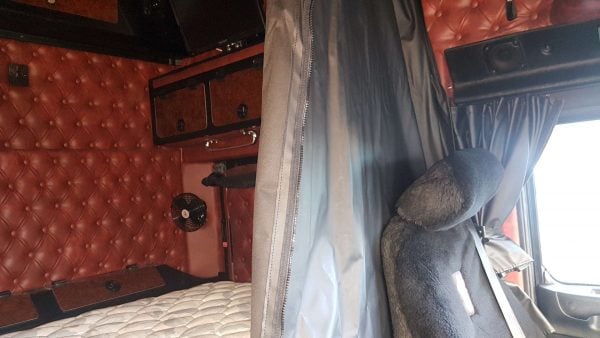
- Insulating curtains cut down on heat loss through glass windows
- A bunk curtain helps maintain the heat in the sleeping area
- Engine idle parameters can be changed to determine when the engine switches on and cuts out, plus the exact idle speed.
The best idle reduction technique is staying in a motel, but this can use more fuel as motels are not necessarily on the desired route, meaning you need to drive to one. If you can find a truck stop with electric outlets, this is ideal as it will minimise emissions and noise.


Darren has written over 3000 articles about driving and vehicles, plus almost 500 vehicle reviews and numerous driving courses. Connect with him on LinkedIn by clicking the name above
 Disqus