
The difference between registration and licensing
While licensing is often called ‘rego’, there is a difference:
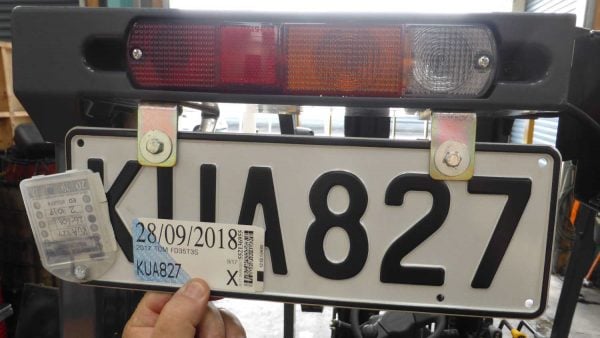
- Registration is when a car is first added to the Motor Vehicle Register in New Zealand and gets its registration plates.
- Licensing is the yearly fee you pay to keep your vehicle on the road.
- Your vehicle must be both registered and licenced to be used on the road.
The fees from vehicle licensing go towards paying for roading projects and road safety programmes.
Licensing fees
From 1 July 2015 the ACC portion of the licence levy is being reduced by an average of 41%. The current figures are:
| Motor vehicle type/usage | 3 months | 6 months | 12 months | |
|---|---|---|---|---|
| Passenger car | ||||
| Petrol driven – private | 70.30 | 140.38 | 280.55 | |
| Petrol driven – taxi | 84.72 | 169.27 | 338.31 | |
| Petrol driven – rental | 84.72 | 169.27 | 338.31 | |
| Non-petrol driven – private | 105.66 | 211.07 | 421.94 | |
| Non-petrol driven – taxi | 120.08 | 239.96 | 479.69 | |
| Non-petrol driven – rental | 120.08 | 239.96 | 479.69 | |
| Trailer | ||||
| Less than 3500kg | 7.24 | 14.28 | 28.37 | |
| Motorcycle | ||||
| Petrol driven – – 0- 60cc incl | 99.14 | 198.03 | 395.85 | |
| Petrol driven – 61-600cc incl | 102.01 | 203.78 | 407.35 | |
| Petrol driven – 601cc and over | 130.54 | 260.85 | 521.51 | |
| Moped | ||||
| Petrol driven | 41.56 | 82.90 | 165.60 | |
| Goods truck/van/utility | ||||
| Private passenger | Petrol driven – 0-3500kg GVM | 72.61 | 145.00 | 289.80 |
| Petrol driven – 3501-6000kg GVM | 82.06 | 163.86 | 327.51 | |
| Non-petrol driven – 0-3500kg GVM | 115.43 | 230.62 | 461.04 | |
| Non-petrol driven – 3501-6000kg GVM | 147.86 | 295.49 | 590.78 | |
| Transport licensed goods | Petrol driven – 6000-12000kg GVM | 96.11 | 191.98 | 383.73 |
| Non-petrol driven – 6000-12000kg GVM | 161.90 | 323.61 | 647.00 | |
| Other (standard) goods | Petrol driven – 0-3500kg GVM | 81.69 | 145.00 | 289.80 |
| Petrol driven – 3501-6000kg GVM | 82.06 | 163.86 | 327.51 | |
| Non-petrol driven – 0-3500kg GVM | 115.43 | 230.62 | 461.04 | |
| Non-petrol driven – 3501-6000kg GVM | 147.86 | 295.49 | 590.78 | |
You can save some money by doing this online. You will receive your label in the mail. Or you can do it at an agent such as NZ Post, but this will cost you slightly more.
Your vehicle must have a current warrant of fitness or certificate of fitness. The only time you are allowed to drive a vehicle on the road without a current licence is if you are taking it to get a WoF or CoF.
If you don’t relicence your vehicle it will be canceled 11 months and 4 weeks after it first expired.
If you don’t need to drive your vehicle on the road you can apply for a temporary exemption of the licence for between three and 12 months. Some vehicles are exempt from licence fees in certain circumstances. Find out more here.
If you will be taking your vehicle off road permanently you can cancel the registration here.


Darren has written over 3000 articles about driving and vehicles, plus almost 500 vehicle reviews and numerous driving courses. Connect with him on LinkedIn by clicking the name above
 Disqus