
The Land Transport (Road User) Amendment Rule 2023 has come into effect and has some implications for drivers.
Clearways
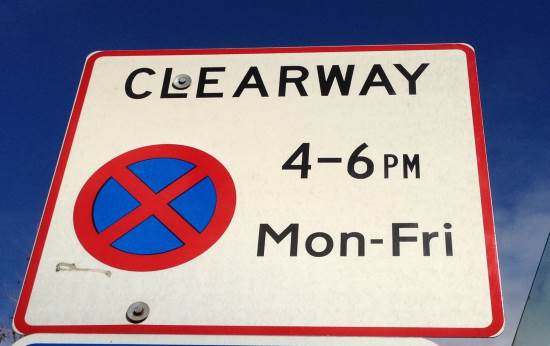
Parking in a clearway is now explicitly prohibited. Previously, clearways weren’t mentioned. Clearway has the same meaning as in Part 2 of Land Transport Rule: Traffic Control Devices 2004. The new clause is:
Without limiting subclause (1), a driver or person in charge of a vehicle must not stop, stand, or park the vehicle in an area that is designated as a clearway or no stopping area.
Note that this is only applicable during the times mentioned on the sign or, if no times are mentioned, it applies 24 hours a day.
Motorways
A small amendment to Rule 2.12 adds the word ‘stand’ to say A driver must not stop, stand or park on a motorway except in an area set aside and indicated by a traffic sign as a parking area.
Trailers
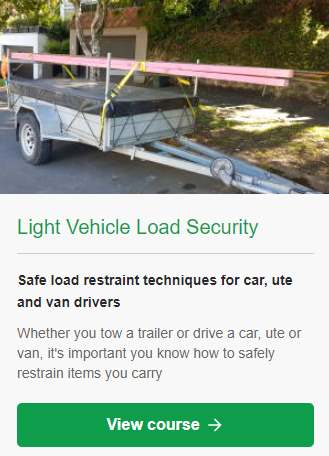
It used to be possible to park a trailer on a roadway for up to 7 days without permission from the Road Controlling Authority. This has been reduced to 5 days. The new clause is:
Except with the written permission of the road controlling authority given for a specified trailer, and in compliance with any conditions imposed by the road controlling authority in giving that permission, a person must not park a trailer on a roadway for a period exceeding 5 days.
If you have a boat on a trailer, you will need to check out your options. These sorts of clauses can be circumvented simply by moving the trailer every few days.
When leaving or moving your trailer, the load must be secure – view the light vehicle load security course for more information.
Electric vehicles
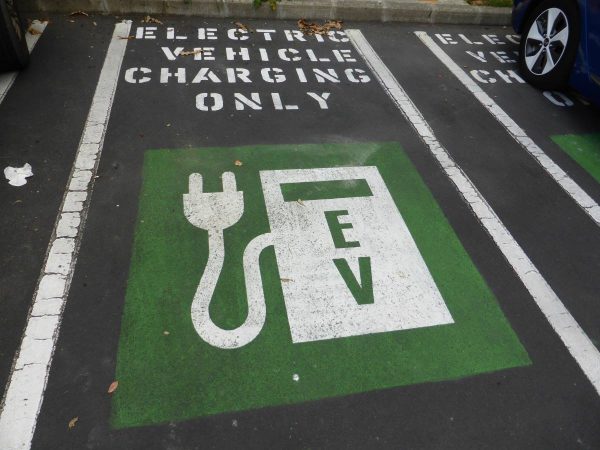
To combat inconsiderate people leaving their EVs in EV charging spaces when they are not charging them, it’s now an offence to not be charging the vehicle when it’s in one of those spaces. Originally this clause prevented a non-EV vehicle parking in an EV space, but didn’t specify the charging.
There is no indication of how this will be enforced. There will be scenarios where the vehicle is charging and finishes charging before the owner returns. There may be some grace period, or maybe not.
The clause reads:
Without limiting subclause (1), a driver or person in charge of a vehicle must not stop, stand, or park the vehicle in any parking area reserved for the charging of electric vehicles unless—
(a) the vehicle is an electric vehicle; and
(b) the person is using the area for charging the vehicle.
If you are considering an EV, it’s a good idea to get EV training because they are different to drive than petrol-powered vehicles.


Darren has written over 3000 articles about driving and vehicles, plus almost 500 vehicle reviews and numerous driving courses. Connect with him on LinkedIn by clicking the name above