Electronic Traction Control (ETC) systems have revolutionised the way rural workers navigate challenging terrain in light four-wheel drive vehicles such as utes. Understanding how these systems function and their practical applications can help rural workers maximise safety and efficiency in their daily operations.
Understanding Electronic Traction Control
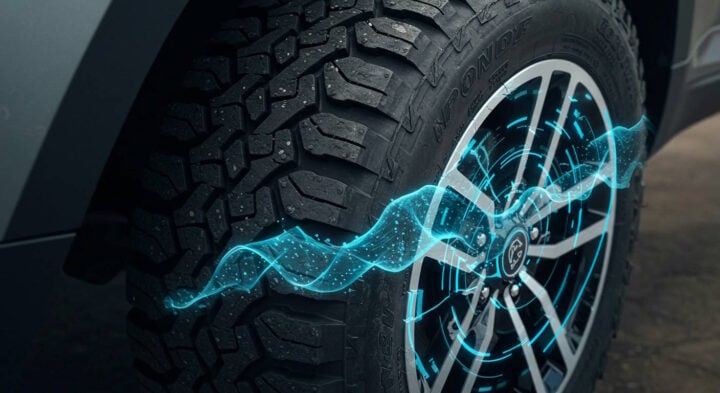
Electronic Traction Control systems are computer-controlled safety features designed to prevent wheel spin and loss of traction during acceleration. When the system detects that one or more wheels are spinning faster than the others (indicating a loss of traction), it automatically applies the brake to the spinning wheel(s) while simultaneously reducing engine power if necessary. This action effectively transfers torque to the wheels that still have grip, enabling the vehicle to maintain forward momentum.
Unlike traditional mechanical systems such as limited-slip differentials, ETC can respond instantaneously to changing conditions and doesn’t require driver intervention to activate. The system utilises the same wheel speed sensors employed by the Anti-lock Braking System (ABS) to monitor rotation speeds and detect slippage.
Benefits for Rural Workers
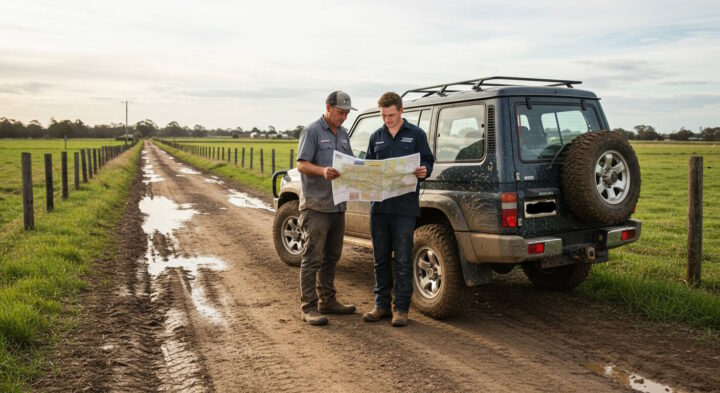
Muddy farm tracks, gravel roads, stream crossings, and steep inclines are common obstacles that can impede progress and potentially strand workers in remote locations. Electronic Traction Control significantly improves vehicle capability in these situations.
When navigating slippery surfaces, such as wet paddocks or muddy access roads, ETC prevents excessive wheel spin that might otherwise dig the vehicle deeper into soft ground. This prevents becoming bogged and reduces environmental damage caused by wheel ruts. For workers accessing conservation areas or traversing sensitive ecosystems, this reduced impact is particularly valuable.
During winter months, when ice and snow compound traction difficulties in high-country regions, ETC provides an additional layer of safety. The system’s ability to detect slip before it becomes pronounced allows for more controlled movement across slippery surfaces, giving rural workers greater confidence when accessing remote locations during adverse weather conditions.
There are specific techniques related to ascending and descending hills, traversing side slopes, and scenarios where you should turn ETC off – you can learn more about these in our 4wd training courses.
Practical Applications in Rural Settings

Livestock management often requires traversing steep hillsides and rough terrain to check on animals, deliver feed, or repair fencing. With ETC engaged, four-wheel drive vehicles can maintain traction on steep inclines even when individual wheels momentarily lose grip due to loose surface material or wet grass. This reduces the risk of sliding and potential rollover situations while enabling access to areas that might otherwise be unreachable.
For rural contractors servicing remote power lines, telecommunications infrastructure, or water management systems, reliable access is essential regardless of ground conditions. Electronic Traction Control helps ensure service continuity by enabling vehicles to reach these assets even during adverse weather events when repair work is often most urgently required.
Agricultural workers benefit significantly during harvesting and planting seasons when time constraints often necessitate field access regardless of ground conditions. ETC allows vehicles to maintain productivity by providing improved capability on wet or loose surfaces, preventing delays that might otherwise impact time-sensitive operations.
System Limitations and Considerations

While Electronic Traction Control provides substantial benefits, rural workers should understand its limitations. ETC works best at low speeds and with progressive throttle application. Aggressive acceleration can overwhelm the system’s capability to manage traction, particularly in extremely slippery conditions. Maintaining steady, controlled inputs yields the best results.
The system is designed as a driving aid rather than a substitute for appropriate driving techniques or vehicle selection. Deep mud, extremely steep slopes, or major obstacles may still exceed the capability of ETC-equipped vehicles, particularly if they lack other important off-road features such as adequate ground clearance, appropriate tyres, or low-range gearing.
For optimal performance in rural applications, ETC works best when combined with proper tyre selection and inflation. Reducing tyre pressure when driving off-road improves the contact patch and works synergistically with ETC to maximise traction in challenging conditions.
Integration with Other Electronic Systems
Modern light four-wheel drive vehicles often feature Electronic Traction Control as part of a comprehensive suite of electronic driver aids. These may include Hill Descent Control, Hill Start Assist, and various terrain-specific drive modes that adjust throttle sensitivity, transmission shift patterns, and stability control parameters to optimise performance in different conditions.
Rural workers benefit from understanding how these systems interact and when each should be engaged or disengaged. For instance, when descending steep terrain with heavy loads, combining ETC with Hill Descent Control provides enhanced stability and safety by managing both traction and speed simultaneously.
Vehicle manufacturers continually refine these systems to provide more seamless integration and intuitive operation. Many newer models feature selectable terrain modes that automatically configure multiple electronic systems, including ETC, to provide optimal performance for specific conditions such as mud, snow, sand, or rocks.


Darren has written over 3000 articles about driving and vehicles, plus almost 500 vehicle reviews and numerous driving courses. Connect with him on LinkedIn by clicking the name above