
When navigating rough terrain in a light 4WD vehicle, understanding the vehicle’s clearance capabilities is essential. One of the most critical measurements that determines your ability to clear obstacles is the break-over angle. This is an important concept when you learn off-road driving. This fundamental concept affects how your vehicle handles ridges, mounds, and uneven terrain, ultimately determining where you can go and what obstacles you can overcome.
What Is Break-Over Angle?
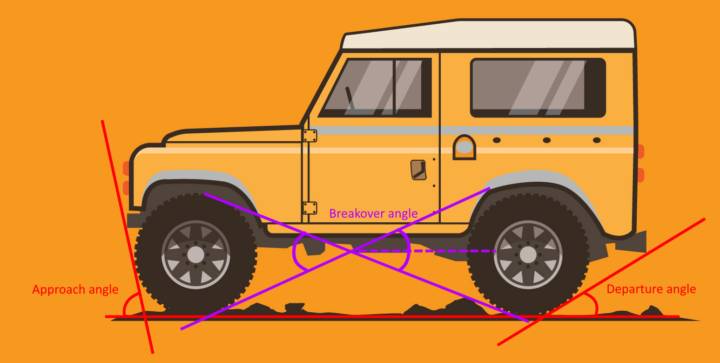
Break-over angle (also known as ramp-over angle) refers to the maximum angle of a ridge or crest that a vehicle can drive over without the underside of the vehicle making contact with the ground. It is measured as the angle formed between the ground and a line drawn from the bottom of the front tyres to the bottom of the rear tyres, passing through the lowest point of the vehicle’s undercarriage.
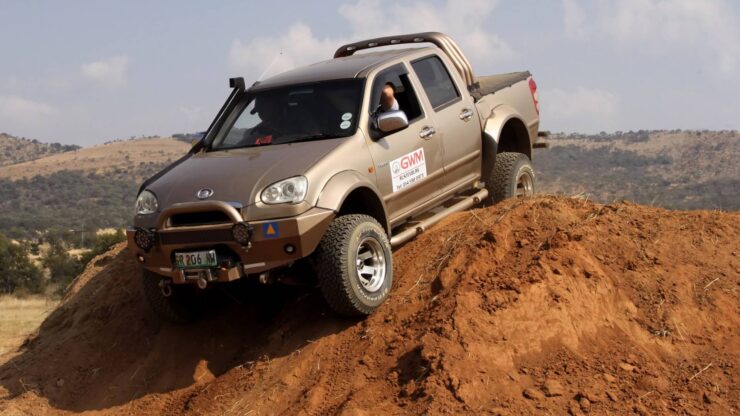
In simpler terms, it’s the measurement that determines whether your vehicle will get “high-centred” when crossing a ridge or a sharp change in terrain gradient. A high-centred vehicle is one where the undercarriage is resting on an obstacle, while the wheels have insufficient traction with the ground to move the vehicle.
Why Break-Over Angle Matters
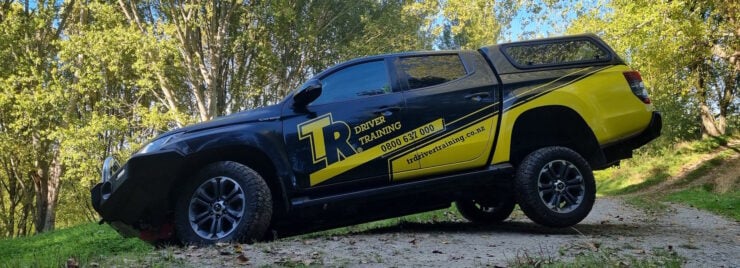
The break-over angle is critical because it directly affects your vehicle’s capability to navigate rough terrain without damaging the undercarriage. When tackling off-road obstacles, a higher break-over angle allows the vehicle to clear sharper crests and more severe changes in terrain without scraping or becoming stranded.
When the break-over angle is insufficient for an obstacle, several negative outcomes may occur:
- Undercarriage damage to components such as the transfer case, sump, or exhaust system
- The vehicle becomes high-centred and immobilised, requiring recovery
- Loss of traction as wheels lose contact with the ground
- Potential environmental damage from scraping the terrain.
Factors Affecting Break-Over Angle

Several factors influence a vehicle’s break-over angle:
Wheelbase Length
The wheelbase—the distance between the front and rear axles—is the primary factor affecting break-over angle. Vehicles with a shorter wheelbase (SWB) typically have a more favourable break-over angle than long wheelbase (LWB) vehicles. This is why compact 4WDs often perform better in rocky, uneven terrain than their longer counterparts.
Ground Clearance
The minimum distance between the lowest point of the vehicle’s undercarriage and the ground directly affects the break-over angle. Higher ground clearance results in a better break-over angle, allowing the vehicle to clear taller obstacles.
Vehicle Modifications
Modifications can either improve or worsen break-over angle:
- Suspension lifts increase ground clearance and generally improve break-over angle
- Body lifts can improve break-over angle without changing the vehicle’s handling characteristics
- Adding accessories like rock sliders may protect the vehicle but can also reduce clearance
Underbody Design
The design of a vehicle’s underbody, including the positioning of components like the exhaust system, transfer case, and sump, affects which parts will make contact first during an obstacle crossing.
Measuring and Understanding Your Vehicle’s Break-Over Angle
Manufacturers typically provide break-over angle specifications for their vehicles. These measurements are usually given in degrees, with higher numbers indicating better off-road capability. For reference, dedicated off-road vehicles might have break-over angles of 20-30 degrees, while standard SUVs might be in the 15-20 degree range.
To practically understand your vehicle’s limitations, a simple test can be performed:
- Place a long, straight object (like a broom handle) under your front tyre
- Slowly raise it until it touches the lowest point of your vehicle’s undercarriage
- Measure the angle between the ground and the object
This provides a visual representation of your break-over angle and helps identify which components are most vulnerable.
Driving Techniques for Managing Break-Over Angle Limitations
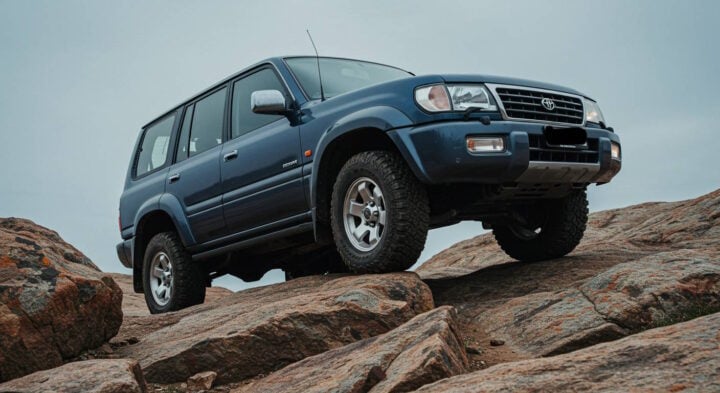
Understanding your vehicle’s break-over angle limitations is only half the equation—knowing how to drive accordingly is equally important:
Approach Obstacles at an Angle
When possible, approach obstacles at a slight angle rather than straight on. This technique, sometimes called “diagonal crossing,” allows one wheel to climb the obstacle at a time, effectively increasing your functional break-over clearance.
Choose Your Line Carefully
Careful route selection is crucial. Look for paths that minimise severe changes in gradient. Sometimes the path with smaller, more frequent undulations is better than one with a single sharp crest.
Use Momentum Wisely
In some situations, controlled momentum can help carry your vehicle over obstacles that might otherwise cause high-centring. However, excessive speed can cause damage if contact does occur, so balance is essential.
Consider Tyre Placement
Placing tyres on high points rather than in depressions can effectively increase your break-over clearance. This requires careful wheel placement and often the assistance of a spotter.
Enhancing Your Vehicle’s Break-Over Angle
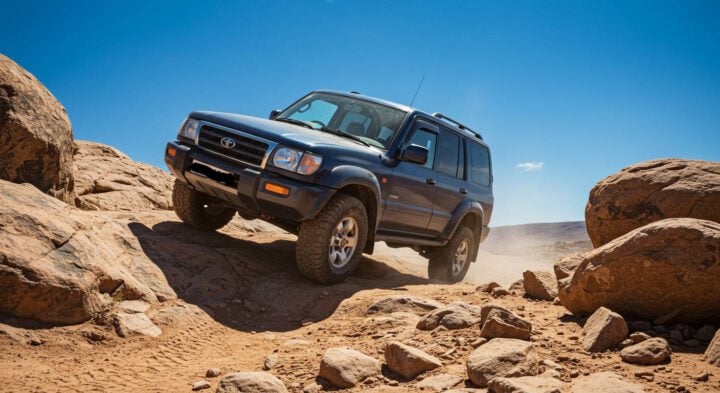
If you find your vehicle’s break-over angle insufficient for your off-road needs, several modifications can help:
- Suspension lifts to increase overall ground clearance
- Larger diameter tyres (within legal limits)
- Relocation of vulnerable components such as exhausts
- Installation of skid plates to protect critical components
In New Zealand, there are legal limitations to vehicle modifications. The New Zealand Transport Agency (NZTA) requires that replacement tyres be no more than 5% larger than the vehicle manufacturer’s specifications without certification.
Conclusion
Break-over angle is a fundamental concept in off-road driving that significantly impacts your vehicle’s capability in rough terrain. By understanding this measurement, recognising your vehicle’s limitations, and employing appropriate driving techniques, you can navigate challenging obstacles while minimising the risk of damage or becoming stranded.
Remember that even the best break-over angle won’t compensate for poor driving decisions. Always assess obstacles before attempting to cross them, and when in doubt, find an alternative route. This cautious approach will keep your vehicle undamaged and ensure you can continue enjoying New Zealand’s diverse off-road terrain responsibly.


Darren has written over 3000 articles about driving and vehicles, plus almost 500 vehicle reviews and numerous driving courses. Connect with him on LinkedIn by clicking the name above