In any workplace emergency where someone is unresponsive, seriously injured, or seriously unwell, the rule is simple: call 111 immediately. The harder calls are the situations in the middle: a worker who looks unwell but is still talking, a cut that’s bleeding but not pumping, a head bump from a low-clearance hit that the worker insists was “nothing”. This article covers the call itself, what dispatch will ask you, and how to decide between 111 and the other options New Zealand has.
We cover this in more depth in our workplace first aid refresher course online.
When 111 is the right call
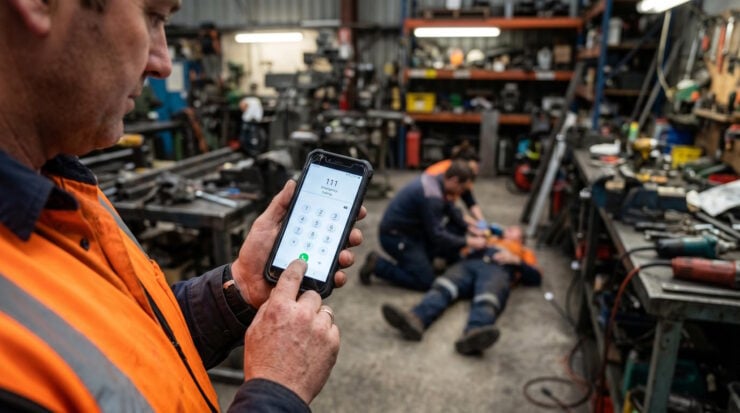
Call 111 for any condition that threatens life. That covers anyone unresponsive or with new altered mental status (confusion that wasn’t there before, sudden behaviour change). It covers difficulty breathing, no breathing, or choking that can’t be cleared quickly. It covers persistent chest pain or pressure, severe or uncontrollable bleeding, seizures, a sudden severe headache (especially “worst headache of my life” type), suspected stroke, suspected spinal injury, overdoses, and injuries to the head, neck or back. Blood in vomit or in urine, abnormal speech, sudden weakness on one side of the body, all 111 calls.
Also call 111 when the situation itself is dangerous: fires, explosions, vehicle collisions on a road or yard, hazardous material releases, downed power lines, flood water, structural collapse. These often need fire, ambulance and police together. The dispatcher will coordinate that for you.
What dispatch will ask
When you call 111, the operator answers and asks: Fire, Ambulance, or Police? Ask for ambulance. If you’re unsure or need more than one service, ask for police and they’ll coordinate. Once you’re connected to the Ambulance communications centre, the Emergency Medical Dispatcher will run through a standard list.
First: where is the emergency? Be specific. Street number, street name, suburb, city. Floor and room if you’re in a large building. Gate number on an industrial site. Bay number in a depot. In rural areas, your RAPID number (the green-and-white road number sign) makes finding you much faster than street name alone. If you’re on the road, give the road name and direction of travel, the nearest visible landmark, kilometre markers if you can see one. Truck operators with eRoad or similar telematics can pull a GPS coordinate from the unit.
Second: what’s your phone number? They’ll need this in case the call drops.
Third: what’s happened? Then specific questions: how old is the patient, male or female, awake or not, breathing or not, bleeding, any obvious injuries. Answer plainly. “He’s breathing but it’s noisy and his lips are turning blue” is more useful than trying to remember a medical term. Don’t hang up until the dispatcher tells you to. They dispatch resources while they’re still talking to you; staying on the line doesn’t delay the ambulance, and dispatch can give you instructions to follow until help arrives.
If the patient deteriorates while you’re waiting (starts breathing abnormally, becomes unresponsive, bleeding gets worse), call 111 back. The response level can be upgraded based on new information.
The other numbers worth knowing
For situations that need medical input but aren’t emergencies, New Zealand has two other free numbers worth keeping handy:
Healthline (0800 611 116) is staffed by registered nurses, 24 hours a day, every day. Free from any phone including mobiles. Call them when a worker is unwell but not in immediate danger, when you’re unsure whether they need to see a doctor, or when you need to find the nearest after-hours medical centre.
National Poisons Centre (0800 764 766) is the call for chemical exposures and ingestions that aren’t immediately life-threatening. They’ll tell you what the substance does, what to watch for, and whether the person needs hospital. Workshops, agricultural sites, anywhere with chemicals on hand should have this number posted. If the person is unconscious, having trouble breathing, or showing severe symptoms, call 111 instead.
A decision scenario
Two situations on the same morning at the same site, both needing some kind of help.
First: a workshop technician slips while carrying a transmission cover, drops it, and the corner gashes their forearm. The cut is about 4cm long and bleeding steadily. You apply direct pressure with a sterile dressing. After two minutes the bleeding has slowed significantly. The technician is alert, embarrassed, and asking if they can drive themselves home. They’re going to need stitches but they’re stable. Is this a 111? Probably not. Bleeding is controlled, no signs of shock, conscious and oriented. Someone should drive them to the nearest medical centre or emergency department. Call Healthline if you want a nurse to advise on whether stitches or steri-strips are appropriate.
Second: an hour later a worker doing maintenance using a ladder falls 2.5m onto the concrete. They’re conscious and talking but complaining of severe back pain and saying their legs feel “weird”. This is a 111. Suspected spinal injury, fall from height, neurological symptoms. Do not move them or let them get up. The paramedics will assess, stabilise the spine, and arrange appropriate transport. Don’t put them in a colleague’s ute and drive them to ED. The right people with the right equipment need to come to them.
When in doubt
Call 111. The worst outcome of an unnecessary call is that dispatch tells you it doesn’t need an ambulance and suggests another option. The worst outcome of not calling when you should is the one no one wants. Dispatchers would much rather field a call that turns out to be minor than be told about a situation 20 minutes after they could have helped.


Darren has written over 3000 articles about driving and vehicles, plus almost 500 vehicle reviews and numerous driving courses. Connect with him on LinkedIn by clicking the name above