
• A TR Group Site
  • Help
  • Cart
Driving Tests DT logo small
Driving tests
  • Learner licence
    • Car
    • Motorbike
    • Heavy vehicle
    • Learner Licence Plus
  • Courses
  • Tourist
  • Resources
  • Learn
  • Resources
  • Learner licence
    • Car
    • Motorbike
    • Heavy Vehicle
    • Learner Licence Plus
  • Your courses
    • Enrolled courses
  • View all courses
  • Tourist
  • Resources home
  • iOS application
  • Android application
  • Contact us
  • Terms and conditions
  • Privacy
  • Home
  • /
  • Resources
  • / Advice ( / Page 4)

Advice Resources

Should we raise the driving age?

Periodically an argument surfaces in the media that we should raise the minimum driving age (currently 16) to 17 or 18 like in the UK or Europe. We have a graduated driver licensing system or GDLS. This means that you…

Read more ›

Which vehicles have speed limiters?

What is a speed limiter? A speed limiter is a device that prevents a vehicle from exceeding a certain speed. Some vehicles have an electronic control that analyses road speed data and uses that to restrict engine power, while others…

Read more ›

What is the speed limit tolerance in New Zealand?

The general speed limit tolerance has been 10km/h for automated cameras, however, according to the police, this has been reduced and they are remaining tight-lipped about what the actual tolerance is. There is no official tolerance used by road police…

Read more ›

What’s the Dutch Reach and is it safe?

Cars and trucks have blind spots that aren’t covered by the mirrors. When you open your car door, it can be a hazard to cyclists, scooter riders, motorcyclists and pedestrians. So, how do you ensure that you’ve seen anyone approaching,…

Read more ›

Is it safe to coast downhill while not in gear?

Coasting is where you either take your car out of gear and put it into neutral, or you push the clutch in to disengage the transmission. Pushing the clutch in only works in a manual vehicle, but it is possible…


Read more ›

Can you import and drive a left-hand drive vehicle?

There are restrictions on importing left-hand drive (LHD) vehicles (where the steering wheel is on the left). Most have to be converted to right-hand drive before they can be registered and driven on the road in New Zealand. There are…

Read more ›

Should you do online training or in-class training

Driver training can be done either online, in-class, in-vehicle or a mix of the three. Online training: learning materials are completed using a computer, tablet or smartphone In-class: learning is done with an instructor in a classroom In-vehicle: learning is…

Read more ›

Trailer coupling and drawbar damage: how to prevent it

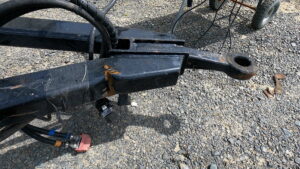
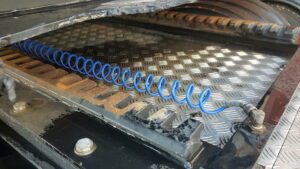
A truck with a drawbar trailer or full trailer (also called a dog trailer in Australia), will be connected using a drawbar and a bolt and pin coupling. Power and air is provided using suzi coils. A full trailer needs…

Read more ›

How can you safely load a ute or pickup truck?

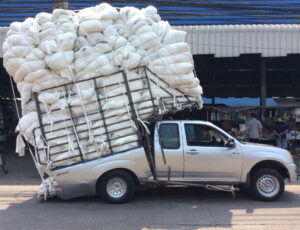
The loading area of a ute can either be: Wellside (with or without flat cover) Wellside with canopy Flat deck (with or without tailgate and side gates) Custom (e.g. toolboxes, kennels, racks, cages, etc) Each type of ute is loaded…

Read more ›

How truck drivers damage trailer drawbars and couplings

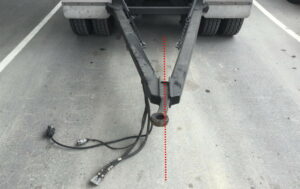
A full trailer differs from a semitrailer in that it has an A-frame drawbar attached to a dolly at the front of the trailer, rather than a kingpin and skidplate. Full trailers (also called pull trailers) are coupled using a…

Read more ›

Is it safe to drive with your car’s interior light on?

If you compare a 1950s car to a 2020s car when sitting inside while driving at night, you’ll notice just how dark the 1950s car is. Modern vehicles have screens and dials which are illuminated, plus they have a plethora…

Read more ›

Can you drive everywhere in reverse?

Let’s say you’re awesome at driving in reverse. Can you drive everywhere backwards? The answer is no, for several reasons. Firstly, the law states you can only drive in reverse as far as necessary to perform a manoeuvre. You will…

Read more ›

What jobs can you do if you’ve been a truck driver?

When decide on a career change and don’t want to drive trucks anymore, what are your options? At the moment, there’s a huge shortage of truck drivers, so experienced drivers are likely to be snapped up and there will be…

Read more ›

How does your suspension and tyre pressure contribute to rollover risk?

Many drivers have suffered a rollover and even more have lifted an axle or two, unaware that it happened. These drivers are frequently driving their trucks on the limit without realising it because most drivers never get rollover prevention training.…

Read more ›

How to prevent overloading on a truck’s axles by sliding the fifth wheel

Getting your load’s centre of gravity as low as possible and having it restrained securely are two of the three main tasks when transporting a load. The third is ensuring that you’re not overloading an axle (if you don’t know…

Read more ›

Why do drivers break the speed limit?

The majority of drivers break the speed limit. Mostly it’s deliberate, sometimes it’s accidental. Almost always, it’s not required, but very occasionally it’s to get a driver out of danger (e.g. a misjudged overtaking manoeuvre). While over 80% of drivers…

Read more ›

What happens if your car battery runs flat?

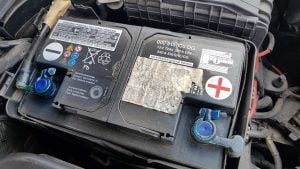
In a car with a petrol or diesel engine, the battery has a life of around 5-6 years, assuming it’s being used reasonably regularly, but there are ways in which you can reduce this, one of them being letting your…

Read more ›

Why do trucks have a lot of gears?

Trucks are often classified in according to the class of licence required to drive them. A class 2 truck can have gross laden weight of 18000kg, a class 4 truck is 18000kg and over without a trailer and a class…

Read more ›

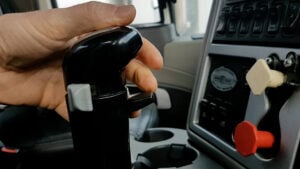
How many gears in a Roadranger truck gearbox?

The most common type of Roadranger gearbox has 18 forward speeds and 4 reverse speeds. However, older trucks might have 9, 13 or 15 forward speeds and you can identify them by the style of the gearstick. Roadranger ‘boxes are…

Read more ›

What cab checks should you do in your truck for a pre-trip inspection?

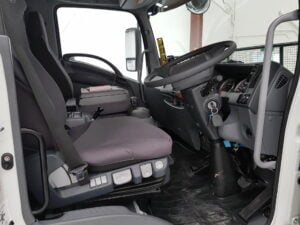
The cab is your work area, so it needs to be safe and comfortable. A comfortable cab helps the driver avoid fatigue. Knowing how to do a pre-trip inspection means you’ll find issues with the truck before they become major…

Read more ›

‹ Older posts
Newer posts ›
Recent Resources
  • Interpreting Manufacturer Load Capacity Specifications
  • PPE, safety equipment and hazardous substances in permitted work
  • How to find your real driving triggers (and why most drivers get it wrong)
  • PPE Requirements for Truck Loader Crane Operators and Ground Crew
  • Atmospheric testing for Permit Issuers as part of the permit to work system
  • The pre-drive routine: why the first few minutes of your driving shift matter most
  • What are outriggers or straddle legs on a forklift or electric pallet jack?
  • Preparing the worksite
  • What is a forklift paper roll clamp, and how does it work?
  • Manual vs Automatic: Which Works Best in Rural Driving

Licences and Courses

  • Car
  • Motorbike
  • Heavy Vehicles
Car
  • Core
  • Behaviour
  • Parking
  • Emergencies
  • Road position
  • Intersection
  • Theory
  • Signs
Motorbike
  • Bike-specific questions
  • Core
  • Behaviour
  • Parking
  • Emergencies
  • Road position
  • Intersection
  • Theory
  • Signs
Heavy Vehicles
  • Class 2
  • Class 3-5
  • Core
  • Behaviour
  • Parking
  • Emergencies
  • Road position
  • Intersection
  • Theory
  • Signs

Vehicle and workplace training

  • About
  • Resources
DT Driver Training TR Group
About
  • About us
  • Contact us
  • Privacy Policy
  • Terms and Conditions
Resources
  • Homepage
  • Driving Tests Android App
  • Driving Tests iPhone App
  • Getting your learner licence
DT Driver Training TR Group
Copyright 2010-2026 DT Driver Training Ltd, PO Box 12541, Penrose, Auckland, 1642. All rights reserved. Questions and images are used with permission from NZTA; question answers are proprietary.