
The safe operation of gantry cranes is paramount to prevent accidents, protect workers, and maintain operational efficiency. This article outlines the critical safety features that every gantry crane should have to ensure safe operation.
Structural Integrity and Design Features
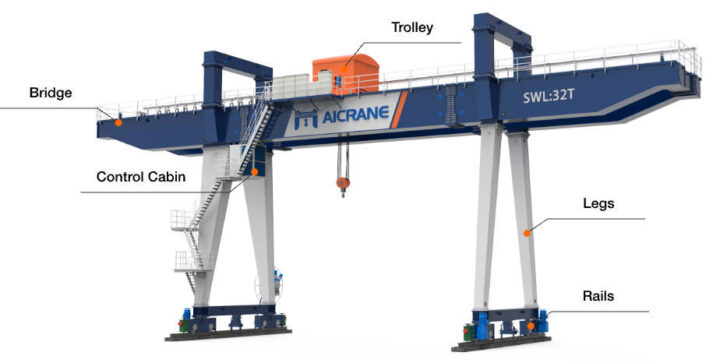
The foundation of gantry crane safety begins with proper structural design. Gantry cranes must be designed and constructed in accordance with recognised standards such as AS 1418 and AS 2550. The crane’s structure should be capable of withstanding the forces likely to be imposed on it, including the dead weight of the crane, the weight of the load, dynamic forces caused by movement, and environmental factors like wind and seismic activity.
For gantry cranes operating in earthquake-prone areas, it’s particularly important that seismic requirements are considered in the design calculations. The stability factor should comply with AS 1418.4 or an equivalent standard, with a zone factor of 1.2 typically applied to all cranes. Wind forces should be calculated according to the current version of AS/NZS 1170.2 or equivalent standards.
Adequate clearance between the crane and fixed objects is essential. A minimum clearance of 750mm is recommended for overhead clearance, with at least 600mm for side clearances. This helps prevent collisions with surrounding structures and provides a safe working space.
Obviously, if the overhead items are power lines, then it needs to be four metres or 10 metres, depending on the lines’ voltage.
Braking Systems
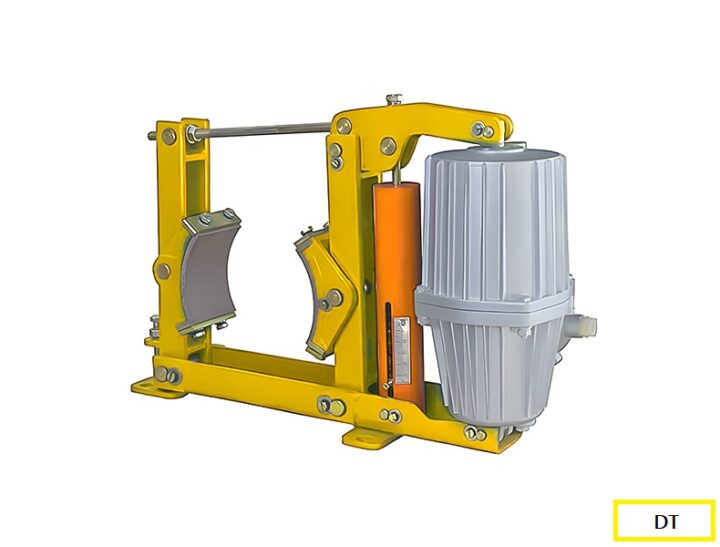
Effective braking systems are crucial for controlling crane movements and preventing accidents. Gantry cranes should be equipped with brakes on all motions—hoist, trolley, and bridge. These brakes should engage automatically when controls are released or if power fails. This fail-safe functionality ensures that loads remain suspended safely even in emergency situations.
The brake systems should be regularly tested and maintained to ensure their proper functioning. During pre-operational checks, operators should verify that all brakes are working correctly and are capable of holding loads in position.
Limiting and Indicating Devices
Various limiting and indicating devices help prevent crane overloading and ensure safe operation within the crane’s capabilities. Load moment indicators (LMIs) or rated capacity indicators (RCIs) continuously monitor the weight being lifted and provide warnings when approaching the crane’s maximum capacity.
Limit switches are essential safety features that prevent the crane from moving beyond safe operational boundaries. These include upper and lower hoist limits to prevent over-hoisting or unwinding the rope, as well as bridge and trolley travel limits to prevent collisions with end stops.
For larger gantry cranes operating on shared runways, anti-collision devices are vital. These systems use technology such as laser, infrared, or radio frequency to detect other cranes or obstacles and prevent collisions by automatically slowing or stopping the crane.
Control Systems

The control system of a gantry crane plays a significant role in operational safety. Controls should be clearly marked, intuitive to use, and designed to return to the neutral position when released. This prevents unintended crane movement if an operator lets go of the controls.
Emergency stop buttons should be prominently positioned, clearly marked in red, and easily accessible from all operating positions. When activated, these buttons should immediately cut power to all crane motions. Testing of emergency stop functionality should be included in pre-operational checks.
For pendant-controlled cranes, the pendant should be supported independently of its electrical conductors, and if made of metal, it must be properly earthed. For radio-controlled cranes, the system should include features such as a key switch to prevent unauthorised use, a controlled reception range, and automatic de-energisation if the signal is lost or interfered with.
Electrical Protection
Electrical safety features are crucial for preventing electrical accidents and ensuring proper crane function. All electrical installations should comply with AS/NZS 3000 (Australian/New Zealand Wiring Rules). For electrically powered cranes, systems should be designed so that brakes automatically apply in the event of power failure.
Phase failure protection should be incorporated so that if one phase fails, all phases are shut down. This prevents motor damage and potential unsafe operation. Electrical emergency stop devices should be installed as part of the control system to provide immediate shutdown capability in dangerous situations.
For cranes using electromagnetic lifting attachments, a backup system (such as a battery) should be available to maintain the magnetic field if power to the magnet fails, preventing dropped loads.
Operator Protection
Operator safety is enhanced through various protective features. For cabin-operated cranes, the cabin should provide clear visibility of the operating area and be equipped with features like comfortable seating, climate control, and protection from falling objects if necessary.
Access to the crane should be safe and adequate, with properly designed ladders, platforms, and guardrails. Safety lines, when fitted, should comply with AS/NZS 1891 (Industrial Fall Arrest Systems and Devices). An emergency escape system should also be available to operators in case of power failure or other emergencies.
For outdoor cranes, an anemometer (wind speed indicator) should be installed to alert operators when wind speeds exceed safe operating limits. This is particularly important for larger gantry cranes with substantial wind exposure.
Load Handling Safety

Safety features related to load handling prevent accidents during lifting operations. Hooks should be equipped with safety latches to prevent loads from accidentally detaching. The hook and lifting gear should be regularly inspected for signs of wear, deformation, or damage.
Overload protection systems prevent the crane from lifting loads beyond its rated capacity. These systems may include load cells, mechanical devices, or electronic systems that cut power to the hoist when an overload is detected.
For some applications, load rotation control systems may be necessary to prevent uncontrolled spinning of loads. Tag lines, used in conjunction with proper rigging techniques, can help control load movement during lifting and placement operations.
Warning Systems
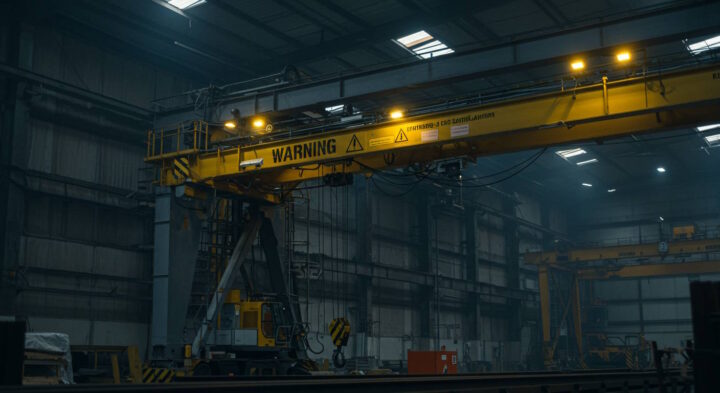
Visual and audible warning systems alert workers to crane operations, reducing the risk of accidents. Travel warning lights or sounds should activate when the crane is in motion, alerting nearby workers to the potential hazard. For outdoor cranes, aircraft warning lights should be fitted to the highest part of the crane if it is located near flight paths.
Warning signs and capacity charts should be clearly displayed on the crane, informing operators and other workers of the crane’s limitations and potential hazards. All controls should be clearly labelled to prevent confusion during operation.
Maintenance and Inspection Features
Design features that facilitate maintenance and inspection contribute significantly to long-term safety. Access platforms and walkways should be provided to allow safe access for maintenance personnel to all parts of the crane requiring regular inspection or maintenance.
Lubrication points should be easily accessible, and components requiring regular inspection, such as wire ropes, sheaves, and brakes, should be visible or have inspection ports. Documentation, including maintenance schedules, operating manuals, and inspection records, should be readily available to maintenance personnel.
Conclusion
The safety features outlined in this article represent the minimum requirements for safe gantry crane operation in New Zealand workplaces. It’s essential that crane owners, operators, and maintenance personnel understand the importance of these features and ensure they are properly maintained and used.
Regular inspection, testing, and maintenance of safety features are as important as their initial installation. A comprehensive safety management system that includes thorough training for gantry crane operators, clear operational procedures, and regular equipment inspections will maximise the effectiveness of these safety features.
By investing in and properly maintaining these key safety features, organisations can protect their workers, prevent costly accidents, and ensure efficient, reliable crane operations. Remember that safety is not just about compliance with regulations—it’s about creating a culture where the wellbeing of workers is prioritised and where safety considerations are integrated into every aspect of crane operation.


Darren has written over 3000 articles about driving and vehicles, plus almost 500 vehicle reviews and numerous driving courses. Connect with him on LinkedIn by clicking the name above