• A TR Group Site
  • Help
  • Cart
Driving Tests DT logo small
Driving tests
  • Learner licence
    • Car
    • Motorbike
    • Heavy vehicle
    • Learner Licence Plus
  • Courses
  • Tourist
  • Resources
  • Learn
  • Resources
  • Learner licence
    • Car
    • Motorbike
    • Heavy Vehicle
    • Learner Licence Plus
  • Your courses
    • Enrolled courses
  • View all courses
  • Tourist
  • Resources home
  • iOS application
  • Android application
  • Contact us
  • Terms and conditions
  • Privacy
  • Home
  • /
  • Resources
  • / Motorbike ( / Page 3)

Motorbike Resources

Using a life coach to help you pass your driving test

If you’ve been struggling to find the motivation or confidence to go for your driving licence, or you have fears and phobias about driving, perhaps a life coach can help you. Having a driving licence will give you added mobility…

Read more ›

Using hypnotherapy to help you pass your driving test

There are a few techniques and therapies you can use to give you more chance of passing your driving test and in this article we cover hypnotherapy. Hypnotherapy can be used to improve your confidence, reduce nervousness, improve your spatial…

Read more ›

Using visualisation techniques to help you pass your driving test

Visualisation is a technique commonly used by sportspeople and musicians to accustom their brains to performing a particular action. It is simply the process of imagining something happening – a kind of mental rehearsal just like you would rehearse for…

Read more ›

Use affirmations to help with your driving test

Affirmations or ‘self-talk’ is a common and simple way in which you can improve your performance. You can use it to help you improve your memory so that you remember the Road Code quicker and more effectively, reduce nervousness when…

Read more ›

Skidding explained: oversteer, understeer, hydroplaning and wheelspin

A skid is where your vehicle’s tyres lose traction on the road surface and it can be caused by too much acceleration, too much braking or too much turning force for the road surface. Some of the advice you will hear…

Read more ›

Highside and lowside motorcycle crashes explained (+video)

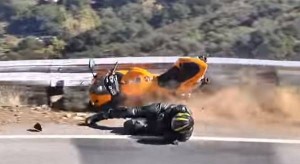
Two types of crash a likely to occur on corners when riding a motorbike: the lowside and highside crash. Highside crashes The highside crash is the most dangerous of the two types of crash because the action of the motorbike…

Read more ›

Carrying pillion passengers

You must have your full class 6 licence before you are allowed to carry a pillion passenger. Your bike must have a seat and foot pegs for the passenger. If it doesn’t, there’s a risk they might get a limb…

Read more ›

Choosing motorbike protective clothing

While it’s only a legal requirement to wear a helmet when riding a motorbike, if you come off, the coarse road surface will act like a cheese grater on your skin and you’ll be left with serious (and often disfiguring)…

Read more ›

Choosing glasses, sunglasses or goggles for motorbike riding

Almost all motorcyclists will wear glasses or goggles at some time when riding a motorbike, whether to correct vision, dull the bright sun or protect the eyes. Before you purchase a pair of glasses, though, you’ll need to make sure that…

Read more ›

Rumble strips: what are they used for?

Rumble strips, raised profile line markings or audio tactile profiled (ATP) road markings, are road markings that generate noise and vibration when you drive over them. The lines are painted like normal road markings except the machine drops ridges (also…

Read more ›

Signage clutter: what is it and how is it reduced?

Roading authorities need to convey a certain amount of information to help you drive. Regulatory and advisory signs, street signs, road markings and traffic signals have to compete against advertising hoardings, vehicle signage and other distractions on and off the…

Read more ›

Licence will expire sooner for learner and restricted drivers

As we reported back in April, NZTA was looking for input into a law change to limit the amount of time drivers and riders spend on their learner or restricted licence. Changes to the Land Transport (Driver Licensing) Rule were announced…

Read more ›

Seat belt law in New Zealand

Wearing safety belts The driver is responsible for ensuring all passengers under 15 years of age wear seat belts. Passengers 15 years of age and over are responsible for putting seat belts on themselves. If you are riding a motorbike,…

Read more ›

Tourist information signs in New Zealand

Historic tourist information signs were yellow pole-mounted signs, and you can still see some of these around in rural areas. Newer signs are brown with white writing. Not all tourist facilities warrant a sign. NZTA divides tourist facilities into five…

Read more ›

Where can you park and for how long?

Parking permission signs Parking signs are usually blue with white writing. Apart from 5-minute parking, they are in increments of 10 minutes up to 60 minutes, then in 60-minute intervals up to 240 minutes. At the edge of each parking…

Read more ›

Traffic calming measures explained (plus photos)

Traffic engineers look at engineering, education and enforcement when designing traffic environments. In this article we’ll show you many of the different ways in which traffic engineers make roads safer by using measures to slow drivers down where there might…

Read more ›

The Give Way Rules in New Zealand

Let’s look at a number of examples of giving way which can help you determine what to do at many kinds of intersections in New Zealand (and around the world). If you’ve been confused about the rules before, these simple…

Read more ›

Traffic lights in New Zealand

Our traffic lights conform to international standards in terms of their colour, but we have slightly different phasing than some countries. Red lights A red light always means stop. You must wait until the green light shows before you can…

Read more ›

Speed limits in New Zealand

This is a convenient list of speed limits in New Zealand for all types of vehicles. For cars and motorbikes the open road speed limit is 100km/h if the conditions are good. Other vehicles have restricted limits, though. The default…

Read more ›

Motorcycle visibility and position

Your visibility comes from the clothes you wear while riding, the lights on your bike, and the position your put your motorbike in on the road. Your position won’t stay static: you will change where you are riding on the…

Read more ›

‹ Older posts
Newer posts ›
Recent Resources
  • The pre-drive routine: why the first few minutes of your driving shift matter most
  • What are outriggers or straddle legs on a forklift or electric pallet jack?
  • Preparing the worksite
  • What is a forklift paper roll clamp, and how does it work?
  • Manual vs Automatic: Which Works Best in Rural Driving
  • Determining whether a task needs a permit
  • What happens to your licence and insurance after a careless or dangerous driving conviction?
  • What a good fleet road rage policy looks like (and how to ask for one if yours doesn’t have one)
  • Electronic Traction Control Systems: How They Help Rural Workers
  • Supporting documents for permit issuers – how to create, assemble and manage them

Licences and Courses

  • Car
  • Motorbike
  • Heavy Vehicles
Car
  • Core
  • Behaviour
  • Parking
  • Emergencies
  • Road position
  • Intersection
  • Theory
  • Signs
Motorbike
  • Bike-specific questions
  • Core
  • Behaviour
  • Parking
  • Emergencies
  • Road position
  • Intersection
  • Theory
  • Signs
Heavy Vehicles
  • Class 2
  • Class 3-5
  • Core
  • Behaviour
  • Parking
  • Emergencies
  • Road position
  • Intersection
  • Theory
  • Signs

Vehicle and workplace training

  • About
  • Resources
DT Driver Training TR Group
About
  • About us
  • Contact us
  • Privacy Policy
  • Terms and Conditions
Resources
  • Homepage
  • Driving Tests Android App
  • Driving Tests iPhone App
  • Getting your learner licence
DT Driver Training TR Group
Copyright 2010-2026 DT Driver Training Ltd, PO Box 12541, Penrose, Auckland, 1642. All rights reserved. Questions and images are used with permission from NZTA; question answers are proprietary.