It can be nerve-wracking to watch someone work at height for the first time. Even if they’ve completed all the right training courses, there’s a world of difference between a controlled working at heights training environment and an actual job site with real hazards, real distractions, and real consequences. As a supervisor, your role during this transition period is critical. Getting it right can make the difference between a worker who develops sound habits and one who picks up dangerous shortcuts.
What Does “Direct Supervision” Actually Mean?
The Health and Safety at Work Act places a duty on PCBUs to provide supervision necessary to protect workers from health and safety risks. But what does that look like in practice when you’ve got someone new to height work on your team?
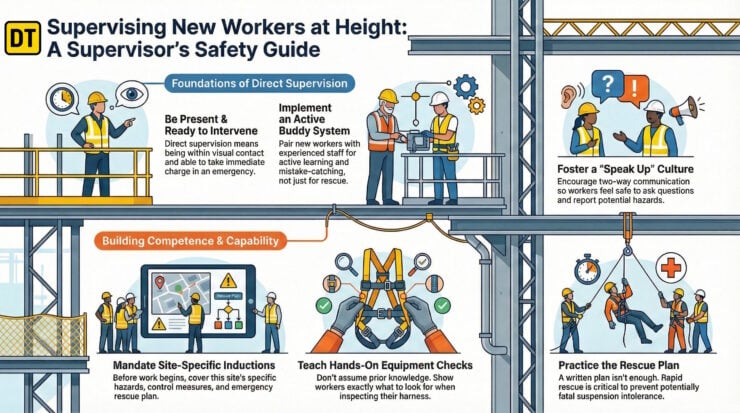
WorkSafe’s scaffolding guidelines give us a useful benchmark: direct supervision means being within reach or within visual contact. The supervising person is responsible for monitoring the work and ensuring compliance with regulations and recommended practice. Critically, they must be in a position to take immediate charge in an emergency.
That last point is worth sitting with for a moment. If something goes wrong, can you actually intervene in time? If your new worker is on a roof and you’re three levels down in the site office, the answer is obviously no. But it’s not always that clear-cut. Think about whether you can reach them quickly enough to prevent an incident from becoming a catastrophe.
Getting the Ratio Right
There’s no magic number for how many inexperienced workers one supervisor can safely oversee. The appropriate ratio depends on several factors: the level of experience and competence of each trainee, the complexity of the work being undertaken, and the risks associated with any mistakes that might be made.
A simple task on a stable scaffold with edge protection in place is quite different from working on a fragile roof with a harness system. Adjust your supervision intensity accordingly. On a high-risk job, you might realistically only be able to properly supervise one or two inexperienced workers at a time.
The Induction Isn’t Optional
Before anyone sets foot on a work platform, scaffold, or roof, they need a proper site-specific induction. This isn’t just a tick-box exercise; it’s your opportunity to make sure they understand the specific hazards present on this particular job, the control measures in place, and their role in maintaining those controls.
Persons not trained should be inducted by the system installer or other qualified persons before they are permitted to use height safety systems. They should also be supervised at all times by another person who is trained and competent. That’s straight from the best practice guidelines, and it’s non-negotiable.
Your induction should cover the rescue plan, the location of safety equipment, communication protocols, and what to do if something doesn’t look right.
The Buddy System Isn’t Just About Rescue
Workers using fall arrest systems must never work alone (that’s a clear requirement). But the buddy system serves purposes beyond emergency rescue. Pairing an inexperienced worker with someone experienced creates natural opportunities for learning, for questions, and for catching mistakes before they become incidents.
A good buddy doesn’t just stand around waiting for something to go wrong. They’re actively checking harness connections, watching for unsafe positioning, and demonstrating good practice through their own work. Choose your buddy pairings carefully; not every experienced worker has the temperament or inclination to teach.
Equipment Checks Need to Be Taught
Your new worker might know theoretically that they should check their harness before each use, but do they actually know what they’re looking for? Take the time to go through equipment inspection with them, explaining not just what to check but why each element matters.
Pre-operational safety checks should include confirming the harness is correctly adjusted (you should be able to fit a flat hand between the harness and your body, but not a closed fist), that all connections are secure, that lanyards are free from damage, and that anchor points are appropriate for the task.
Rescue Plans Require Practice
Having a rescue plan written down somewhere isn’t the same as having a rescue capability. Your inexperienced workers need to know the plan, understand their role in it, and ideally have practised at least some elements of it.
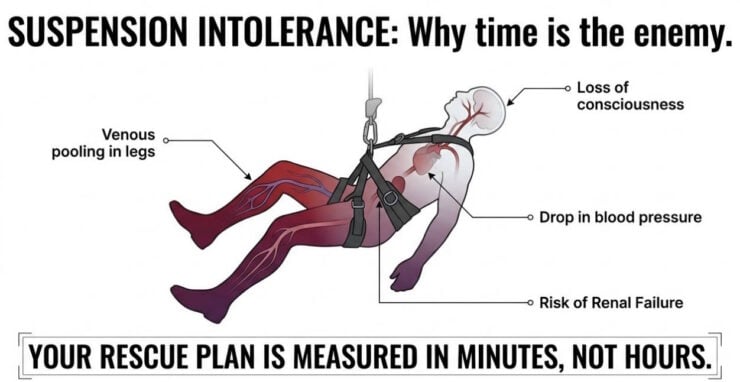
A worker suspended in a harness after a fall can develop suspension intolerance, where blood pooling in the legs can lead to loss of consciousness, renal failure, and in extreme cases, death. Time matters. Your rescue plan needs to ensure rapid recovery of a suspended person, and everyone on site needs to understand what that looks like in practice.
Watch for Complacency
Here’s an uncomfortable truth: supervisors get complacent too. After watching someone complete the same task competently a dozen times, it’s tempting to relax your oversight. But competence in one situation doesn’t automatically transfer to a slightly different one.
Keep watching. Keep asking questions. Keep reinforcing good habits. The goal is to develop workers who don’t need close supervision—but you won’t get there by assuming they’re ready before they actually are.
Communication Goes Both Ways
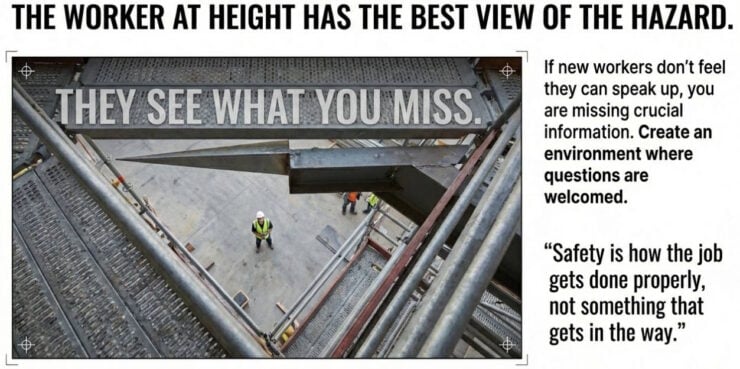
Create an environment where your new workers feel comfortable asking questions and raising concerns. The worker at height often has the best view of potential hazards. If they don’t feel they can speak up, you’re missing crucial information.
Regular toolbox talks and site meetings aren’t just for ticking compliance boxes. They’re opportunities to discuss hazards, share lessons learned, and reinforce the message that safety isn’t something that gets in the way of the job—it’s how the job gets done properly.
Building Genuine Competence
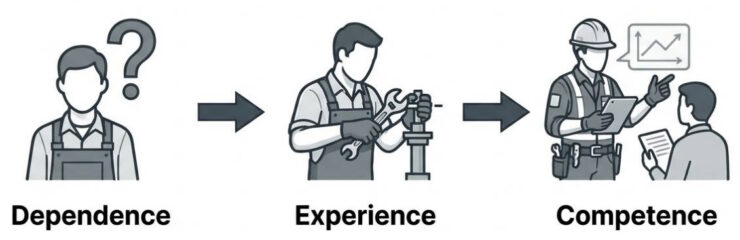
The end goal of supervision isn’t to create workers who are dependent on constant oversight. It’s to develop genuinely competent people who understand the hazards, respect the controls, and can make sound decisions when unexpected situations arise.
That takes time, patience, and consistent reinforcement. There are no shortcuts. But the investment pays off—not just in preventing incidents, but in building a workforce that understands why working safely at height matters, not just that it’s required.
Anyone using a harness system should be closely supervised by a competent person or be a competent person themselves. Your job as a supervisor is to help your workers make that transition—safely, thoroughly, and without cutting corners that could cost someone their life.


Darren has written over 3000 articles about driving and vehicles, plus almost 500 vehicle reviews and numerous driving courses. Connect with him on LinkedIn by clicking the name above