
• A TR Group Site
  • Help
  • Cart
Driving Tests DT logo small
Driving tests
  • Learner licence
    • Car
    • Motorbike
    • Heavy vehicle
    • Learner Licence Plus
  • Courses
  • Tourist
  • Resources
  • Learn
  • Resources
  • Learner licence
    • Car
    • Motorbike
    • Heavy Vehicle
    • Learner Licence Plus
  • Your courses
    • Enrolled courses
  • View all courses
  • Tourist
  • Resources home
  • iOS application
  • Android application
  • Contact us
  • Terms and conditions
  • Privacy
  • Home
  • /
  • Resources
  • / 26: Angle parking

26: Angle parking

— No Comments ↓

The aim of this lesson is for you to safely park and reverse out of an angle parking space. You’ll need to find a road with marked angle parks. It can help to read our guide on parking first.
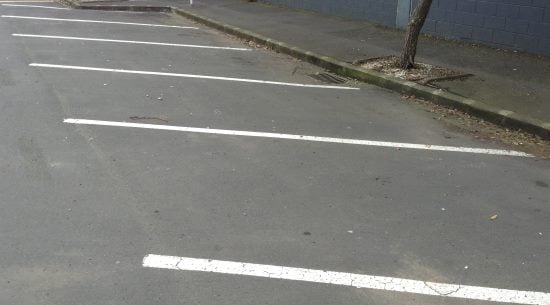
angle parking markings

Driver actions

To park:

  • Find an appropriate parking space and position your car before it. When you are practicing it’s a good idea to choose one where the vehicles on either side are parked considerately, i.e. not over the line
  • Scan for hazards, including in your blind spot (for example, for cyclists coming up the inside, or pedestrians walking in your desired parking space)
  • Indicate for at least three seconds before turning
  • When it’s safe to go move forward slowly and then turn into the parking space
  • Position your car in the centre of the parking space
  • Move to the front of the parking space and stop. Be careful here for tall kerbs that might damage your front bumper.

To reverse out of the park:

  • Check all your mirrors and blind spots for traffic and pedestrians in all directions. If your car has a system such as Rear Cross Traffic Alert, this will warn you if it detects approaching vehicles that you might not be able to see. If your car has a reversing camera, use it as a backup, not as the sole means of visibility while reversing out.
  • Put the car in reverse and find the clutch bite point (manual), or be ready to accelerate gently (automatic)
  • Release the handbrake/park brake
  • Gently and smoothly reverse your car, keeping the speed slow. Turn your wheels to the left to bring the front of the car around, taking care not to hit the car next to you.
  • Stop and check all mirrors and blind spots for hazards.
  • Select a forward gear and drive smoothly away if it’s safe to do so.

Perform the tasks at least three times.

Previous (25) | Next (27)

  • DisqusDisqus
Recent Resources
  • Why we judge other drivers more harshly than ourselves
  • Issuing a permit to work: conditions, communication and cancellation
  • Dashcam footage and the Privacy Act 2020: what your employer must do, and what you can ask for
  • Issuing a permit to work: scope, inspection and isolation
  • Interpreting Manufacturer Load Capacity Specifications
  • PPE, safety equipment and hazardous substances in permitted work
  • How to find your real driving triggers (and why most drivers get it wrong)
  • PPE Requirements for Truck Loader Crane Operators and Ground Crew
  • Atmospheric testing for Permit Issuers as part of the permit to work system
  • The pre-drive routine: why the first few minutes of your driving shift matter most

Licences and Courses

  • Car
  • Motorbike
  • Heavy Vehicles
Car
  • Core
  • Behaviour
  • Parking
  • Emergencies
  • Road position
  • Intersection
  • Theory
  • Signs
Motorbike
  • Bike-specific questions
  • Core
  • Behaviour
  • Parking
  • Emergencies
  • Road position
  • Intersection
  • Theory
  • Signs
Heavy Vehicles
  • Class 2
  • Class 3-5
  • Core
  • Behaviour
  • Parking
  • Emergencies
  • Road position
  • Intersection
  • Theory
  • Signs

Vehicle and workplace training

  • About
  • Resources
DT Driver Training TR Group
About
  • About us
  • Contact us
  • Privacy Policy
  • Terms and Conditions
Resources
  • Homepage
  • Driving Tests Android App
  • Driving Tests iPhone App
  • Getting your learner licence
DT Driver Training TR Group
Copyright 2010-2026 DT Driver Training Ltd, PO Box 12541, Penrose, Auckland, 1642. All rights reserved. Questions and images are used with permission from NZTA; question answers are proprietary.