
Winter driving is predominantly characterised by less traction available on the road. Basically, your tyres have less grip because the road’s surface will have ice, snow, mud or water on it.
As well as slippery road surfaces, this is a comprehensive list of the hazards for drivers in winter:
- Greater risk of rockfall due to rain and the action of freezing/thawing behind rocks on slopes
- Greater risk of landslides and washouts due to waterlogged soils – this increases the risk of road closures and diversions that are inconvenient to drivers
- More incidences of wind-blown debris due to storms breaking branches, uprooting trees and taking other materials such as iron off roofs
- Higher risk of flooding and deep standing water
- Lower visibility due to gloomy weather, shorter days, and more rain and fog
- Higher risk of being stranded due to impassable roads
- More sunstrike due to the angle the sun rises and that it sets and rises around the time people drive to work
- Increased numbers of potholes due to water and frost accelerating erosion on the road’s surface
- Pedestrians with reduced visibility of traffic around them due to wearing hooded jackets, carrying umbrellas and being more eager to rush to get out of the weather
- Lower visibility due to windows fogging more readily and drivers not clearing ice from their screens before setting off
- Lower visibility of road markings and signs making it harder to anticipate what the road is doing ahead
Our course, Driving in Difficult Conditions, covers all these scenarios and more, with comprehensive examples of what can go wrong and what you should do to reduce the risk when driving in winter.
It contains a list for your emergency kit, how to plan your route and how to deal with any incidents on the road.
While the main driving advice to keep you safe is to slow down and leave more room between you and the vehicle in front, there are other driving techniques to help keep you on the road which are explained in the course, including cornering techniques and lines, braking and stopping distances and how to read the road ahead.
Special considerations for heavy vehicles in winter
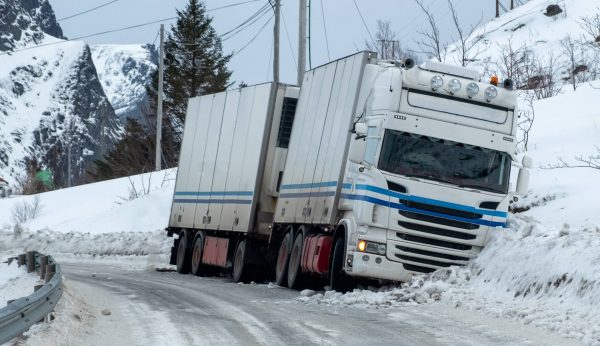
Stopping distances are increased, as with cars and utes, but there are other issues that make driving a heavy vehicle more difficult:
- Loading, unloading, coupling, decoupling and doing a pre-trip inspection can be unpleasant and more difficult in bad weather
- Journey times are increased, meaning more pressure on drivers, especially if they are paid by the load
- Risk of being blown over in strong winds, particularly when driving an empty high-sided vehicle
- Increased fuel usage due to standing water on the road creating more rolling resistance, and slower speeds leading to poor fuel economy
- Increased risk of becoming stuck on steep inclines if traction is lost.
The best question to ask yourself before driving in bad weather is if you actually need to drive at all. If you can delay your trip until the weather improves, you reduce your risk of having a crash.


Darren has written over 3000 articles about driving and vehicles, plus almost 500 vehicle reviews and numerous driving courses. Connect with him on LinkedIn by clicking the name above
 Disqus