
While most people know the basic rules of the road, there are many more unwritten rules or obscure rules that help keep traffic flowing smoothly and reduce incidences of road rage. If you can practice most of these, you’ll find your journey is smoother, you arrive feeling less stressed and other motorists will have had a better experience on the road.
Give thanks to other drivers
A friendly wave is always appreciated, but when should you do it? If someone is courteous and gives way to you when they didn’t necessarily need to, give them a wave. This includes if someone lets you out of an intersection or driveway in busy traffic or if you are on a narrow road and another motorist coming towards you stops and waves you through first.
Motorcyclists – if vehicles change their lane position to let you filter through, give them some acknowledgement.
If a slow truck signals to you that it’s safe to pass, give the driver a wave – he or she is trying not to hold you up, but also has to be careful they don’t move too far left and sink into the road’s shoulder.
You don’t really need to wave on one-way bridges or when merging like a zip. Also, don’t compromise your grip on the steering wheel or handlebars if it would be dangerous – you can nod, smile or raise a finger, too (but not the middle one…); try to avoid flashing your lights, though, as that signal is ambiguous. Which leads us to…
Merge like a zip
When two streams of traffic are merging, one goes from the left, then one goes from the right (unless someone is letting more traffic in). Merging like a zip is the most effective way of combining two traffic streams.
Park in the centre of parking bays
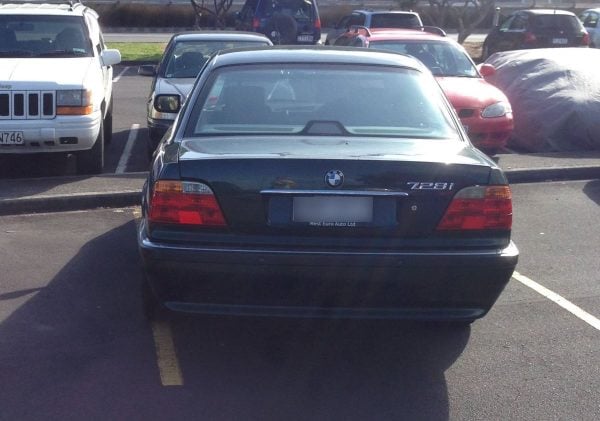
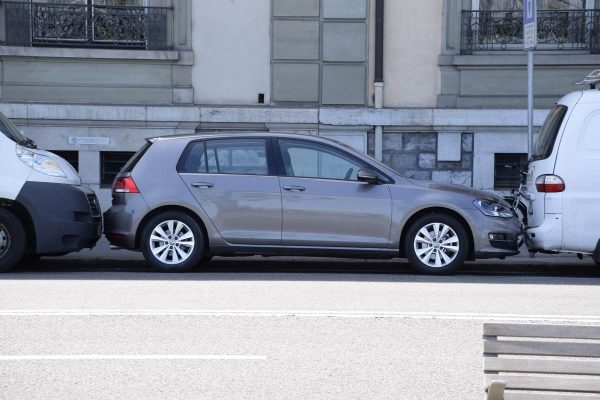
Cars are gradually getting wider and wider, but parking bay sizes seem to be stuck in the 1960s. In bay parking, park in the middle of the lines so that you and the drivers next to you have enough room to open your doors. In parallel parking, leave an equal distance front and back between the road lines. If there are no lines, give other drivers at least a metre front and back if possible (in some countries, this is a legal requirement). These strategies help reduce damage to your vehicle from accidental manoeuvres.
Don’t jump queues in traffic
Your time isn’t any more valuable than anyone else’s time. If there’s a queue of traffic, don’t drive by it and then try to force your way in at the last minute. Which leads us to…
Get in the correct lane early
If you’re diving across lanes at the last minute, you’ll most likely force other drivers to brake to accommodate you. This has ripple effects back through the traffic, leading to jamitons and phantom traffic jams, especially on motorways. If you know where you’re going, move across into the lane in plenty of time. You definitely shouldn’t be changing lanes at the point where the dashed white line becomes a solid white line.
Fix your smoky vehicle
No one wants to be breathing your fumes, whether they’re coming through the air conditioning or in through an open window. Motorcyclists and cyclists get it pretty bad in heavy traffic. Plus, think about the environment.
Leave gaps for traffic to enter and exit side roads
If you block traffic coming towards you from turning right it’s probably contributing to blocking traffic in its lane. Even if there are no cross-hatches or keep clear signs, be aware of this.
Be aware of your vehicle’s noise
When you’re on the open road, go for it with the stereo if you want to (but be aware that loud music is a distraction and means you can’t hear emergency service vehicles), however, when you’re parked up in a residential area, waiting outside an apartment block or driving quiet suburban streets, other people don’t want to listen to your music. If you desperately want people to share an experience with you that you are having, do a poetry slam (it’s marginally less annoying).
Also, there’s no reason to toot your horn as you leave someone’s house, especially not if it’s late at night – the person you are tooting to probably cringes that you’ve done it. The only reason you should use the horn on your vehicle is to warn another driver of your presence.
Revving your vehicle isn’t acceptable either. Unless it’s a V12 Lamborghini, in which case it’s a symphony to the ears.
Petrol stations
If the station is busy, once you’ve finished refuelling, pull into a parking bay so that others can refuel, rather than blocking the pump. This will possibly give the attendant an adrenalin surge as they initially think you are trying to drive off without paying, but they’ll soon see your noble intentions and their faith in humanity will be restored.
Signal
Easy enough – just let people know where you intend on going. If you’re looking for a driveway and you’re driving slowly, you should at least have your indicator on so that you give a clear signal to others that they can overtake you
Don’t dawdle
When the lights go green, quickly check left and right for other road users, then get a move on. Rather than looking at your phone, you should be looking at the lights. A two-second delay by you means one fewer cars gets through the lights. They then have to sit and idle, increasing local pollution.
Similarly, when you get on the motorway, get a move on – the on-ramp is there for you to get up to motorway speeds, not for you to enter the motorway at 50km/h. Which leads us nicely to…
Speed up or move over
The weather’s good, the road is dry, why are you doing 80km/h when it’s safe to do 90km/h or 100km/h? Traffic flows most smoothly when everyone is travelling at a constant speed. If you do have to drive slowly, move over and make it easy for people to pass – they might even give you a wave!

Darren has written over 3000 articles about driving and vehicles, plus almost 500 vehicle reviews and numerous driving courses. Connect with him on LinkedIn by clicking the name above
 Disqus