
If you’ve ever wondered why there’s such a fuss about digging near fibre optic cables, you’re in the right place. These tiny glass threads, no thicker than a human hair, are absolutely crucial for our modern world. They’re the backbone of our internet, phone calls, and telly services. Unlike the old copper cables that many of us grew up with, fibre optic cables use light to send information, making them heaps faster and more reliable.
Why Fibre Optic Cables are Different from Other Services
When you’re operating your digger or excavator, hitting any underground service is bad news. But fibre optic cables are especially delicate. Unlike power cables or water pipes, which are pretty sturdy, fibre optic cables are made of glass fibres. Imagine trying to fix a broken drinking straw—that’s child’s play compared to fixing a broken fibre optic cable!
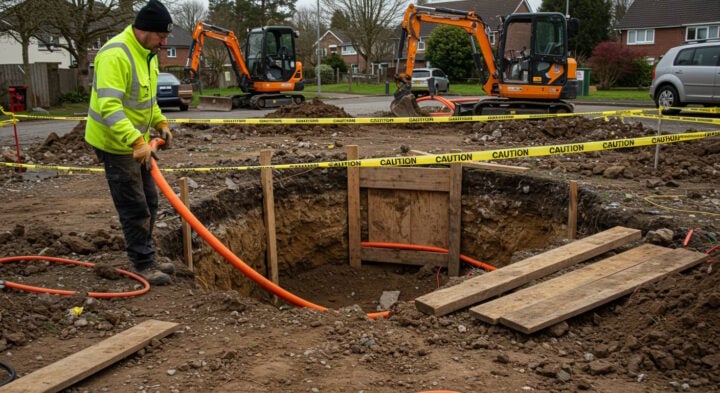
The Real Cost of Damaged Fibre Optics
When you accidentally snag a fibre optic cable with your excavator, it’s not just a simple repair job. One small nick can affect thousands of homes and businesses. Hospitals losing their internet connection, EFTPOS machines stopping at the dairy, and emergency services having communication troubles might be a consequence of a broken fibre connection. IThe repair costs can be astronomical too—we’re talking tens of thousands of dollars, and that’s not counting the losses businesses face while they’re offline.
How to Spot Fibre Optic Cable Locations
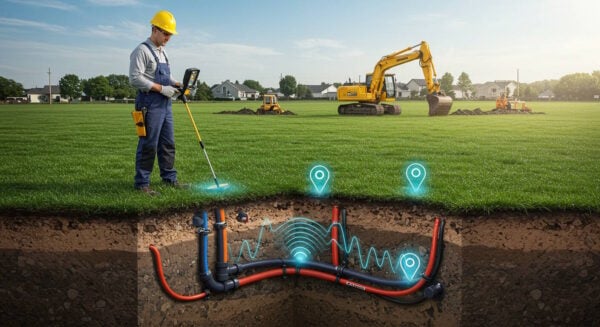
Before you even think about firing up your machine, you need to know what’s under your feet. Don’t just rely on visual markers as they can move over time or get damaged.
The smart thing to do is to get in touch with “Before U Dig” services. They’ll provide you with detailed maps and information about all the services in your area, including those precious fibre optic cables.
Safe Digging Practices Near Fibre Optics
Now, once you know where these cables are, you’ve got to treat them with respect. The first rule is to keep your machine at least a metre away from where you reckon the cable is. Instead of going straight in with the bucket, use hand tools to carefully expose the cable’s exact location.
Here’s a trick that experienced operators swear by: imagine there’s an invisible shield around the cable that extends a metre in each direction. If you’re working within that zone, you need to be extra careful, mate. No aggressive digging, no quick movements, and definitely no assuming you know exactly where the cable runs.
The Importance of Potholing
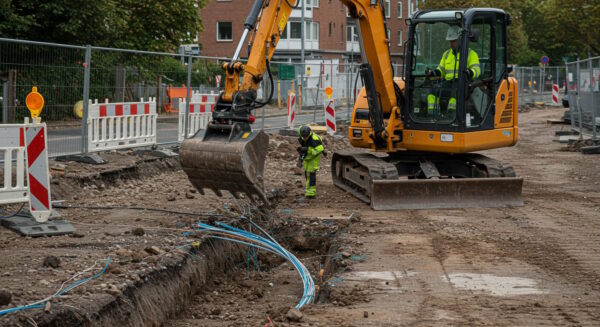
One of the best techniques we use in New Zealand is called potholing. It’s like playing a careful game of “find the cable” without actually touching it. You dig small test holes by hand to locate the exact position of the cable. It takes more time, but it’s way better than dealing with a broken cable!
When you’re potholing, you’ll often find that cables aren’t exactly where the plans show them. Sometimes they’re a bit deeper or shallower, or they might run at a slightly different angle. That’s why we never take the plans as gospel—they’re more like a general guide.
What to Do If You Accidentally Hit a Cable
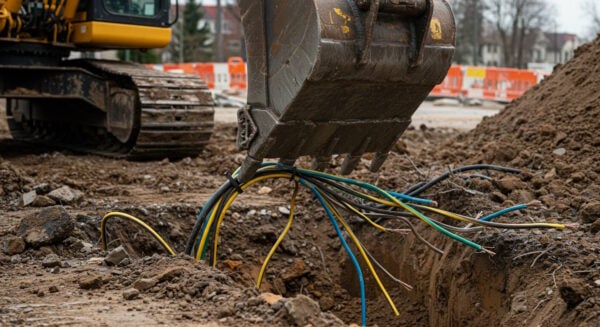
If things go pear-shaped and you do hit a fibre optic cable, don’t panic and don’t try to fix it yourself! Even if the damage looks minor, like a small nick in the outer coating, it could be causing major drama inside the cable.
The moment you suspect you’ve hit a cable, stop your machine immediately. Don’t try to pull it free or cover up the damage. That’ll only make things worse, trust me. Call your supervisor straight away and get them to contact the cable owner. Most fibre optic cables in New Zealand are owned by companies like Chorus or local fibre companies, and they need to know about any damage pronto.
Emergency Response Procedures
While you’re waiting for the experts to arrive, there are a few important things to do. First, secure the area—you don’t want anyone else accidentally making the situation worse. Put up some barriers or warning signs if you’ve got them. Keep track of exactly where the damage occurred—take photos if you can, but don’t move anything.
Remember, fibre optic cables don’t carry electricity like power cables do, so you’re not in danger of electrocution. However, never look directly into a broken fibre optic cable. The laser light they use to transmit data can seriously damage your eyes. It’s invisible but properly powerful!
Training and Certification Requirements
If you’re operating machinery near fibre optic cables, you should have completed proper training, including excavator training. This usually includes understanding how to read service plans, knowing the different types of underground services, and learning safe digging practices.
Many companies also require specific certifications for working near critical infrastructure. It’s worth getting these qualifications—they make you more valuable as an operator and help keep everyone safe. Plus, they give you the confidence to handle tricky situations when you’re working near sensitive services.
Modern Technology and Cable Protection
These days, we’ve got some choice technology to help us work safely around fibre optic cables. Ground penetrating radar (GPR) can show us what’s underground before we start digging. Some modern excavators even come with systems that warn you when you’re getting too close to known service locations.
While this technology is brilliant, it’s not perfect; it’s just another tool in our kit, not a replacement for careful work practices. The best operators use a combination of technology, planning, and good old-fashioned careful digging to keep those cables safe.
Future Developments in Cable Protection
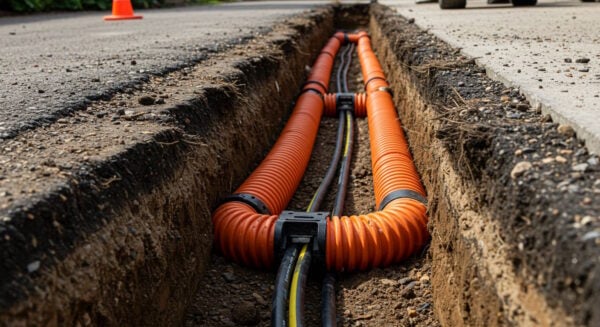
Looking ahead, things are getting even more interesting. There’s talk of smart cables that can detect when they’re being disturbed and send warnings before any damage occurs. Some companies are developing new types of protective casings that make fibre optic cables more resistant to accidental strikes.
But until these developments become standard, we need to stick to our careful approach. The consequences of damaging these cables are just too serious to take any risks.
Final Thoughts
At the end of the day, working safely around fibre optic cables comes down to respect and patience. These cables might be small, but they’re crucial to keeping our country connected. Taking the extra time to locate them properly and dig carefully around them isn’t just about avoiding costly mistakes—it’s about being a professional operator who takes pride in doing the job right.


Darren has written over 3000 articles about driving and vehicles, plus almost 500 vehicle reviews and numerous driving courses. Connect with him on LinkedIn by clicking the name above
 Disqus