
Difficult driving conditions are not limited to snow, ice, or heavy rain on sealed roads. Many real-world challenges begin where the seal ends, and they’re exacerbated by bad weather:
- Wet grass beside rural roads
- Gravel tracks that turn to mud after rain
- Steep access roads, farm tracks, or forestry entrances
- Washouts and ruts
- Snow-covered side roads and driveways.
Utes and SUVs are often used in exactly these environments, which is where understanding 4WD systems becomes important. For a deeper understanding, we recommend taking this four-wheel drive training course. If you have a 2WD vehicle, you must pay extra attention before committing to conditions that may see you become stuck.
Wet Grass and Soft Ground
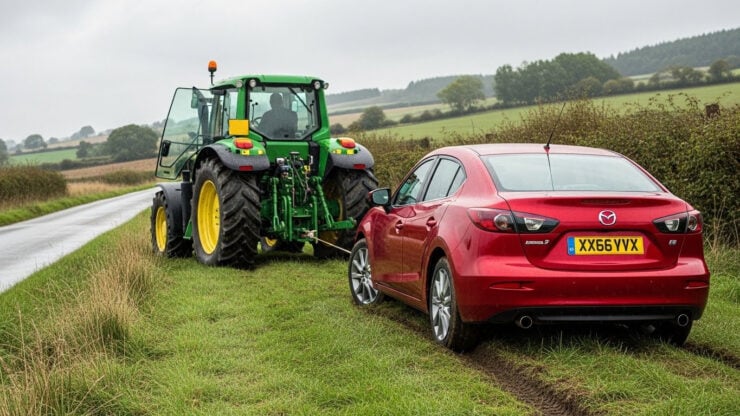
Wet grass is one of the most deceptive driving surfaces. It often looks firm but offers very little traction.
A common scenario involves pulling half over onto grass to let traffic pass or parking near a worksite. In a 2WD vehicle, the differential will allow one of the driven wheels to spin instantly, so you lose all momentum, or start to dig a trench.
With 4WD:
- Power can be distributed across all wheels (as long as there’s a limited-slip diff, or locking diff).
- Wheelspin can be reduced
- Controlled movement is possible if 4WD is engaged early
However, engaging 4WD after traction is lost is often too late. This is why understanding when to use 4WD is just as important as having it.
Gravel Roads That Turn to Clay
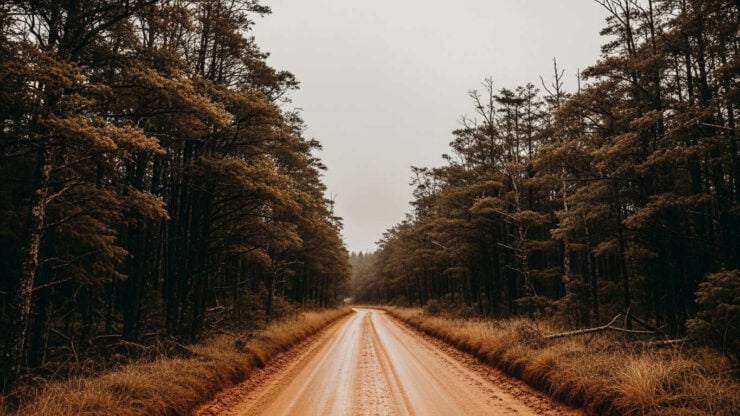
Many New Zealand gravel roads perform well in dry conditions but become extremely slippery when wet. Clay content can turn a road into a low-grip surface with little warning.
Drivers often assume 4WD will improve braking. In reality:
- 4WD helps with moving off, not stopping
- Braking distances remain largely unchanged
- Sudden steering inputs can still cause loss of control
- Cornering is more predictable and safer with 4WD (the driven front wheels help change direction on slippery surfaces).
Using low range for better engine braking and maintaining smooth inputs are learned skills, not automatic features.
For drivers with 2WD vehicles, even slower speeds may be necessary, particularly if the tread depth is less (4WD vehicles often have all-terrain tyres that provide more traction). Slopes will cause problems if momentum is lost.
Steep Driveways and Access Tracks
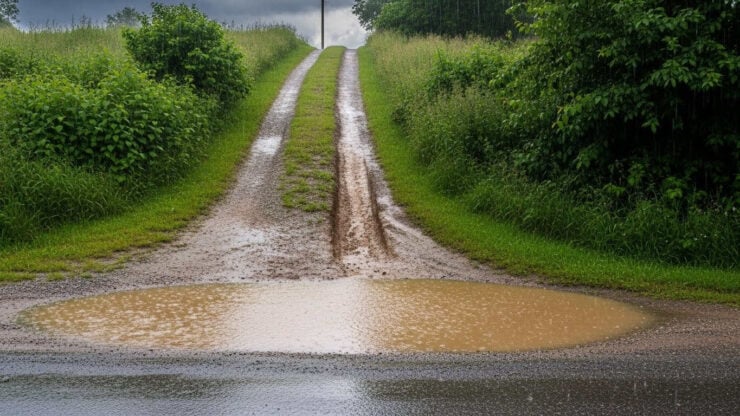
Utes and SUVs are commonly driven on steep driveways, farm tracks, and worksite access roads. Unless conditions are dry and the ground is mostly smooth, 2WD vehicles are not recommended.
These conditions introduce two key risks:
- Loss of traction on the way up
- Loss of control on the way down.
Low-range gearing allows:
- Better torque control when climbing
- Safer descents without heavy brake use
- Reduced risk of wheel lock-up or sliding.
Without training, many drivers rely too heavily on brakes, increasing the risk of sliding or brake fade.
Example 4: Snow Beyond the Main Road
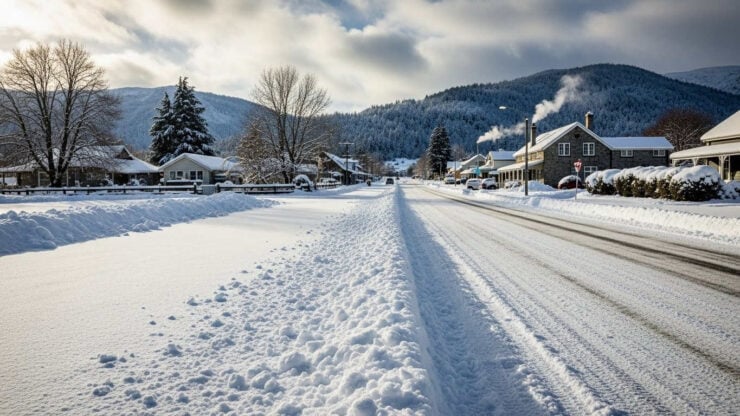
Main roads are often cleared first in winter, while side roads, driveways, and access tracks remain icy or snow-covered. 2WD vehicles can make progress, but are vulnerable on slopes and in deeper snow. 2WD drivers should carry snow chains and a shovel.
A 4WD vehicle can help a driver:
- Move off on slippery surfaces
- Maintain momentum in shallow snow.
But it does not improve stopping ability. This leads to a common and dangerous trap; increased confidence without increased control.
Drivers trained in 4WD techniques understand:
- Why tyres matter more than drivetrain
- How to manage speed and spacing
- When conditions exceed safe limits, even in 4WD.
Example 5: Changing Conditions and Limited Recovery Options
One of the biggest risks for drivers is entering conditions that gradually worsen:
- A firm track becomes muddy
- Light snow turns to ice
- A shallow puddle hides soft ground.
4WD allows drivers to proceed further, which also means they can become stuck further from help. Understanding terrain reading, momentum management, and recovery planning is essential.
Why 4WD Training Builds on Difficult Conditions Training
If you’ve done our Driving in Difficult Conditions course, you’ll be well aware of the different types of hazards: torrential rain, fog, ice, snow, high winds, sun strike, floods, slips, and so on. It focused on:
- Awareness
- Risk assessment
- Techniques for driving safely through these conditions
- Knowing when not to proceed.
With a 2WD vehicle, there’s not much more you can do. However, with a 4WD vehicle, you have much more capability. 4WD training capitalises on this by teaching:
- How 4WD systems work
- How to use the features of a 4WD vehicle
- Driving in diverse terrain (hills, side slopes, ruts, washouts), and on different surfaces (sand, rock, mud, snow)
- How to avoid getting stuck rather than relying on recovery.
A Common Misconception
A light 4WD vehicle does not make a driver safer by default. In some situations, it allows a driver to reach hazards that a 2WD vehicle would never encounter.
Training ensures that added capability is used deliberately, not reactively.
The Takeaway for Off-road Driving
If you regularly drive on unsealed or rural roads, in winter or wet conditions, on steep access tracks or worksites, then understanding 4WD operation is the logical next step after learning how to drive in difficult conditions. If you drive a 2WD vehicle, you may need to wait out poor conditions, or risk getting stuck.


Darren has written over 3000 articles about driving and vehicles, plus almost 500 vehicle reviews and numerous driving courses. Connect with him on LinkedIn by clicking the name above