• A TR Group Site
  • Help
  • Cart
Driving Tests DT logo small
Driving tests
  • Learner licence
    • Car
    • Motorbike
    • Heavy vehicle
    • Learner Licence Plus
  • Courses
  • Tourist
  • Resources
  • Learn
  • Resources
  • Learner licence
    • Car
    • Motorbike
    • Heavy Vehicle
    • Learner Licence Plus
  • Your courses
    • Enrolled courses
  • View all courses
  • Tourist
  • Resources home
  • iOS application
  • Android application
  • Contact us
  • Terms and conditions
  • Privacy
  • Home
  • /
  • Resources
  • / Advice ( / Page 10)

Advice Resources

Can you drive with dementia?

Dementia defines a group of symptoms that result in a decline in memory and thinking skills that affect a person’s life. It’s not one disease, but the most common cause is Alzheimer’s disease which accounts for up to 80% of…

Read more ›

How to stop a trailer from swinging side-to-side

Trailer sway is when your trailer starts swinging from side-to-side and is out of control. It can happen to any trailer when you are using a tow ball (i.e. a single pivot point) behind the rear wheels of the towing…

Read more ›

Brake warning lights explained

If there’s a problem with your brakes you’ll see a warning light on your dashboard, but there are different warning lights for different problems and different brakes. When you turn on the car’s ignition the computer will go through a…

Read more ›

Manoeuvring and parking at low speeds

The average company car endures between $1000-2000 of minor panel damage every three years. It’s a huge cost to a company. Some of that damage won’t be the fault of the driver, but much of it will be – scrapes…

Read more ›

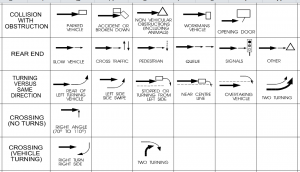
Types of crash

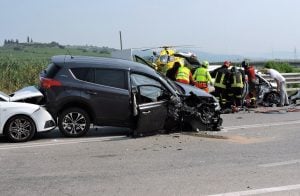
There are 72 classifications of crashes and loss-of-control incidents used by accident investigators and police. Diagrams are used to quickly describe the accident, and these are published with a guide by NZTA for how to code crashes. The motion or…
Read more ›

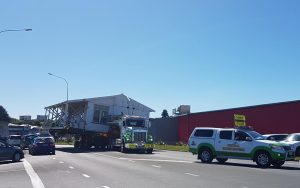
How to become a load pilot

Load pilots help oversized loads be transported on the roads without causing a danger to other road users. These loads are wider, taller and/or longer than the maximum vehicle dimensions. Our roads have signs, lanes, roundabouts and traffic islands based…

Read more ›

Why are roads often sloped and not flat?

Roads are angled for three reasons: Drainage Safety Terrain Superelevation or banking In an ideal world the road would be higher on the outside of the corner than the inside because this is safer and vehicles can travel around the…

Read more ›

Literacy and driving: how not being able to read affects your ability to drive

Literacy is a problem for over 40% of New Zealanders, with around 20% experiencing substantial literacy issues. At some point in New Zealand’s history, it was possible to get a New Zealand driver licence simply by taking a quick spin…

Read more ›

Distracted walkers and cyclists

Why are so many walkers and cyclists distracted on the road? While we hear about driver distraction being a problem, distraction among other road users is also a huge issue. The main causes of being distracted while walking or cycling…

Read more ›

How to be a stunt driver

Driving in the movies is often done by a stunt driver. They will do car chases, action scenes, precision driving and anytime a vehicle is involved in an impact or explosion. Stunt drivers sometimes start out as racing drivers but…

Read more ›

How to get out of a sinking car

New Zealand has a huge number of roads that wind around our coastline and along rivers in valleys, for example a road like SH25 from Thames to Coromandel which has a large number of places where, if you go off…

Read more ›

Bus lane rules

Bus lanes are lanes with specific rules about which vehicles can use them. There are four types of bus lane: Bus-only lanes Bus lanes Bus and transit Busways Bus-only lanes Bus-only lanes are part of existing roads but designed only…

Read more ›

What are smart motorways?

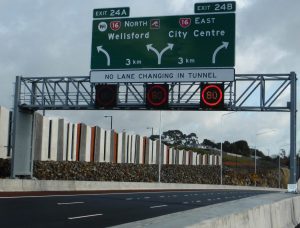
Smart motorways use a number of systems working together in real time to manage traffic. While standard motorways simply have a fixed speed limit and lanes, smart motorways have signalling that can control the speed limit based on the current…

Read more ›

Seven ways to make your car insurance invalid

You could have car insurance but that doesn’t mean that the insurance company will pay out if you have an accident because there are ways in which you can invalidate it by not understanding the fine print (i.e. the terms…

Read more ›

What language can I take my driving test in?

Theory test When you take the final learner test it is available in a number of other languages as well as English: All New Zealand’s road signs are in English, so it’s important that drivers understand the meaning of these signs otherwise…

Read more ›

What is drink walking and what’s a drink walker?

A drink walker is a person who is walking home drunk. It’s most commonly seen on Friday and Saturday nights near bars and pubs and with males aged 18-30. Many pedestrian fatalities involve people who are under the influence of…

Read more ›

13 driving techniques to cut your fuel bill

Driving responsibly is about more than keeping your passengers and other road users safe. Many of the driving techniques that your instructor will advise you to use to stay safe can also save fuel, which reduces the impact of your…

Read more ›

How do vehicle recalls work?

A vehicle recall is when a manufacturer identifies a problem and advises that owners of those vehicles bring them to an authorised service centre to have them repaired. Vehicles are complex things with thousands of moving parts subject to vibration…

Read more ›

How often should you check your mirrors?

At 100km/h you’re travelling almost 28 metres a second. In five seconds you’ve travelledĀ almost 140 metres. The landscape has changed, you’ve been past intersections, other vehicles have changed lanes. Would that be a good time to check your mirrors, every…

Read more ›

What is a defensive driving course?

A defensive driving course helps drivers become more aware of how to reduce risks while driving. A typical defensive driving course consists of several classroom sessions followed by a practical session in a car with an instructor which must be…

Read more ›

‹ Older posts
Newer posts ›
Recent Resources
  • Interpreting Manufacturer Load Capacity Specifications
  • PPE, safety equipment and hazardous substances in permitted work
  • How to find your real driving triggers (and why most drivers get it wrong)
  • PPE Requirements for Truck Loader Crane Operators and Ground Crew
  • Atmospheric testing for Permit Issuers as part of the permit to work system
  • The pre-drive routine: why the first few minutes of your driving shift matter most
  • What are outriggers or straddle legs on a forklift or electric pallet jack?
  • Preparing the worksite
  • What is a forklift paper roll clamp, and how does it work?
  • Manual vs Automatic: Which Works Best in Rural Driving

Licences and Courses

  • Car
  • Motorbike
  • Heavy Vehicles
Car
  • Core
  • Behaviour
  • Parking
  • Emergencies
  • Road position
  • Intersection
  • Theory
  • Signs
Motorbike
  • Bike-specific questions
  • Core
  • Behaviour
  • Parking
  • Emergencies
  • Road position
  • Intersection
  • Theory
  • Signs
Heavy Vehicles
  • Class 2
  • Class 3-5
  • Core
  • Behaviour
  • Parking
  • Emergencies
  • Road position
  • Intersection
  • Theory
  • Signs

Vehicle and workplace training

  • About
  • Resources
DT Driver Training TR Group
About
  • About us
  • Contact us
  • Privacy Policy
  • Terms and Conditions
Resources
  • Homepage
  • Driving Tests Android App
  • Driving Tests iPhone App
  • Getting your learner licence
DT Driver Training TR Group
Copyright 2010-2026 DT Driver Training Ltd, PO Box 12541, Penrose, Auckland, 1642. All rights reserved. Questions and images are used with permission from NZTA; question answers are proprietary.