• A TR Group Site
  • Help
  • Cart
Driving Tests DT logo small
Driving tests
  • Learner licence
    • Car
    • Motorbike
    • Heavy vehicle
    • Learner Licence Plus
  • Courses
  • Tourist
  • Resources
  • Learn
  • Resources
  • Learner licence
    • Car
    • Motorbike
    • Heavy Vehicle
    • Learner Licence Plus
  • Your courses
    • Enrolled courses
  • View all courses
  • Tourist
  • Resources home
  • iOS application
  • Android application
  • Contact us
  • Terms and conditions
  • Privacy
  • Home
  • /
  • Resources
  • / Advice ( / Page 19)

Advice Resources

Where can you park and for how long?

Parking permission signs Parking signs are usually blue with white writing. Apart from 5-minute parking, they are in increments of 10 minutes up to 60 minutes, then in 60-minute intervals up to 240 minutes. At the edge of each parking…

Read more ›

Traffic calming measures explained (plus photos)

Traffic engineers look at engineering, education and enforcement when designing traffic environments. In this article we’ll show you many of the different ways in which traffic engineers make roads safer by using measures to slow drivers down where there might…

Read more ›

The Give Way Rules in New Zealand

Let’s look at a number of examples of giving way which can help you determine what to do at many kinds of intersections in New Zealand (and around the world). If you’ve been confused about the rules before, these simple…

Read more ›

What vehicles can you drive on what class of licence in New Zealand?

Class 1 – car licence (learner or restricted) A holder of a Class 1 learner or restricted licence can drive: Any vehicle with a gross laden weight (GLW) or gross combined weight (GCW) of not more than 4500kg, including tractors…

Read more ›

Motorcycle visibility and position

Your visibility comes from the clothes you wear while riding, the lights on your bike, and the position your put your motorbike in on the road. Your position won’t stay static: you will change where you are riding on the…
Read more ›

Road signs videos – New Zealand signs explained

There are three videos in this article with 50 road signs in each to help you learn them for your test. The first video shows you the following signs: Speed limit 50kph (default urban limit) Compulsory stop Right turning traffic must…

Read more ›

Marking the edge of the road with markers and cat’s eyes

To help drivers see where a road is going ahead, both in the day and at night, roads are often installed with markers on the left and right verges, road studs (also called cat’s eyes or reflective raised pavement markers),…

Read more ›

Alcohol and drug limits when driving

Alcohol and many drugs reduce your reaction time and change your perception of what’s going on around you. This is what makes them dangerous when driving. You dramatically increase the risk of killing or seriously injuring another person (and yourself)…

Read more ›

Street furniture: what is it? (includes images)

Street furniture, or road furniture, are items that are added to streets and roads to help direct traffic, inform road users, and help pedestrians. Road users Bollards Bollards prevent traffic from parking or driving on certain areas. They are sometimes…

Read more ›

Why a quiet car is better for your concentration and driving

When we buy a car we rarely think about cabin noise as being a major consideration in the purchase decision. Unless the car is obviously noisy when we drive it we’re unlikely to think about it. In this article we’ll…

Read more ›

What motorbikes can you ride as a learner rider?

Powerful motorbikes are extreme. Everything happens quickly, and once you exceed the limit you need a lot of skill to bring it back. In the same way that the first levels of a computer game are easy, NZTA helps get…

Read more ›

Towing a trailer: the complete guide in New Zealand

Towing a trailer requires more skill from you as a driver, and puts more strain on your car. In this article we’ll discuss the skills you will need to develop, what the requirements are for your car, what should you…

Read more ›

What should you do if you have a crash or accident?

In this article, we’ll discuss how competent drivers avoid accidents, and tell you your obligations if you do have an accident. Until computers control all our vehicles, we will continue to have crashes because drivers are only human. Unfortunately, humans…

Read more ›

advisory speed sign

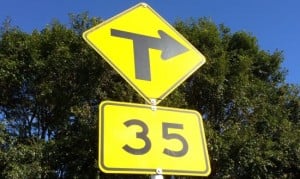
The difference between speed limits and suggested speeds

When you start driving you will see three types of speed sign: a public regulatory limit, a private regulatory limit and a suggested safe (advisory) speed. Speed limit Public regulatory limits always end in zero. They start at 10km/h (which…

Read more ›

Advanced overtaking: keeping safe when passing

In this article we’ll recap on the basics of overtaking, then talk about advanced techniques taught to police drivers and instructors. The Road Code has an excellent basic set of guidelines for overtaking. Overtaking is the most risky manoeuvre on…

Read more ›

Caring for your tyres

In a car you have four contact patches with the road, each one about the size of your hand. On a motorbike, the contact patches are the size of a credit card and there are only two. In a truck,…

Read more ›

Dashboard and helmet-mounted cameras: how do you choose the right one?

Imagine this scenario: you are driving down Newton Road in Auckland in the left-hand lane and you are turning left into Piwakawaka Street. It’s drizzling lightly. You can see the map here (it opens in a new window). At the…

Read more ›

Why do motorways almost always pass under other roads?

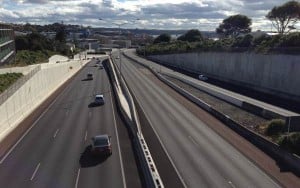
When you drive along a motorway you’ll find that most other roads pass over the top of the motorway and there are a few good reasons for this. Bridges It is easier and cheaper to build a longer two-lane bridge than…

Read more ›

Pedestrian crossings and refuges: Sharing the roads with pedestrians

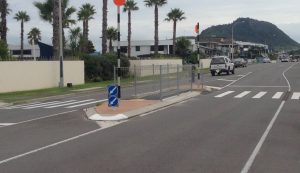
There are several types of pedestrian crossings on New Zealand’s roads, and they are designed to allow safer crossings for pedestrians, people using wheeled recreational vehicles like skateboards, rollerskates and self-propelled scooters; and people using mobility devices such as motorised…

Read more ›

Comprehensive guide to driving in snow: 21 important tips

If you learned to drive during summer, chances are that you won’t have driven in snow before. The main issues with snow are that it reduces the friction between your vehicle and the road, and can block roads. Ideally, if…

Read more ›

‹ Older posts
Newer posts ›
Recent Resources
  • Interpreting Manufacturer Load Capacity Specifications
  • PPE, safety equipment and hazardous substances in permitted work
  • How to find your real driving triggers (and why most drivers get it wrong)
  • PPE Requirements for Truck Loader Crane Operators and Ground Crew
  • Atmospheric testing for Permit Issuers as part of the permit to work system
  • The pre-drive routine: why the first few minutes of your driving shift matter most
  • What are outriggers or straddle legs on a forklift or electric pallet jack?
  • Preparing the worksite
  • What is a forklift paper roll clamp, and how does it work?
  • Manual vs Automatic: Which Works Best in Rural Driving

Licences and Courses

  • Car
  • Motorbike
  • Heavy Vehicles
Car
  • Core
  • Behaviour
  • Parking
  • Emergencies
  • Road position
  • Intersection
  • Theory
  • Signs
Motorbike
  • Bike-specific questions
  • Core
  • Behaviour
  • Parking
  • Emergencies
  • Road position
  • Intersection
  • Theory
  • Signs
Heavy Vehicles
  • Class 2
  • Class 3-5
  • Core
  • Behaviour
  • Parking
  • Emergencies
  • Road position
  • Intersection
  • Theory
  • Signs

Vehicle and workplace training

  • About
  • Resources
DT Driver Training TR Group
About
  • About us
  • Contact us
  • Privacy Policy
  • Terms and Conditions
Resources
  • Homepage
  • Driving Tests Android App
  • Driving Tests iPhone App
  • Getting your learner licence
DT Driver Training TR Group
Copyright 2010-2026 DT Driver Training Ltd, PO Box 12541, Penrose, Auckland, 1642. All rights reserved. Questions and images are used with permission from NZTA; question answers are proprietary.