• A TR Group Site
  • Help
  • Cart
Driving Tests DT logo small
Driving tests
  • Learner licence
    • Car
    • Motorbike
    • Heavy vehicle
    • Learner Licence Plus
  • Courses
  • Tourist
  • Resources
  • Learn
  • Resources
  • Learner licence
    • Car
    • Motorbike
    • Heavy Vehicle
    • Learner Licence Plus
  • Your courses
    • Enrolled courses
  • View all courses
  • Tourist
  • Resources home
  • iOS application
  • Android application
  • Contact us
  • Terms and conditions
  • Privacy
  • Home
  • /
  • Resources
  • / Heavy Vehicle ( / Page 5)

Heavy Vehicle Resources

Use affirmations to help with your driving test

Affirmations or ‘self-talk’ is a common and simple way in which you can improve your performance. You can use it to help you improve your memory so that you remember the Road Code quicker and more effectively, reduce nervousness when…
Read more ›

Skidding explained: oversteer, understeer, hydroplaning and wheelspin

A skid is where your vehicle’s tyres lose traction on the road surface and it can be caused by too much acceleration, too much braking or too much turning force for the road surface. Some of the advice you will hear…

Read more ›

Eight new vehicle technologies for safety and convenience

As vehicle manufacturers constantly attempt to outdo one another in convenience, comfort and safety, new features appear on premium models and then gradually trickle down to the mainstream models. While automotive manufacturers sometimes develop their own systems, many of the…

Read more ›

Rumble strips: what are they used for?

Rumble strips, raised profile line markings or audio tactile profiled (ATP) road markings, are road markings that generate noise and vibration when you drive over them. The lines are painted like normal road markings except the machine drops ridges (also…

Read more ›

Spring and Daylight Saving bring more risk of truck crashes

Spring starts today and Daylight Saving starts on the last Sunday of September. Both of these have the effect of increasing the risk of accidents among truck drivers. Truck drivers often work the kind of hours that gives them an…

Read more ›

Signage clutter: what is it and how is it reduced?

Roading authorities need to convey a certain amount of information to help you drive. Regulatory and advisory signs, street signs, road markings and traffic signals have to compete against advertising hoardings, vehicle signage and other distractions on and off the…

Read more ›

Seat belt law in New Zealand

Wearing safety belts The driver is responsible for ensuring all passengers under 15 years of age wear seat belts. Passengers 15 years of age and over are responsible for putting seat belts on themselves. If you are riding a motorbike,…

Read more ›

Tourist information signs in New Zealand

Historic tourist information signs were yellow pole-mounted signs, and you can still see some of these around in rural areas. Newer signs are brown with white writing. Not all tourist facilities warrant a sign. NZTA divides tourist facilities into five…

Read more ›

Where can you park and for how long?

Parking permission signs Parking signs are usually blue with white writing. Apart from 5-minute parking, they are in increments of 10 minutes up to 60 minutes, then in 60-minute intervals up to 240 minutes. At the edge of each parking…

Read more ›

Traffic calming measures explained (plus photos)

Traffic engineers look at engineering, education and enforcement when designing traffic environments. In this article we’ll show you many of the different ways in which traffic engineers make roads safer by using measures to slow drivers down where there might…

Read more ›

The Give Way Rules in New Zealand

Let’s look at a number of examples of giving way which can help you determine what to do at many kinds of intersections in New Zealand (and around the world). If you’ve been confused about the rules before, these simple…

Read more ›

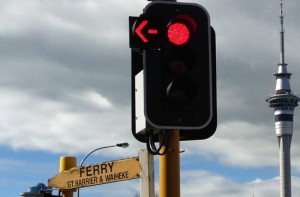
Traffic lights in New Zealand

Our traffic lights conform to international standards in terms of their colour, but we have slightly different phasing than some countries. Red lights A red light always means stop. You must wait until the green light shows before you can…

Read more ›

Speed limits in New Zealand

This is a convenient list of speed limits in New Zealand for all types of vehicles. For cars and motorbikes the open road speed limit is 100km/h if the conditions are good. Other vehicles have restricted limits, though. The default…

Read more ›

Heavy vehicle work time requirements and logbooks

Work time restrictions are placed on heavy vehicle drivers because driver fatigue is a leading cause of fatal crashes. Commercial drivers are particularly at risk, especially when they drive during shift-work. To keep drivers accountable details are stored in a…

Read more ›

Heavy vehicle weights and loads

Vehicle weight definitions The tare weight is the weight of the vehicle itself, not including any load. Gross weight or gross vehicle mass is the combined weight of a vehicle and its load, accessories, equipment and passengers.  Before an overweight vehicle…

Read more ›

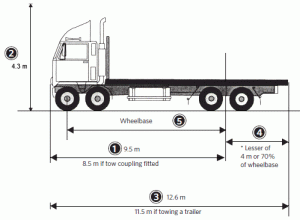
Heavy rigid vehicle dimensions

Heavy vehicle dimensions and measurements

Class 2 The forward distance is the measurement is from the rear axis to the front of the vehicle or its load. The maximum distance a vehicle or its load may extend forward from the front edge of the driver’s seat…

Read more ›

Road signs videos – New Zealand signs explained

There are three videos in this article with 50 road signs in each to help you learn them for your test. The first video shows you the following signs: Speed limit 50kph (default urban limit) Compulsory stop Right turning traffic must…

Read more ›

Marking the edge of the road with markers and cat’s eyes

To help drivers see where a road is going ahead, both in the day and at night, roads are often installed with markers on the left and right verges, road studs (also called cat’s eyes or reflective raised pavement markers),…

Read more ›

Alcohol and drug limits when driving

Alcohol and many drugs reduce your reaction time and change your perception of what’s going on around you. This is what makes them dangerous when driving. You dramatically increase the risk of killing or seriously injuring another person (and yourself)…

Read more ›

Street furniture: what is it? (includes images)

Street furniture, or road furniture, are items that are added to streets and roads to help direct traffic, inform road users, and help pedestrians. Road users Bollards Bollards prevent traffic from parking or driving on certain areas. They are sometimes…

Read more ›

‹ Older posts
Newer posts ›
Recent Resources
  • PPE, safety equipment and hazardous substances in permitted work
  • How to find your real driving triggers (and why most drivers get it wrong)
  • PPE Requirements for Truck Loader Crane Operators and Ground Crew
  • Atmospheric testing for Permit Issuers as part of the permit to work system
  • The pre-drive routine: why the first few minutes of your driving shift matter most
  • What are outriggers or straddle legs on a forklift or electric pallet jack?
  • Preparing the worksite
  • What is a forklift paper roll clamp, and how does it work?
  • Manual vs Automatic: Which Works Best in Rural Driving
  • Determining whether a task needs a permit

Licences and Courses

  • Car
  • Motorbike
  • Heavy Vehicles
Car
  • Core
  • Behaviour
  • Parking
  • Emergencies
  • Road position
  • Intersection
  • Theory
  • Signs
Motorbike
  • Bike-specific questions
  • Core
  • Behaviour
  • Parking
  • Emergencies
  • Road position
  • Intersection
  • Theory
  • Signs
Heavy Vehicles
  • Class 2
  • Class 3-5
  • Core
  • Behaviour
  • Parking
  • Emergencies
  • Road position
  • Intersection
  • Theory
  • Signs

Vehicle and workplace training

  • About
  • Resources
DT Driver Training TR Group
About
  • About us
  • Contact us
  • Privacy Policy
  • Terms and Conditions
Resources
  • Homepage
  • Driving Tests Android App
  • Driving Tests iPhone App
  • Getting your learner licence
DT Driver Training TR Group
Copyright 2010-2026 DT Driver Training Ltd, PO Box 12541, Penrose, Auckland, 1642. All rights reserved. Questions and images are used with permission from NZTA; question answers are proprietary.