
• A TR Group Site
  • Help
  • Cart
Driving Tests DT logo small
Driving tests
  • Learner licence
    • Car
    • Motorbike
    • Heavy vehicle
    • Learner Licence Plus
  • Courses
  • Tourist
  • Resources
  • Learn
  • Resources
  • Learner licence
    • Car
    • Motorbike
    • Heavy Vehicle
    • Learner Licence Plus
  • Your courses
    • Enrolled courses
  • View all courses
  • Tourist
  • Resources home
  • iOS application
  • Android application
  • Contact us
  • Terms and conditions
  • Privacy
  • Home
  • /
  • Resources
  • / Heavy Vehicle ( / Page 6)

Heavy Vehicle Resources

Why a quiet car is better for your concentration and driving

When we buy a car we rarely think about cabin noise as being a major consideration in the purchase decision. Unless the car is obviously noisy when we drive it we’re unlikely to think about it. In this article we’ll…
Read more ›

What should you do if you have a crash or accident?

In this article, we’ll discuss how competent drivers avoid accidents, and tell you your obligations if you do have an accident. Until computers control all our vehicles, we will continue to have crashes because drivers are only human. Unfortunately, humans…

Read more ›

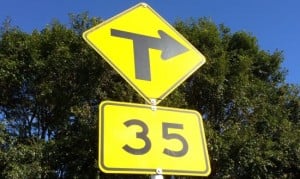
advisory speed sign

The difference between speed limits and suggested speeds

When you start driving you will see three types of speed sign: a public regulatory limit, a private regulatory limit and a suggested safe (advisory) speed. Speed limit Public regulatory limits always end in zero. They start at 10km/h (which…

Read more ›

Advanced overtaking: keeping safe when passing

In this article we’ll recap on the basics of overtaking, then talk about advanced techniques taught to police drivers and instructors. The Road Code has an excellent basic set of guidelines for overtaking. Overtaking is the most risky manoeuvre on…

Read more ›

Caring for your tyres

In a car you have four contact patches with the road, each one about the size of your hand. On a motorbike, the contact patches are the size of a credit card and there are only two. In a truck,…

Read more ›

Dashboard and helmet-mounted cameras: how do you choose the right one?

Imagine this scenario: you are driving down Newton Road in Auckland in the left-hand lane and you are turning left into Piwakawaka Street. It’s drizzling lightly. You can see the map here (it opens in a new window). At the…

Read more ›

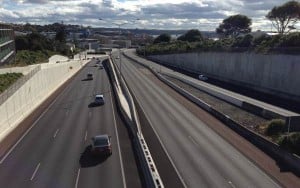
Why do motorways almost always pass under other roads?

When you drive along a motorway you’ll find that most other roads pass over the top of the motorway and there are a few good reasons for this. Bridges It is easier and cheaper to build a longer two-lane bridge than…

Read more ›

Comprehensive guide to driving in snow: 21 important tips

If you learned to drive during summer, chances are that you won’t have driven in snow before. The main issues with snow are that it reduces the friction between your vehicle and the road, and can block roads. Ideally, if…

Read more ›

Driving in hazardous conditions

When you learn to drive you will have some experience of hazardous conditions, but it’s unlikely that you will experience all kinds of difficult situations that you might encounter. For example, you could learn to drive in Auckland and have…

Read more ›

Chinese tourists targeted for driver education

As the number of tourists visiting New Zealand grows, so does the number of rental cars driven by people who may never have driven on the left before. Tourists might not speak or read English and therefore struggle to understand…

Read more ›

When can you use your hazard warning lights?

Your hazard warning lights are when all your indicators flash at the same time. They are designed to be used as a warning to other road users. There are some common misconceptions about hazard warning lights and when they can…

Read more ›

Advice for correcting skids is now outdated and dangerous

If you drive a modern car – one produced in the past few years – chances are that the advice you’ve been given to correct a skid is now wrong and might even be dangerous. The Road Code has been…

Read more ›

UK government sets limits for drug traces in blood; NZ has no recommendations yet

New Zealand’s current law, which was brought into effect on 1 November 2009 states that it is illegal to drive while impaired by drugs, even legally prescribed drugs such as Benzodiazepines. However, it’s only alcohol that has prescribed maximum limits.…

Read more ›

The world’s most terrifying intersections

Studies done in various countries have found that certain intersections are very daunting for some drivers. Where you get a lot of traffic passing through and needing to go in different directions intersections can not only be complex in their…

Read more ›

Tailgating – what is it and why is it dangerous?

Tailgating is driving behind someone too closely. There is a recommended safe following distance which varies with speed and is indicated by time: the two-second rule. This means that the time difference between the back of the vehicle in front…

Read more ›

Driving and riding smoothly saves you money and is faster. Here’s how

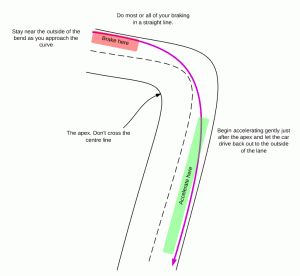
To drive smoothly we have to take one lesson from racing drivers: use the smoothest line around the corner. We’re not going to be braking and accelerating as harshly as racing drivers, though, just steering like them and using moderate…

Read more ›

Heavy vehicle offences consultation underway – have your say

NZTA is asking for feedback on changes to penalties levied on freight operators whose vehicles exceed either the weight limits stated in Land Transport Rule: Vehicle Dimensions and Mass 2002, or those set out in a permit. The general limits…

Read more ›

How to calculate braking distances

The braking distance, also called the stopping distance, is the distance a vehicle covers from the time of the full application of its brakes until it has stopped moving. This is often given as a 100-0kph distance, e.g. 56.2m, and…

Read more ›

‘Noise’ camera will photograph loud trucks

NZTA is working with the Road Transport Association NZ, Log Transport Safety Council and National Road Carriers to reduce engine braking noise. An initial trial, costing $100,000,  is taking place on SH2 Takitimu Drive near the Elizabeth St roundabout in…

Read more ›

Animal road signs from the UK

Heading over to the UK on your OE? If you’re driving around you’ll see a few new animal signs that won’t be familiar from driving on New Zealand roads. This specialist sign means that police dogs might be on patrol…

Read more ›

‹ Older posts
Newer posts ›
Recent Resources
  • PPE, safety equipment and hazardous substances in permitted work
  • How to find your real driving triggers (and why most drivers get it wrong)
  • PPE Requirements for Truck Loader Crane Operators and Ground Crew
  • Atmospheric testing for Permit Issuers as part of the permit to work system
  • The pre-drive routine: why the first few minutes of your driving shift matter most
  • What are outriggers or straddle legs on a forklift or electric pallet jack?
  • Preparing the worksite
  • What is a forklift paper roll clamp, and how does it work?
  • Manual vs Automatic: Which Works Best in Rural Driving
  • Determining whether a task needs a permit

Licences and Courses

  • Car
  • Motorbike
  • Heavy Vehicles
Car
  • Core
  • Behaviour
  • Parking
  • Emergencies
  • Road position
  • Intersection
  • Theory
  • Signs
Motorbike
  • Bike-specific questions
  • Core
  • Behaviour
  • Parking
  • Emergencies
  • Road position
  • Intersection
  • Theory
  • Signs
Heavy Vehicles
  • Class 2
  • Class 3-5
  • Core
  • Behaviour
  • Parking
  • Emergencies
  • Road position
  • Intersection
  • Theory
  • Signs

Vehicle and workplace training

  • About
  • Resources
DT Driver Training TR Group
About
  • About us
  • Contact us
  • Privacy Policy
  • Terms and Conditions
Resources
  • Homepage
  • Driving Tests Android App
  • Driving Tests iPhone App
  • Getting your learner licence
DT Driver Training TR Group
Copyright 2010-2026 DT Driver Training Ltd, PO Box 12541, Penrose, Auckland, 1642. All rights reserved. Questions and images are used with permission from NZTA; question answers are proprietary.