There are three main types of tail lift and each one has its advantages and disadvantages:
Cantilever: the platform folds up using a tilt ram and forms all or part of the rear door
Folding: the platform folds in half and is stowed under the truck
Column: the platform forms part of the rear door or gate and is raised or lowered using a mechanism on either side of the platform.
There’s a lot to learn about the safe operation of tail lifts. Let’s deal with the types first.
Cantilever tail lifts
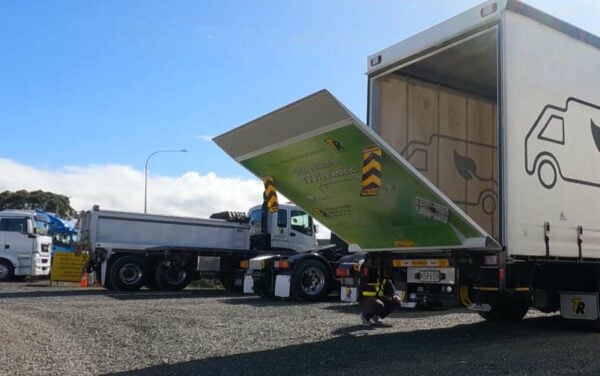
A cantilever tail lift is quick to open and doesn’t require any muscle from the driver as the whole process is mechanical. You may need to unlock the platform before you can lower it but, in general, you simply press the tilt and lower buttons at the same time and it will open up.
As it forms all or part of the rear of the truck, it means that there are no doors to open. This means that the driver doesn’t have to walk into the traffic lane to open the driver’s side door and attach it to the side of the truck.
The platform can be used as a bridge plate between a dock and the truck, although care must be taken not to exceed the safe working load.
The disadvantages are that with a cantilever tail lift you may not be able to back right up to a dock to load in the rear (the platform must be lowered for access to the truck), and a forklift can’t load directly into the back if the load is heavy (i.e. the platform might not support the weight of the forklift).
Folding tail lifts
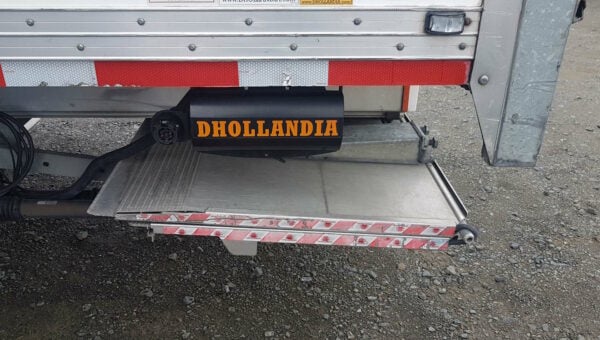
There are two types: sliding and tuck-under or tuck-away. For both types, there is a manual component: the driver must unfold the platform, and this creates a risk for injuries if the driver is not strong, or lifts incorrectly.
With a tuck-under tail lift, the platform is lowered by the hydraulic rams, and then the driver unfolds it and lowers it to touch the ground. With a sliding tail lift, the platform is slid out, the driver unfolds it, then lowers it to touch the ground. Both are slower to operate than a cantilever tail lift.
The platforms are not as sturdy as a cantilever tail lift because they are not on continuous platform due to the folding mechanism.
Because the platform is stored under the truck at the rear, more ground clearance is required. This can be an issue when exiting or entering steep driveways.
The main advantage of a folding tail lift is for dock loading. The driver can simply open the doors and reverse up to the dock without the tail lift being in the way. This is especially good for refrigerated docks where a good seal between the truck and the dock helps keep the temperatures in both the warehouse and the truck low.
Column tail lifts and ‘railgates’
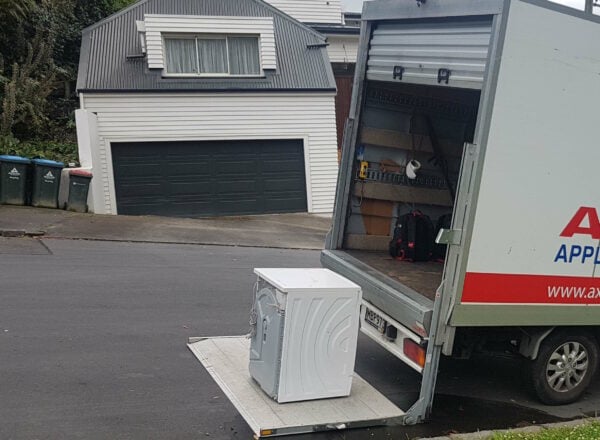
Column tail lifts cannot support the heavy weights that the hydraulics of a cantilever or folding tail lift can support.
The advantage of a column tail lift is its price and its ability to lift higher than the deck of the truck, which means that it’s possible to use it for a mezzanine deck; a common application for this might be a race car transporter with a mezzanine deck.
Column tail lifts don’t tilt, so the ground’s surface angle is more important to consider.
They tend to be used on smaller vehicles such as utes and small trucks, and they are a cheaper option. Their cycle time is quicker than a cantilever tail lift.


Darren has written over 3000 articles about driving and vehicles, plus almost 500 vehicle reviews and numerous driving courses. Connect with him on LinkedIn by clicking the name above
 Disqus