
In New Zealand’s varied rural terrain, tyres face significant challenges from rough gravel roads, muddy farm tracks, rocky outcrops, and river crossings. Understanding how to manage your tyres effectively can make the difference between completing your work efficiently and facing costly downtime due to tyre failures or vehicle recovery.
Tyre Selection for Rural Work
All-terrain (AT) tyres generally provide the best compromise for vehicles that spend time both on sealed roads and off-road in rural settings. These tyres feature a more aggressive tread pattern than highway tyres, providing improved traction in mud and loose surfaces while maintaining reasonable on-road characteristics.
For vehicles predominantly used in more challenging off-road conditions, mud-terrain (MT) tyres offer superior traction in soft, muddy conditions due to their wider-spaced lugs that provide a self-cleaning action. However, they typically generate more road noise, and have less grip and accelerated tyre wear on sealed roads.
Light truck (LT) rated tyres are recommended for rural work due to their stronger sidewalls and improved puncture resistance compared to passenger (P) rated tyres. The additional strength comes from reinforced construction designed to handle heavier loads and more challenging conditions.
You’ll also find a maximum load rating on the side of the tyre, e.g. 112 or 1120kg. This is the weight that an individual tyre is rated to support. If it’s a number like 95, this means 950kg, not 95kg.
Tyre Pressure Management
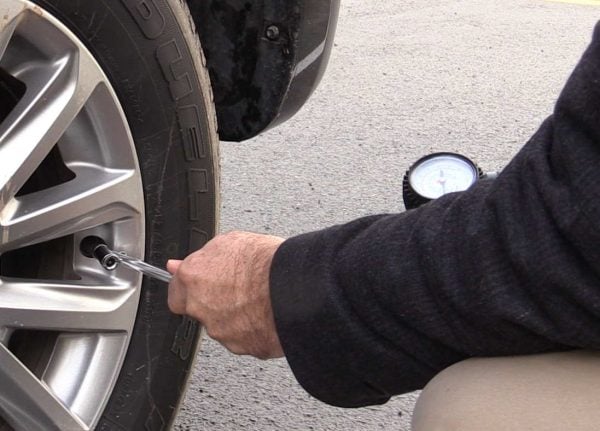
Correct inflation pressure varies depending on the driving surface, load, and operating conditions. As a general principle, lower tyre pressures improve traction off-road by increasing the tyre’s footprint, while higher pressures are required for on-road driving to reduce rolling resistance and prevent excessive heat build-up.
For gravel roads, reducing tyre pressure by 10-15% from the manufacturer’s recommended road pressure can provide a smoother ride and better traction. For more challenging terrain, such as mud, a reduction of 25% may be appropriate.
It is essential to carry a quality tyre pressure gauge and a means of reinflating tyres when transitioning back to sealed roads. Portable air compressors that can be powered from your vehicle’s electrical system are invaluable for rural work. Remember that prolonged driving on sealed roads with under-inflated tyres can lead to excessive heat build-up, accelerated wear, and potentially dangerous blowouts.
Regular Tyre Inspections
For extended rural work periods, daily tyre inspection becomes a necessity rather than a luxury. Start each day by checking all tyres for signs of damage, unusual wear patterns, or embedded objects. Pay particular attention to the sidewalls, which can be damaged by sharp rocks or hidden obstacles in tall grass.
Check that valve caps are present and secure, as these protect the valve mechanism from dirt and moisture. Missing valve caps can lead to slow leaks as dirt enters the valve.
Monitor tread depth regularly. While the legal minimum tread depth in New Zealand is 1.5mm across the entire tread, for rural work, replacing tyres when they reach approximately 3mm of remaining tread is prudent, as worn tyres significantly reduce traction in wet or muddy conditions.
Rotation and Alignment
Regular tyre rotation helps achieve more even wear across all tyres. For most 4WD vehicles, rotation every 10,000km is recommended, though this may need to be more frequent in harsh rural conditions.
Wheel alignment should be checked after any significant impact or when uneven tyre wear becomes apparent. Rural driving often involves impacts with potholes, rocks, or washouts that can affect alignment. Signs of misalignment include uneven tyre wear, the vehicle pulling to one side, or a steering wheel that is not centred when driving straight.
Dealing with Punctures and Damage
Having the equipment and knowledge to deal with tyre damage in remote locations is essential. A comprehensive tyre repair kit should include tyre plugs, a tyre repair tool, valve replacements, and tyre sealant. Repair plugs can provide a reliable temporary repair for punctures in the tread area.
Sidewall damage generally cannot be safely repaired and requires tyre replacement. Always carry at least one full-sized spare tyre, properly inflated and regularly checked.
Tyre Care in Extreme Conditions
Extremely muddy conditions require particular attention to tyre management. After driving through deep mud, inspect and clean the tyres and rims at the earliest opportunity. Dried mud on the inside of wheels can create an imbalance that affects vehicle handling. Additionally, mud packed into tread blocks reduces traction and can accelerate tyre wear.
In winter conditions, check tyres more frequently. Cold temperatures can cause tyre pressure to drop, potentially by as much as 7 kPa (1 psi) for every 10°C temperature decrease. Snow chains should be carried when operating in alpine areas, and practice fitting them before needing them in adverse conditions.
Long-Term Storage Considerations
For vehicles that may stand idle for extended periods between rural work assignments, proper tyre storage is important. If possible, raise the vehicle on axle stands to remove weight from the tyres. If this is not practical, ensure tyres are inflated to the recommended pressure and move the vehicle periodically to prevent flat spots from forming.
Protect tyres from prolonged exposure to sunlight, which can degrade the rubber compounds. If storing tyres separately, keep them in a cool, dry place away from direct sunlight, electrical motors (which produce ozone), and petroleum products.
Conclusion
Effective tyre management is a fundamental aspect of successful extended rural work operations. By selecting appropriate tyres, monitoring their condition, maintaining correct pressures for different conditions, and being prepared to handle problems, you can significantly reduce the risk of costly downtime and ensure your vehicle remains reliable throughout your rural work period.
Investing time in tyre management is ultimately an investment in work efficiency, cost management, and safety. Developing a systematic approach to tyre care will pay dividends in terms of reduced operating costs and improved reliability in challenging rural environments.