Driving into an unfamiliar industrial site for the first time can feel overwhelming. Container terminals, log yards, ports, warehouses, and processing plants each have their own layouts, procedures, and unwritten rules. Yet beneath the surface differences, most sites follow remarkably similar patterns. Understanding these common threads will help you navigate any new location with confidence, keep yourself safe, and complete your work efficiently.
This guide walks through the typical journey from arrival to departure, highlighting what to expect at each stage and the reasons behind the rules you will encounter.
Before You Arrive
Preparation begins well before you reach the gate. Most sites require some form of identification, so ensure you have your driver licence readily accessible. Some locations, particularly ports and facilities handling international cargo, operate under strict security legislation and will not grant entry without photo ID.
Check that you have the correct documentation for your load. If you are collecting cargo, you may need a pickup authority or reference number. If delivering, ensure your paperwork matches what the site is expecting. Arriving without the right documents can mean lengthy delays or being turned away entirely. At some ports, you cannot exit without handing over a despatch docket, so understanding the paperwork requirements saves frustration later.
Your personal protective equipment should be ready before you arrive. At minimum, expect to need a high-visibility vest and safety footwear. Many sites mandate these from the moment you step out of your cab, and some require them even while driving on site. A hard hat may be necessary in areas where overhead work occurs or loads are being lifted. Having your PPE accessible rather than buried in the cab saves time and demonstrates professionalism.
If this is your first visit to a particular site, expect to complete an induction. This might be a quick verbal briefing, a written handbook to read, or an online module to work through. Inductions must be completed before any work can begin, so factor this time into your schedule. Once inducted, many sites issue an access card that you will use for all subsequent visits.
Arriving at the Gate
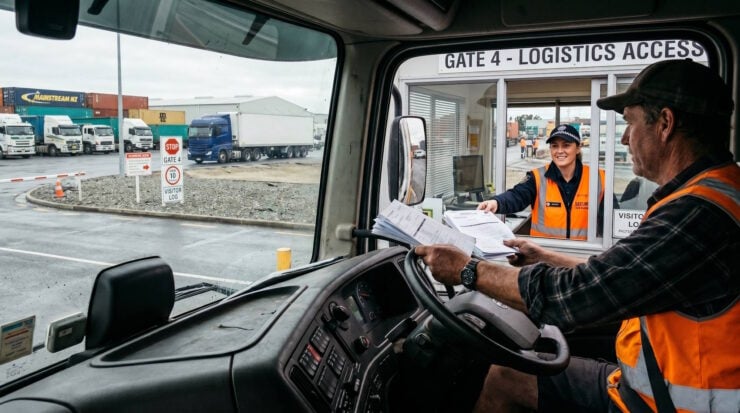
Your first point of contact is typically a gatehouse or security checkpoint. Slow down well before the entrance. Speed limits often reduce significantly on the approach, and sites may use radar detection to monitor compliance. If there is a queue, remain in your vehicle until you reach the front.
At the gatehouse, you will check in with staff who will verify your documentation and confirm your purpose. They will tell you where to go, which bay or area has been allocated to you, and any specific instructions for the day. Listen carefully and ask questions if anything is unclear. Write notes so there’s no chance of forgetting. This is also when you will learn the site speed limit, which is typically between 10 and 30 kilometres per hour, depending on the area.
Some sites use swipe cards or access codes for entry. If you have been issued a card, use it every time you enter and exit. Do not tailgate another vehicle through the barrier, even if it seems convenient. Security systems track individual movements, and tailgating can result in losing site access privileges.
Be aware that passengers, children, and animals are typically prohibited. If you arrive with someone in the cab, they may need to wait outside the security perimeter. This rule exists because sites cannot guarantee the safety of people who have not completed induction training.
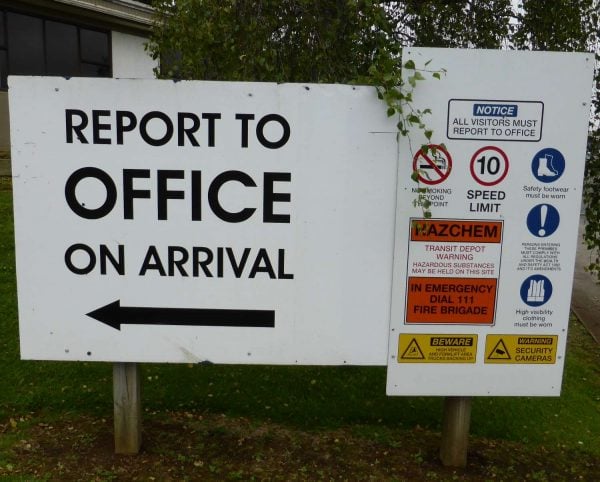
Sites will also have a hazard board.
Moving Through the Site
Once past the gate, proceed directly to your designated area. Do not deviate from the route you have been given or use the site as a shortcut to somewhere else. Traffic flow on industrial sites is carefully managed, often operating as one-way systems to reduce the risk of collisions between heavy vehicles.
Keep your headlights on. Many sites require this regardless of the time of day because it makes your vehicle more visible to forklift operators and other machinery with limited sightlines. Turn off your hazard lights while driving, as these can be confused with a stationary vehicle.
The single most important rule to understand is that mobile plant has right of way. Forklifts, hoists, loaders, and cranes take priority over trucks. These machines often carry heavy loads that affect their braking distance and their operators may have restricted visibility. Give way to them, maintain a safe following distance, and never drive behind operating machinery. If a forklift is working in your path, wait until the operator signals that it is safe to proceed.
Put your phone away. Mobile phone use while driving or walking on site is prohibited at most locations, often with zero tolerance policies. Offenders may receive warnings or be banned from the site entirely. The combination of heavy machinery, tight spaces, and multiple hazards demands your full attention.
Loading and Unloading
When you reach your allocated bay, park as directed and wait. The loading or unloading operation is controlled by the machinery operator, not by you. They will position their equipment, assess the load, and determine when it is safe to proceed.
During the actual loading or unloading, you must remain inside your cab with doors and windows closed. This rule appears in virtually every industrial site induction for good reason. The area immediately around your truck becomes a danger zone when heavy machinery is operating. Suspended loads can shift, equipment can malfunction, and the operator needs to focus on the task rather than watching for pedestrians. Your cab is your safe zone.
Some sites use colour-coded zone systems to communicate where you can and cannot be. Green zones are safe areas for drivers. Yellow zones require caution and communication with operators before entering. Red zones are exclusion areas where you must never go. Understanding these visual cues helps you stay safe even when you cannot hear verbal instructions over machinery noise.
Wait for a clear signal before moving. This is often a horn toot from the machinery operator indicating the load is complete and it is safe to drive off. Do not assume the job is finished just because the forklift has moved away. The operator will let you know when you are clear to proceed.
If you will be the one operating the forklift, then you’ll need a current forklift operator’s certificate. If it’s a port or other area considered a road, you’ll need an F endorsement, too.
Securing Your Load and Preparing to Leave
After loading, you may need to secure your cargo before leaving the site. Many locations have designated areas for this task, such as twist lock bays for containers or chain-off areas for logs. Do not attempt to secure loads in the loading bay itself or on roadways, as this blocks traffic flow and puts you in a hazardous location.
Ensure your load is properly secured and flagged in accordance with transport regulations before departing; if you’re unsure about how to do this a heavy vehicle load security course will tell you what you need to know. All loads must meet legal requirements for the road, and the site may refuse to let you leave if your cargo is not properly restrained.
If you experienced any incidents during your visit, including near misses, report them before leaving. Sites take incident reporting seriously because it helps them identify hazards and prevent future accidents. Even minor events should be documented.
Exiting the Site
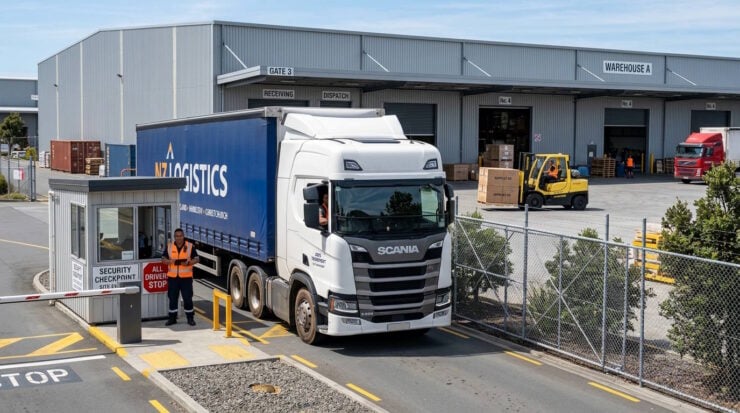
Follow the designated exit route. Entry and exit points are often different, and the traffic system relies on everyone following the correct flow. Check for other vehicles, pedestrians, and machinery before pulling out, especially at intersections with the main site roads.
At some sites, you will need to complete paperwork at the gatehouse before leaving. Ports in particular may require you to hand over documentation before the barrier will open. Have your paperwork ready to avoid holding up traffic behind you.
Swipe your access card on exit if required. The site needs to know who is on the premises at any given time, and failing to sign out creates problems for emergency evacuations and security audits.
Understanding Why These Rules Exist
Every rule you encounter on an industrial site exists because something went wrong in the past. The requirement to stay in your cab during loading comes from incidents where drivers were struck by shifting loads or moving machinery. Speed limits reflect the stopping distances of heavy vehicles on surfaces that may be uneven, dusty, or wet. Phone bans recognise that a moment of distraction in these environments can have fatal consequences.
Understanding the reasoning behind rules makes them easier to follow. You are not being inconvenienced by arbitrary requirements. You are being protected by lessons learned from real incidents.
Final Thoughts
Your first visit to any site will feel unfamiliar, but the underlying pattern is consistent: arrive prepared, check in, follow instructions, stay in designated areas, keep out of the way of mobile plant, wait for clear signals, secure your load, and sign out. The specifics vary, but the principles remain the same.
If you are ever uncertain about what to do, ask. Site staff would far rather answer a question than deal with an incident. As one port induction memorably puts it: the aim is to ensure you do not leave the site in an ambulance.
Approach each new site with patience, follow the procedures, and stay alert. The rules are there to get you home safely at the end of every shift.


Darren has written over 3000 articles about driving and vehicles, plus almost 500 vehicle reviews and numerous driving courses. Connect with him on LinkedIn by clicking the name above