• A TR Group Site
  • Help
  • Cart
Driving Tests DT logo small
Driving tests
  • Learner licence
    • Car
    • Motorbike
    • Heavy vehicle
    • Learner Licence Plus
  • Courses
  • Tourist
  • Resources
  • Learn
  • Resources
  • Learner licence
    • Car
    • Motorbike
    • Heavy Vehicle
    • Learner Licence Plus
  • Your courses
    • Enrolled courses
  • View all courses
  • Tourist
  • Resources home
  • iOS application
  • Android application
  • Contact us
  • Terms and conditions
  • Privacy
  • Home
  • /
  • Resources
  • / Heavy Vehicle ( / Page 2)

Heavy Vehicle Resources

What is a diesel particulate diffuser and how does it work?

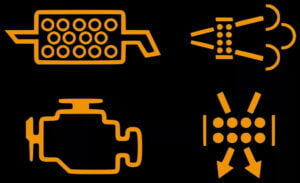
A diesel particulate diffuser, or DPD, is an emission control device used in diesel engines to reduce the amount of particulate matter (PM) emissions released into the atmosphere – they lower exhaust emissions. They’re also called DPF (diesel particulate filter).…
Read more ›

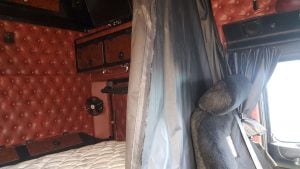
In-cab checks for heavy vehicles

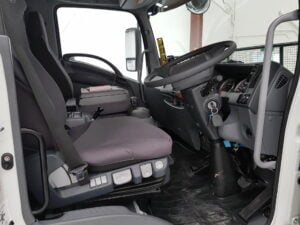
Part of a pre-start inspection training involves learning how to check the inside of the truck cab for things that might cause an issue during the trip. Having a clean, tidy, functioning cab is important to help maintain alertness, reduce…

Read more ›

Can you adjust the height of a fifth wheel on a semitrailer?

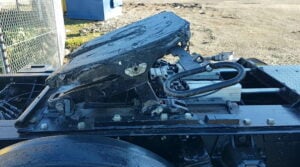
A semitrailer has a kingpin and skid plate. This kingpin fits inside the locking jaws of a fifth wheel, with the skid plate resting on the fifth wheel. The fifth wheel is greased and that’s what enables the trailer to…

Read more ›

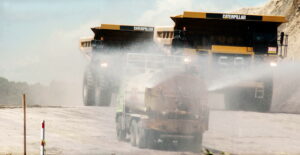
What’s a water truck and are they stable?

Water trucks (also called water tankers, water carts and water tanker lorries) are small to medium-sized rigid trucks with a water tank and pumping equipment on the back. They are used for four main tasks: Carrying water for fire prevention…

Read more ›

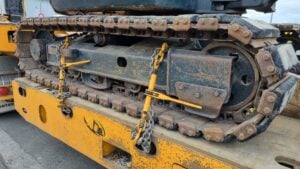
How to transport an excavator

Excavators can be transported on flatbed trailers or in the back of a tipper truck, depending on the size of the excavator. Check that the rated capacity of the trailer or truck is more than the weight of the excavator…

Read more ›

What is a cardan shaft brake and why do they fail?

Some small, medium and heavy trucks (but mostly small trucks), as well as machinery such as telehandlers have a cardan shaft park brake. This is a type of park brake. They are usually activated by a handle which looks and…

Read more ›

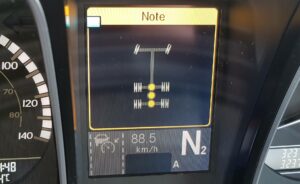
How do power dividers work on a truck?

When a tractor unit has a 6×4 or 8×4 configuration it has two axles that are drive axles. Some units are fixed, while others have a power divider to enable the driver to decide where to send the engine’s power.…

Read more ›

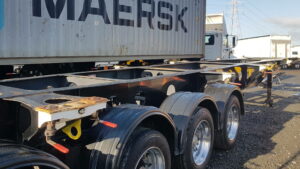
What is a skeletal trailer and how do you load them?

A skeletal trailer is a lightweight semitrailer most commonly used for transporting one or two shipping containers. Shipping containers are intermodal – they can be loaded onto a ship, unloaded using a crane, moved using a forklift, empty container handler,…

Read more ›

What’s a sleeper cab and how should truck drivers use them?

Trucks have either a day cab, rest cab or sleeper cab. A day cab has one compartment which contains the driver and passenger seats with nothing behind them (or perhaps just a small space for personal belongings). Day cabs almost…

Read more ›

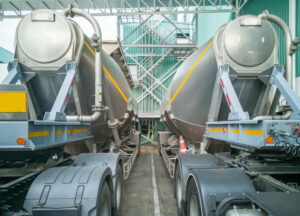
What is a tanker truck?

Tanker trucks are a convenient way to move around bulk liquids, gases and powders. Sizes are variable, from small fuel trucks and biohazard waste trucks up to large b-trains and semitrailers. The tank can either be attached to the truck…

Read more ›

How can you unload or load a truck without a forklift?

A forklift is usually the best way to unload palletised freight from a truck, but if you don’t have a forklift, what can you use? Manual pallet jack Cheap, durable, but a bit dangerous if you’re on a slope. A…

Read more ›

Exterior checks required for a truck and trailer pre-trip inspection

We’ve covered the interior cab checks a driver should do in a pre-trip inspection. Here are the exterior checks. There are two ways to do it: Choose based on your preference, but option 1 is better for checking that the…

Read more ›

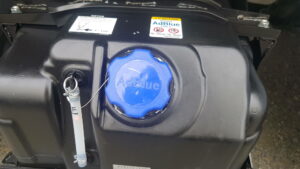
What is diesel exhaust fluid (AdBlue) and why is it used?

Diesel exhaust fluid (DEF) helps heavy vehicle drivers achieve Euro-5 emission control standards by reducing the level of nitrogen oxides emitted. As the spotlight is turned on pollution caused by diesel vehicles, it has gained popularity due to European trucks…

Read more ›

Cab-over vs bonneted (conventional) trucks: which one is better?

Unlike in Europe where flat-fronted cab-over tractor units reign supreme, we have a good mix of the North American bonneted trucks (also called ‘conventional’) where the engine sits in front of the cab, and cab-over, where the engine is under…

Read more ›

What are the orange panels on the side of trucks?

When flammable hazardous goods are stored, sometimes a Hazchem emergency information panel (EIP) is required that gives codes that let emergency responders such as firefighters know exactly what products are on board and how to deal with them. On a…

Read more ›

What is a semitrailer and why are they so common?

A semitrailer or ‘semi’ is a combination vehicle comprising a tractor unit towing a trailer via a fifth wheel coupling. The trailer only has wheels at the back (hence being called a semitrailer rather than a full trailer), and the…

Read more ›

What is a B-train?

There are three main vehicle combination types in New Zealand: A B-train is a tractor unit towing a semitrailer that has a dolly with a fifth wheel on the back of it, to which another semitrailer is attached. It’s called…

Read more ›

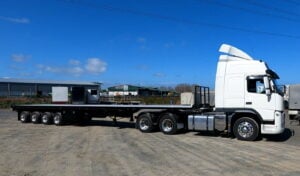
What is a flat deck truck or trailer?

The flat deck refers to the area of the truck or trailer that the goods are loaded onto – it’s a large uniformly flat area which items can be placed on and secured. Trailers can be heavy or light, and…

Read more ›

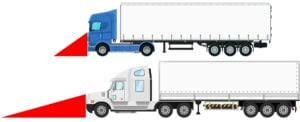
Where are blind spots on trucks and buses?

Drivers have areas around their vehicle that they cannot see in the mirrors or by turning to look. These are called blind spots. Modern vehicles have fewer blind spots due to better mirror placement, cameras and bigger windows, but there…

Read more ›

What is a full trailer?

A full trailer, sometimes called a pull trailer, is a heavy trailer which has at least one axle at each end of the trailer and is pulled using a drawbar. The front axle pivots to allow steering. Contrast this with…

Read more ›

‹ Older posts
Newer posts ›
Recent Resources
  • PPE, safety equipment and hazardous substances in permitted work
  • How to find your real driving triggers (and why most drivers get it wrong)
  • PPE Requirements for Truck Loader Crane Operators and Ground Crew
  • Atmospheric testing for Permit Issuers as part of the permit to work system
  • The pre-drive routine: why the first few minutes of your driving shift matter most
  • What are outriggers or straddle legs on a forklift or electric pallet jack?
  • Preparing the worksite
  • What is a forklift paper roll clamp, and how does it work?
  • Manual vs Automatic: Which Works Best in Rural Driving
  • Determining whether a task needs a permit

Licences and Courses

  • Car
  • Motorbike
  • Heavy Vehicles
Car
  • Core
  • Behaviour
  • Parking
  • Emergencies
  • Road position
  • Intersection
  • Theory
  • Signs
Motorbike
  • Bike-specific questions
  • Core
  • Behaviour
  • Parking
  • Emergencies
  • Road position
  • Intersection
  • Theory
  • Signs
Heavy Vehicles
  • Class 2
  • Class 3-5
  • Core
  • Behaviour
  • Parking
  • Emergencies
  • Road position
  • Intersection
  • Theory
  • Signs

Vehicle and workplace training

  • About
  • Resources
DT Driver Training TR Group
About
  • About us
  • Contact us
  • Privacy Policy
  • Terms and Conditions
Resources
  • Homepage
  • Driving Tests Android App
  • Driving Tests iPhone App
  • Getting your learner licence
DT Driver Training TR Group
Copyright 2010-2026 DT Driver Training Ltd, PO Box 12541, Penrose, Auckland, 1642. All rights reserved. Questions and images are used with permission from NZTA; question answers are proprietary.