
Every year, many drivers get injured due to getting out of and into their vehicles unsafely. If you jump from your cab, when you hit the ground, you’ll generate almost twice your bodyweight in force through your knees. It’s in an uncontrolled environment, too – if you land on an uneven surface, it can roll your ankle, let alone the havoc it causes on your knees and back. You can cause serious issues that first aid cannot solve.
How to get into a heavy vehicle
- Make sure the truck is immobile. The parking brake should be on, and the engine should be off. If the engine is running, the gearbox should be in neutral.
- Before you open the door, look around for cyclists who might be pushed wide into traffic if you open your door
- Check the wind speed – you don’t want to open your door and have a strong wind rip it out of your hand as this can damage the hinges
- Is it raining? If so, the steps will be wet, so take care
- Open the door and climb up using the steps (if available), not by clambering up on the wheel. Maintain three points of contact while doing this. Either both hands and one foot or both feet and one hand. Make the best use of any handrails provided
- Get both of your feet inside the cab before you pull the door closed – it’s easy to trap your foot in the door if you’re trying to be quick.
How to get out of a heavy vehicle
- Make sure the vehicle has stopped completely and it’s immobile – parking brake is on, gearbox is in neutral and (preferably) the engine is off. Take the key.
- Look over your shoulder and in your mirrors to avoid opening your door in front of a cyclist or another large vehicle that might swipe it off
- Hold the door firmly – you don’t want the wind to take it
- Check the steps and rails aren’t wet, then climb out of the cab backwards, maintaining three points of contact
- Close the door
Getting into and out of oversized vehicles
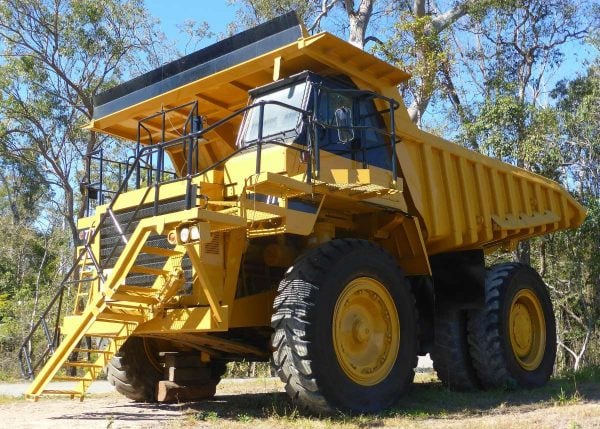
If you’re getting into and out of mining trucks and other enormous machinery, there should be steps or a ladder. Use the same principles of three points of contact and don’t circumvent any safety procedures the manufacturer has built into the vehicle.
How to safely get on and off a trailer or flatbed truck
Getting up onto a curtainsider’s deck is often more difficult than climbing into the cab as there could be fewer handholds and places to put your feet. Some trucks will have a step like this:
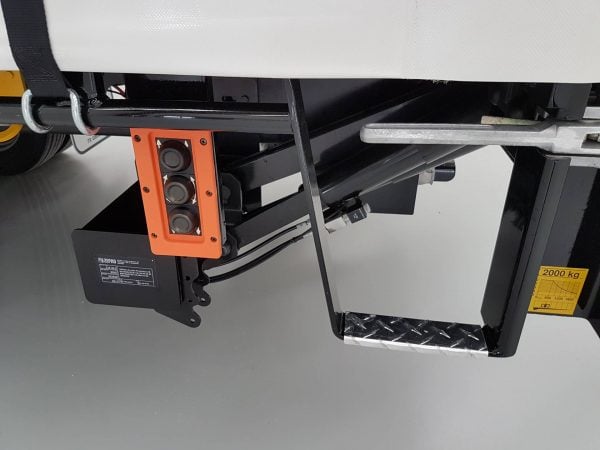
On flat deck trucks, this step is frequently next to the headboard, but bear in mind that there may not be a step on both sides or at all, like on this open curtainside truck:
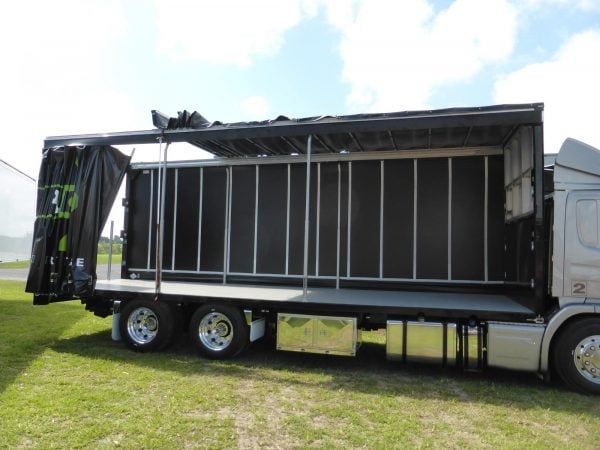
Other trucks have a trailer ladder which stores behind the cab or under the trailer; it fastens to the side when you need to get on or off.
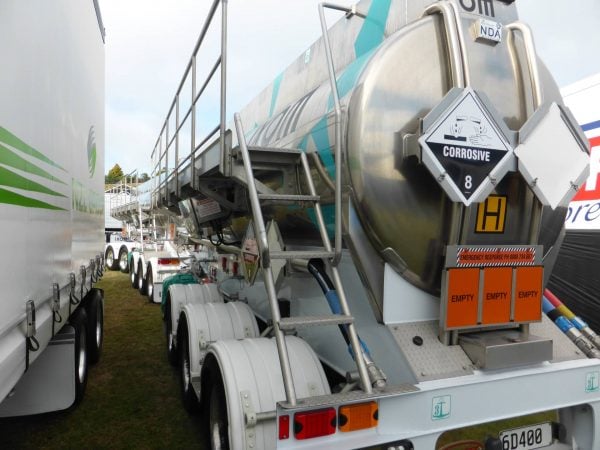
Other trailers will have steps and a catwalk, like this tanker:
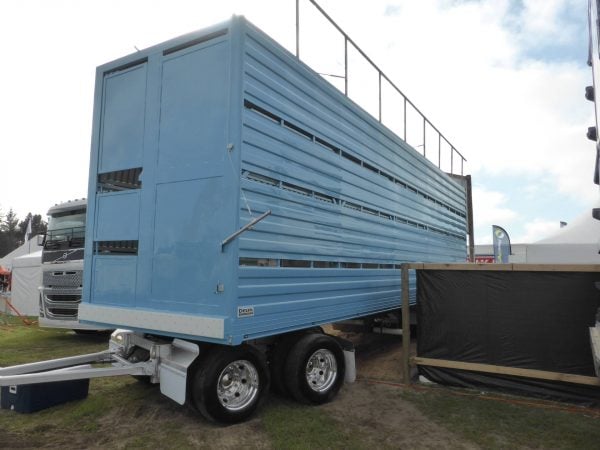
This stock trailer has a rail across the top for safety when walking on the top:
Getting into or out of a forklift
Use the same principles of three points of contact. Get onto the forklift forwards and off the forklift backwards using the side that doesn’t have the hand controls. Don’t use the hand controls as handholds.
How to avoid injury getting into or out of a truck
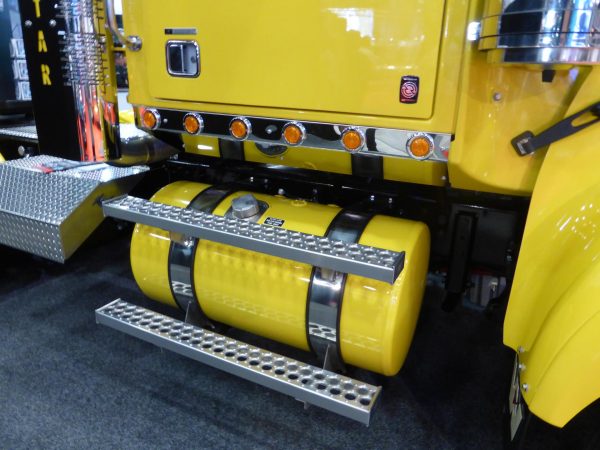
- Don’t jump out of the cab or off a trailer
- Don’t try to climb into or out of your cab while carrying too much – maintain three points of contact
- Don’t use tyres or hub caps as a step
- Watch out for surfaces that might be slippery because they are wet
- Use the steps or ladder when it’s available
- Use a dock for unloading if you need to walk on the deck


Darren has written over 3000 articles about driving and vehicles, plus almost 500 vehicle reviews and numerous driving courses. Connect with him on LinkedIn by clicking the name above
 Disqus