
• A TR Group Site
  • Help
  • Cart
Driving Tests DT logo small
Driving tests
  • Learner licence
    • Car
    • Motorbike
    • Heavy vehicle
    • Learner Licence Plus
  • Courses
  • Tourist
  • Resources
  • Learn
  • Resources
  • Learner licence
    • Car
    • Motorbike
    • Heavy Vehicle
    • Learner Licence Plus
  • Your courses
    • Enrolled courses
  • View all courses
  • Tourist
  • Resources home
  • iOS application
  • Android application
  • Contact us
  • Terms and conditions
  • Privacy
  • Home
  • /
  • Resources
  • / Sideloader

Sideloader and side lifter training in New Zealand

A container sideloader is a crane. It lifts a suspended load, which means the crane rules apply, and that has consequences some operators don’t expect. Under section 36 of the Health and Safety at Work Act 2015, the requirement is that operators are competent and that the business can show it. The machine itself falls under the Pressure Equipment, Cranes and Passenger Ropeways Regulations 1999 and needs a certificate of inspection before it can be used.

What the law requires of the operator: competence, with evidence of the skills, knowledge and experience to operate the machine safely, e.g. Sideloader Operator’s Certificate.

What the law requires of the machine: a certificate of inspection under the PECPR Regulations 1999.

Which document applies: the Approved Code of Practice for Cranes, not the forklift Code.

What is optional: Unit Standard 17679 Operate a truck-mounted sideloader. None is legally required for sideloader operation.

What is a sideloader?

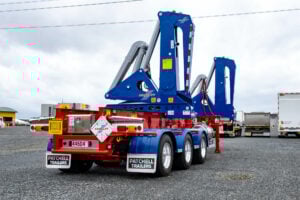
A self-loading container trailer. It’s typically a skeletal trailer fitted with two hydraulic crane modules, one at each end, which lift a shipping container from ground level up and onto the trailer deck without needing a forklift, reach stacker or yard crane.

Read a detailed description here

Isn't a sideloader a type of forklift though?

Two different machines share the name, which is where the confusion starts. A sideloader forklift is a lift truck with its mast and forks mounted on the side, used for handling long loads like timber, steel and pipe in narrow aisles (that’s a powered industrial lift truck under the forklift Code). A container sideloader, also called a side lifter or sidelifter and built by manufacturers including Hammar, Swinglift and Steelbro, is the truck- or trailer-mounted container crane described above. Only the second is a crane. If someone offers you sideloader training, establish which machine they mean.

Does a sideloader need a certificate of inspection?

Yes, on the basis that it’s a crane. Under the PECPR Regulations 1999 a crane must have a current certificate of inspection before it is used, issued following inspection by someone holding a certificate of competence for that work. This is a hard requirement rather than good practice, and it applies to the machine rather than the operator. A fully trained operator on an uncertified machine is still a compliance failure, and it’s the sort of thing that surfaces after an incident rather than before.

Do you need a licence to operate a sideloader?

It’s not so much a ‘licence’ — New Zealand doesn’t have one for crane work of any kind – it’s an operator’s certificate that demonstrates a level of training. What’s required is competence, and the Crane Code puts the obligation on the employer to be able to show that operators have the skills, knowledge and experience to operate safely. In practice that means documented training and a practical assessment on the machine, because principals, ports and container yards increasingly want to see it before granting site access.

What driver licence class do you need?

Most sideloaders are skeletal trailers towed by a tractor unit, which means a driver must have a class 5 licence.

Do sideloader drivers need a work time logbook?

Yes. Sideloaders will be class 4 or 5 vehicles, and drivers of those vehicles must keep a logbook for their working hours. This is different from a mobile crane operator who doesn’t need to keep a logbook. Mobile crane drivers are usually just driving between jobs, whereas a sideloader driver could pick up a container in Wellington and drive it to Gisborne.

Do you need unit standards to operate a sideloader?

No, they are not legally required, but many operators get Unit Standard 17679.

Some operators get Unit Standard 30072, but if a sideloader is the only vehicle they will be using, it is potentially overkill.

How do you know whether a container is too heavy to lift?

By checking rather than assuming, which is the point where a lot of incidents begin. The machine has a rated capacity that varies with the crane position, the reach and the ground conditions, and a container’s declared weight should be available before the lift — the gross mass of a packed container is required to be verified and declared through the shipping documentation. Container markings show tare and maximum gross weight, not the actual loaded weight. If the paperwork and the container don’t agree, the paperwork is the thing to question.

What ground conditions does a sideloader need?

Because the loading is asymmetric, during the lift the entire weight of the container acts on one side of the trailer, transferred through the stabiliser legs into whatever is beneath them. Soft ground, fill, recently trenched services, drainage covers, unsealed shoulders and road camber all matter, and so does anything buried. Stabilisers need adequate footing, level set-up and a solid bearing surface. A machine that lifted safely on the same site last week can tip this week if it rained in between.

What are the main causes of sideloader incidents?

Suspended weight and instability, in combination. Overloading beyond rated capacity, poor ground or stabiliser set-up, lifting on a slope or camber, wind acting on the container surface, and people standing within the fall zone or exclusion zone during the lift. Wind is the one most often dismissed: the larger the container, the more surface area for wind to act on, and the more force ends up on the machine.

What it’s also called

Sideloader, side loader, sidelifter, side lifter, self-loader, self-loading trailer, container sideloader, container side lifter, skeletal trailer, skelly, Swinglift, Hammar and Steelbro. Swinglift and Hammar are manufacturers’ names that have become generic in New Zealand usage. Note that “sideloader” also refers to a side-mast forklift, which is a completely different machine under a different code of practice — only the container side lifter is a crane.

Sources

  • Health and Safety at Work Act 2015, section 36
  • Health and Safety in Employment (Pressure Equipment, Cranes, and Passenger Ropeways) Regulations 1999
  • Approved Code of Practice for Cranes, third edition, 2013. WorkSafe notes this Code predates the Health and Safety at Work Act 2015 and should be read alongside all relevant industry standards.
  • Land Transport Rule: Work Time and Logbooks 2007
  • NZECP 34, New Zealand Electrical Code of Practice for Electrical Safe Distances

Sideloader work sits across three separate compliance regimes and most operators only think about one of them. The machine needs a current certificate of inspection because it’s a crane. The operator needs demonstrable competence on the crane and the right licence class for the combination. And the driver is usually inside the work time rules because the vehicle is carrying goods on the road. If you can produce two of those three and not the third, that’s your gap.

Additional resources and reading

How does wind speed affect sideloaders, forklifts, EWPs and truck loader cranes?

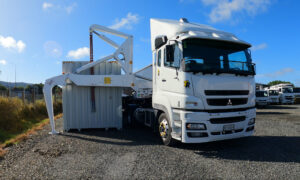
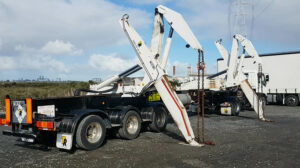
Four different vehicles, but one risk factor that needs to be considered before operating or lifting with them. The bigger the object being carried, the more wind resistance it creates, so the more force will be exerted on the machine.…
Read more ›

Common sideloader accidents and how to avoid them

Sideloaders can lift containers exceeding 30 tonnes, and whenever you’re dealing with a heavy, suspended weight, there are always hazards. It’s important to get sideloader or sidelifter training to understand how to operate the sideloader safely, and to understand the…

Read more ›

What should sideloader drivers consider when picking up or dropping off a container?

As a sideloader driver, you’ll have had training in how to assess a site’s hazards and you’ll know how to operate your machine, but there are things that are not often taught in sideloader training because they are not part…

Read more ›

What is a sideloader?

A sideloader trailer is typically a skeletal trailer with two crane modules for self-loading. The majority of sideloader work is loading containers, but they can be used for freight on container platforms, too. Some sideloaders have fixed crane positions, while…

Read more ›

Recent Resources
  • How to use an AED in a workplace cardiac arrest
  • Confined space entry under a permit to work system
  • Adult CPR: technique and what actually matters
  • What’s changed in WorkSafe’s 2026 working at height guidelines
  • When to call 111 from your workplace
  • Workplace First Aid Responsibilities in New Zealand
  • Creating permits for working at height
  • Using SAMPLE to gather patient information for a first aid assessment
  • The recovery position: when and how to use it
  • Isolation and lockout/tagout explained

Licences and Courses

  • Car
  • Motorbike
  • Heavy Vehicles
Car
  • Core
  • Behaviour
  • Parking
  • Emergencies
  • Road position
  • Intersection
  • Theory
  • Signs
Motorbike
  • Bike-specific questions
  • Core
  • Behaviour
  • Parking
  • Emergencies
  • Road position
  • Intersection
  • Theory
  • Signs
Heavy Vehicles
  • Class 2
  • Class 3-5
  • Core
  • Behaviour
  • Parking
  • Emergencies
  • Road position
  • Intersection
  • Theory
  • Signs

Vehicle and workplace training

  • About
  • Resources
DT Driver Training TR Group
About
  • About us
  • Contact us
  • Privacy Policy
  • Terms and Conditions
Resources
  • Homepage
  • Driving Tests Android App
  • Driving Tests iPhone App
  • Getting your learner licence
DT Driver Training TR Group
Copyright 2010-2026 DT Driver Training Ltd, PO Box 12541, Penrose, Auckland, 1642. All rights reserved. Questions and images are used with permission from NZTA; question answers are proprietary.