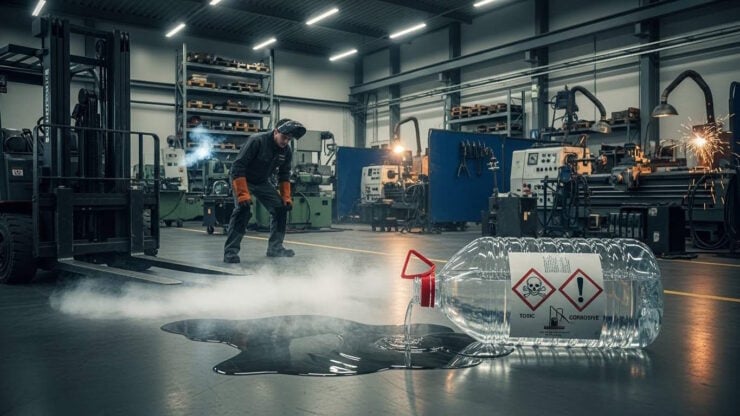
Many commonly used workplace chemicals give off vapours or fumes that are heavier than air, meaning they can sink, spread along floors, and accumulate in low areas such as pits, drains, sumps, basements, or inside vehicles and containers. This makes them especially dangerous for asphyxiation, fire, or explosion risk.
Below is a practical, safety-focused list grouped by chemical type.
Common Chemicals with Vapours Heavier Than Air
Fuels & Petroleum Products
These are very common in transport, workshops, and yards.
- Petrol (gasoline)
- Diesel fuel
- Kerosene
- Aviation fuel
- Heating oil
- Mineral spirits / white spirits
There is a high fire and explosion risk; vapours can travel long distances to ignition sources.
Solvents
Widely used in cleaning, degreasing, painting, and manufacturing.
- Acetone
- Toluene
- Xylene
- Methyl ethyl ketone (MEK)
- Isopropyl alcohol (IPA)
- Methanol
- Ethanol
- Trichloroethylene
- Perchloroethylene (PERC)
Vapours can build up in enclosed or poorly ventilated areas.
Refrigerants & Gases
Often overlooked because many are colourless and odourless.
- Carbon dioxide (CO₂)
- Propane
- Butane
- LPG (liquefied petroleum gas)
- Refrigerants such as R134a, R404A, ammonia alternatives
CO₂ is not flammable but can displace oxygen and cause sudden unconsciousness.
Industrial & Toxic Chemicals
Less common but very hazardous.
- Hydrogen sulfide (H₂S)
- Chlorine
- Sulfur dioxide
- Carbon tetrachloride
- Ethylene dichloride
Extremely dangerous at low concentrations, often fatal without warning.
Paints, Coatings & Adhesives
Common in workshops, panel shops, and construction.
- Paint thinners
- Epoxy hardeners
- Spray paints
- Contact adhesives
- Resins
Spray application greatly increases airborne vapour concentration.
Why “Heavier Than Air” Matters
- Vapours pool at ground level
- They linger longer than lighter gases
- Normal ventilation may be ineffective
- Ignition sources at floor level (forklifts, static sparks, drains) increase risk
- Workers may walk into dangerous concentrations unknowingly
Key Safety Controls
- Use low-level ventilation where required
- Keep ignition sources away from floor level
- Never rely on smell alone
- Store chemicals correctly and keep lids sealed
- Have spill kits suitable for chemicals, not just oil
- Spill control training should include vapour behaviour, not just liquid and solid spills

Darren has written over 3000 articles about driving and vehicles, plus almost 500 vehicle reviews and numerous driving courses. Connect with him on LinkedIn by clicking the name above