
LPG cylinders are designed to be robust, but they are not indestructible. In many workplaces, cylinder damage doesn’t come from dramatic incidents; it comes from everyday handling, storage, and use.
Understanding what causes LPG cylinder damage helps prevent leaks, injuries, equipment downtime, and compliance issues.
Impact and Dropping
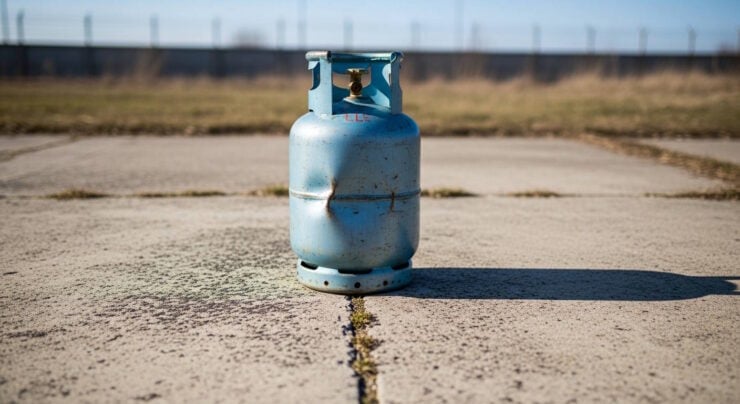
One of the most common causes of LPG cylinder damage is impact.
This includes:
- Cylinders dropped during loading or changeover
- Cylinders knocked over by forklifts, vehicles, or pallet jacks
- Cylinders rolling off stands or unsecured storage areas.
Even if a cylinder looks intact after being dropped, impact can:
- Damage or misalign the valve
- Crack valve protection collars
- Create small fractures that worsen over time.
Valve damage is particularly serious, as it can lead to uncontrolled gas release.
Incorrect Handling and Transport
LPG cylinders are often damaged during short, informal moves. In fact, it’s recommended that people who use LPG bottles do the following training so that they can cope with the load, and understand the dangers:
Manual handling and back injury training
Common examples of actions that cause damage include:
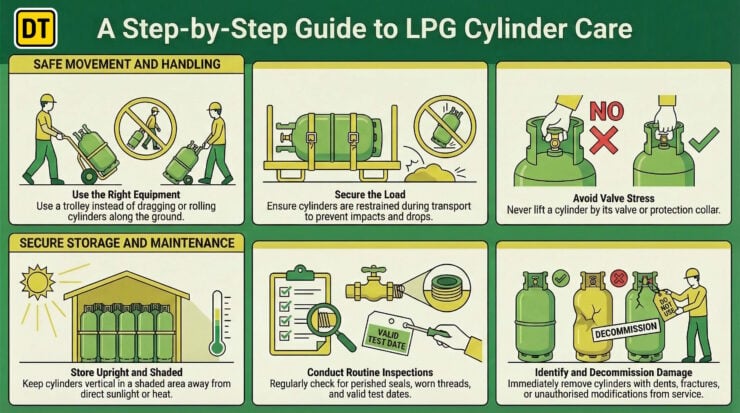
- Dragging cylinders instead of using a trolley
- Rolling cylinders along the ground
- Lifting cylinders by the valve or collar
- Transporting cylinders loose in vehicles.
These practices place stress on parts of the cylinder that are not designed to carry load, increasing the risk of damage and leaks.
Poor Storage Practices
Improper storage contributes significantly to cylinder deterioration.
Typical storage-related causes include:
- Cylinders stored lying down instead of upright
- Inadequate restraints allowing cylinders to tip or fall
- Storing cylinders where they are exposed to vehicle traffic
- Corrosion from moisture, chemicals, or coastal environments.
Over time, corrosion can weaken the cylinder wall or valve components, making the cylinder unsafe even if it hasn’t been dropped. If possible, cylinders should be protected from the worst of the weather, in a shaded area.
Heat Exposure and Fire Damage
Exposure to excessive heat can compromise LPG cylinders.
Sources of heat damage include:
- Storing cylinders near heaters, furnaces, or hot machinery
- Leaving cylinders in direct sunlight for extended periods
- Hot work carried out too close to stored LPG.
Heat can increase internal pressure and degrade seals, increasing the likelihood of leaks or valve failure.
Wear, Age, and Lack of Inspection
LPG cylinders are subject to wear over their service life.
Damage can result from:
- Perished seals or O-rings
- Worn valve threads
- Missing or damaged valve protection caps
- Cylinders kept in service beyond their test date
Without routine visual checks, these issues often go unnoticed until a leak or incident occurs.
Improvised Repairs and Modifications
Attempting to “make do” with damaged cylinders is a serious risk.
Examples include:
- Taping damaged valves
- Using incorrect fittings
- Forcing connections that don’t align properly
- Modifying valve protection or mounts.
LPG cylinders and valves are certified systems. Any unauthorised modification compromises safety and compliance.
Why Cylinder Damage Matters
A damaged LPG cylinder can lead to:
- Gas leaks
- Cold burns or inhalation exposure
- Fire or explosion risk
- Equipment downtime
- Regulatory non-compliance.
Most of these outcomes are preventable through proper handling, storage, and inspection.
Key Takeaway
LPG cylinder damage rarely comes from one big mistake. It usually comes from small shortcuts repeated over time. Treating cylinders carefully, storing them correctly, and removing damaged cylinders from service protects people, equipment, and your business. Completing manual handling training gives people strategies to better cope with the weight and general unwieldiness of gas cylinders, while dangerous goods handler training gives them the understanding of the risks.


Darren has written over 3000 articles about driving and vehicles, plus almost 500 vehicle reviews and numerous driving courses. Connect with him on LinkedIn by clicking the name above