• A TR Group Site
  • Help
  • Cart
Driving Tests DT logo small
Driving tests
  • Learner licence
    • Car
    • Motorbike
    • Heavy vehicle
    • Learner Licence Plus
  • Courses
  • Tourist
  • Resources
  • Learn
  • Resources
  • Learner licence
    • Car
    • Motorbike
    • Heavy Vehicle
    • Learner Licence Plus
  • Your courses
    • Enrolled courses
  • View all courses
  • Tourist
  • Resources home
  • iOS application
  • Android application
  • Contact us
  • Terms and conditions
  • Privacy
  • Home
  • /
  • Resources
  • /
  • Advice
  • / Bridge strikes: what are they and how can you prevent them?

Bridge strikes: what are they and how can you prevent them?

New Zealand has a large number of roads that pass under bridges for roads, rail and pedestrians. The legal maximum height for a vehicle before a permit is required is 4.3m, and the majority of bridges fall into that category, meaning there’s no issue with a vehicle under the legal height passing underneath them.

Some bridges, however, are lower, and some vehicles are taller than 4.3m (either deliberately or inadvertently).

Bridges may have a height sign that shows the lowest height (the bridge will vary slightly in height above the road because roads slope for drainage, and the bridge may also change elevation.)
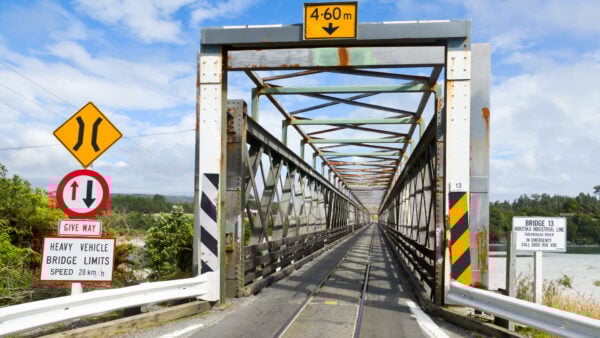
Even though the clearance of the structure on this bridge is still more than 4.3m, many vehicles still operate with overheight permits, or might be flaunting the limits. Better safe than having to close the bridge to all traffic and trains while it’s repaired!

Bridges might also have sensors before the bridge that detect overheight vehicles.
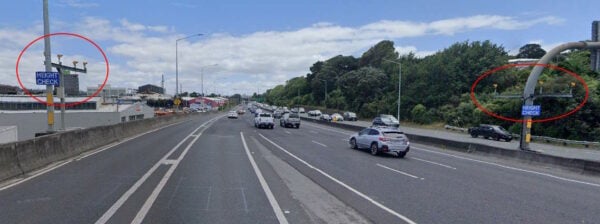
A warning is then displayed on a separate sign further up the motorway. This is used in places like the Penrose Road motorway overpass which is frequently hit, despite having 4.41m clearance southbound and 4.45m northbound.
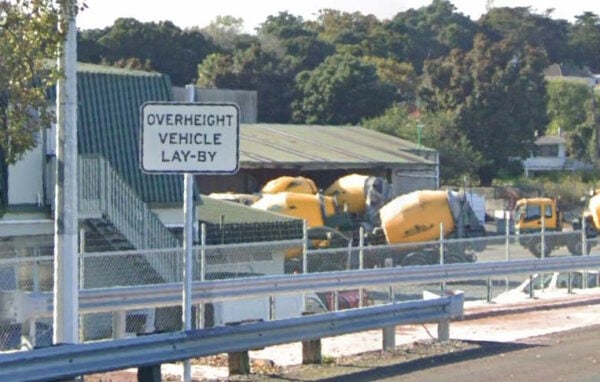
Overheight vehicle lay-by just before the Penrose Road motorway overpass.

On motorways, the vehicle can exit at the offramp and rejoin at the next offramp, unless not permitted.

When operating an overheight vehicle, it is necessary to get an overdimension permit from NZTA which may require you to do a pre-travel route check, get any required permissions (e.g. from rail operators), and comply with any vehicle lighting and piloting requirements. Emergency services may need to be notified.
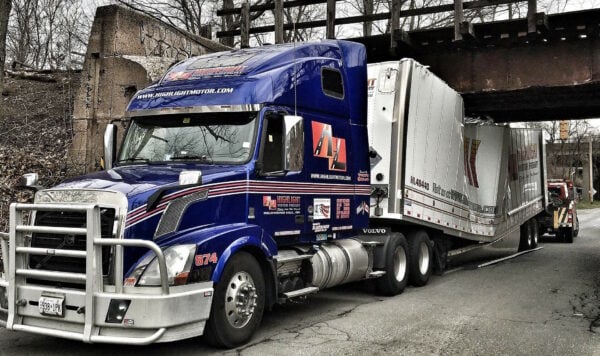
Truck hits low bridge in America
By Darren Cottingham

Darren has written over 3000 articles about driving and vehicles, plus almost 500 vehicle reviews and numerous driving courses. Connect with him on LinkedIn by clicking the name above

‹ How to avoid trapping and crushing injuries when using a scissor lift or boom lift
Common sideloader accidents and how to avoid them ›
Posted in Advice, Heavy Vehicle
  • DisqusDisqus
Recent Resources
  • How to use an AED in a workplace cardiac arrest
  • Confined space entry under a permit to work system
  • Adult CPR: technique and what actually matters
  • What’s changed in WorkSafe’s 2026 working at height guidelines
  • When to call 111 from your workplace
  • Workplace First Aid Responsibilities in New Zealand
  • Creating permits for working at height
  • Using SAMPLE to gather patient information for a first aid assessment
  • The recovery position: when and how to use it
  • Isolation and lockout/tagout explained

Licences and Courses

  • Car
  • Motorbike
  • Heavy Vehicles
Car
  • Core
  • Behaviour
  • Parking
  • Emergencies
  • Road position
  • Intersection
  • Theory
  • Signs
Motorbike
  • Bike-specific questions
  • Core
  • Behaviour
  • Parking
  • Emergencies
  • Road position
  • Intersection
  • Theory
  • Signs
Heavy Vehicles
  • Class 2
  • Class 3-5
  • Core
  • Behaviour
  • Parking
  • Emergencies
  • Road position
  • Intersection
  • Theory
  • Signs

Vehicle and workplace training

  • About
  • Resources
DT Driver Training TR Group
About
  • About us
  • Contact us
  • Privacy Policy
  • Terms and Conditions
Resources
  • Homepage
  • Driving Tests Android App
  • Driving Tests iPhone App
  • Getting your learner licence
DT Driver Training TR Group
Copyright 2010-2026 DT Driver Training Ltd, PO Box 12541, Penrose, Auckland, 1642. All rights reserved. Questions and images are used with permission from NZTA; question answers are proprietary.