
Tyres must be checked before every trip as part of your pre-trip inspection. Tyre failures on a steer axle can cause loss of control, while tyre failures on twin-tyred axles can wipe out suspension components and leave debris on the road.
1. Check tyre pressures
- Visually and audibly (by hitting them with a mallet or similar) check all steer, drive, and trailer tyres for signs of under-inflation.
- Periodically use a pressure gauge or tyre monitoring system where fitted.
- Ensure tyres on the same axle are evenly inflated.
- Recheck pressures if the vehicle has recently been off-road or on rough surfaces.
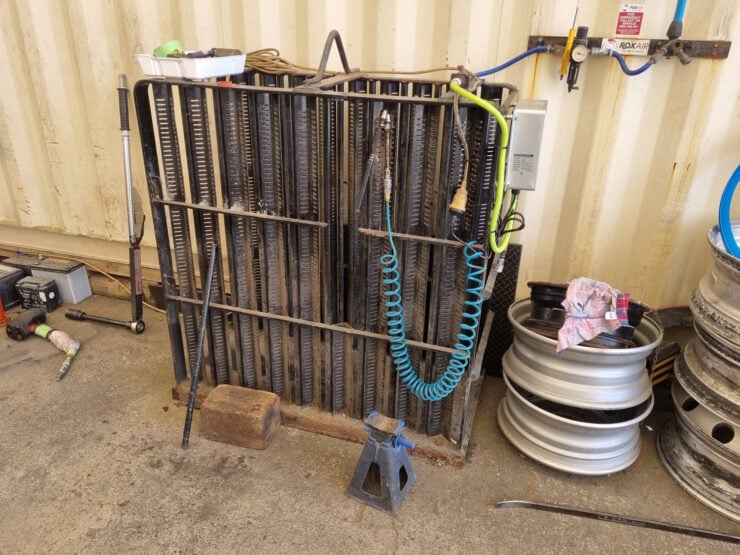
- If you need to inflate the tyres, you’ll need a specialist for this because they need to be in a cage when inflated.
2. Inspect tread condition and wear
- Confirm tread depth is above the legal minimum across the full tyre width.
- Look for uneven wear, feathering, or cupping, particularly on steer and drive axles.
- Inspect inner tyres on duals, including trailer axles.
3. Inspect sidewalls closely
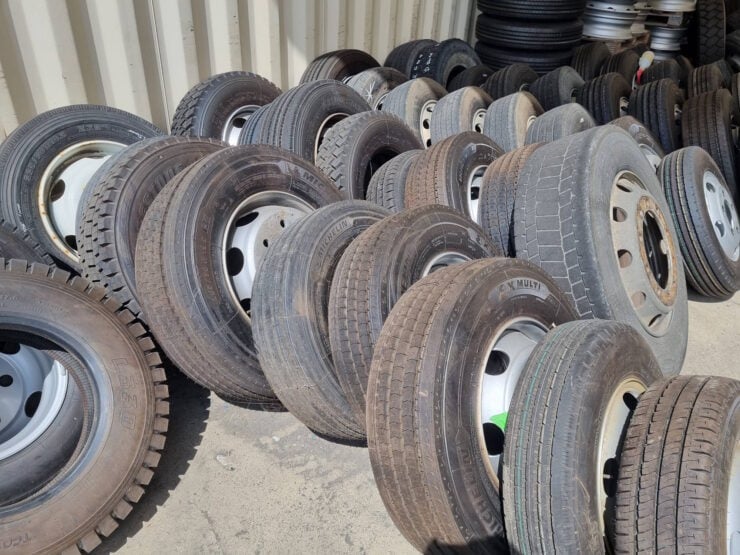
- Check for cuts, splits, bulges, cracking, or exposed cords.
- Pay extra attention to sidewalls after site work, as kerbs, rubble, and debris can cause hidden damage.
- Any sidewall damage is a defect and must be reported.
4. Check for foreign objects and damage
- Look for nails, screws, stones, wire, or other debris lodged in the tread.
- Check between dual tyres for trapped material that could cause heat build-up, failure, or become a missile if it dislodges while the tyre is spinning.
5. Inspect wheels and rims
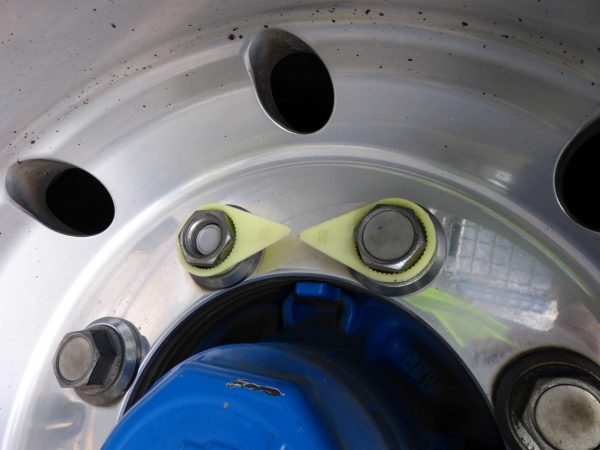
- Check for cracked or damaged rims, loose or missing wheel nuts, and rust streaks indicating the nuts are coming loose. If you use wheel nut indicators, this is more obvious.
- Ensure rims are free of excessive mud or debris, particularly after worksite access.
6. Check valves and valve caps
- Valves must be straight, undamaged, and fitted with caps.
- Listen for air leaks, especially on trailer axles.
7. Check trailer tyres and condition
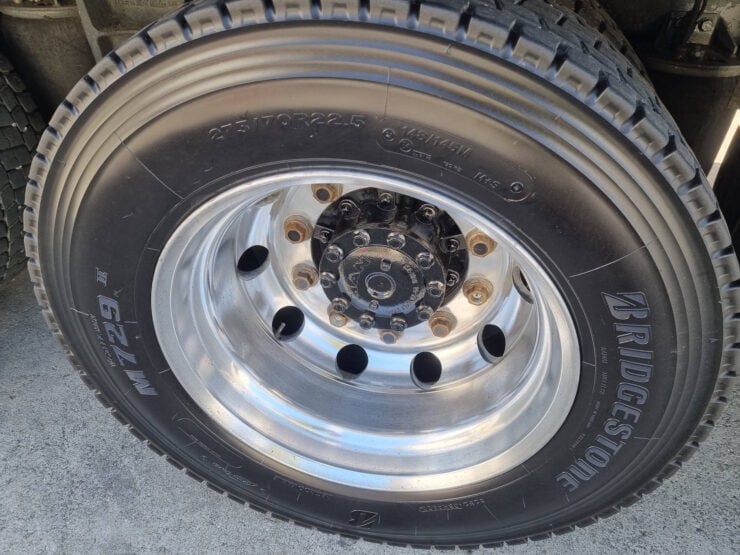
- Do not focus only on the tractor unit — fully inspect all trailer tyres.
- Check for mismatched tyre sizes or significantly different tread depths, which can affect stability and braking.
8. Post-worksite check (if applicable)
- After leaving a worksite, recheck tyres for damage, debris, or pressure loss before continuing the journey at road speeds.
If in doubt — do not proceed
Any tyre defect, damage, or pressure issue must be reported and rectified before travel or site entry. Never enter or leave a worksite with a known tyre defect.


Darren has written over 3000 articles about driving and vehicles, plus almost 500 vehicle reviews and numerous driving courses. Connect with him on LinkedIn by clicking the name above