
When winter arrives, many drivers suddenly experience slow engine cranking, warning lights, or vehicles that refuse to start altogether. In most cases, the culprit isn’t the engine or fuel system—it’s the battery. Battery health plays a critical role in vehicle performance during cold weather, and understanding why can help drivers avoid breakdowns and costly repairs.
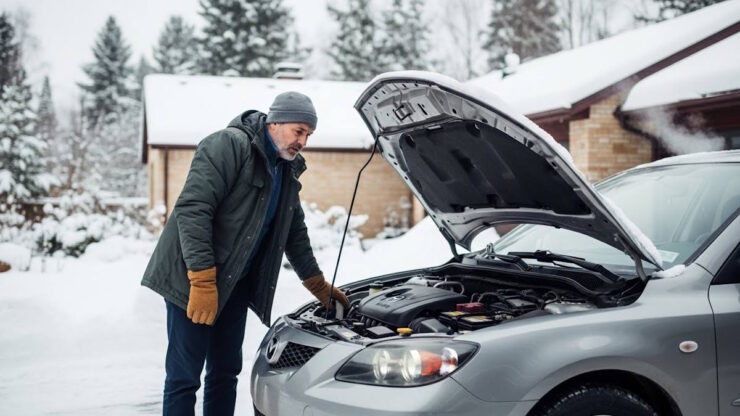
Why Cold Weather Is Hard on Batteries
Vehicle batteries rely on chemical reactions to generate electrical power. Cold temperatures slow these chemical reactions, reducing the battery’s ability to deliver power. As a general rule:
- At 0°C, a battery can lose around 20–30% of its starting power
- At -18°C, it can lose up to 50% of its capacity
At the same time, cold weather makes engines harder to turn over. Thicker engine oil and tighter mechanical tolerances increase resistance, meaning the battery has to work harder just when it is least able to do so.
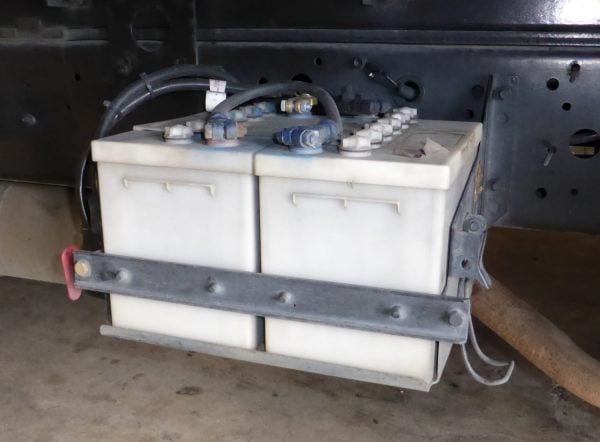
Truck batteries are required to deliver far higher cranking power than passenger vehicles. In cold weather, this demand increases significantly, especially on high-compression diesel engines. Even a single weak battery in a battery bank can reduce overall system performance and cause starting failures.
Signs of a Weak Battery in Cold Conditions
A battery that seems fine in warmer months may struggle once temperatures drop. Common warning signs include:
- Slow or laboured engine cranking
- Dimming headlights when starting
- Clicking sounds instead of engine turnover
- Dashboard warning lights flickering or resetting
- Electrical systems behaving erratically
If these symptoms appear during cold weather, the battery may already be nearing the end of its service life.
Battery Age and Cold Weather Performance
Most vehicle batteries last 3 to 5 years, depending on usage and conditions. As batteries age, internal components degrade, reducing their ability to hold and deliver charge. Cold weather exposes this weakness quickly.
An older battery might still show an acceptable voltage reading, but under the heavy load of a cold start, it may not be able to supply enough current (measured as Cold Cranking Amps, or CCA). This is why many winter breakdowns occur suddenly, with little warning.
Impact on Modern Vehicles
Modern vehicles rely heavily on electronics. In cold conditions, a weak battery can affect more than just starting:
- Engine management systems may not initialise correctly
- Stop-start systems may disable themselves
- Safety systems such as ABS or traction control may trigger warnings
- Diesel vehicles may struggle with glow plug operation
In commercial vehicles, vans, and lorries, battery issues can also affect auxiliary systems such as tail lifts, refrigeration units, and telematics.
Diesel Engines and Cold Starts
Diesel engines are particularly demanding on batteries in cold weather. Glow plugs require significant electrical power, and higher compression ratios mean the starter motor works harder. A battery that is marginal in summer may fail completely in winter, especially after short journeys that don’t allow full recharging.
Idling, Rest Breaks and Parasitic Drain
During overnight rest breaks, batteries may be supporting heaters, fridges, lighting, and electronic devices. In cold weather, this drain combined with reduced battery efficiency can leave insufficient reserve power for morning start-up.

Auxiliary Equipment
If your vehicle has additional equipment, e.g. a tail lift, low battery levels can stop these from working effectively, even when no mechanical fault exists.

How to Protect Battery Health in Cold Weather
Drivers can reduce cold-weather battery problems with a few practical steps:
- Test the battery before winter, especially if it’s over three years old
- Keep terminals clean and tight to reduce resistance
- Avoid repeated short trips, which prevent the battery from fully recharging
- Turn off electrical loads (heated seats, headlights, heaters, air conditioning) before starting
- Park in a garage or sheltered area when possible
For vehicles that are used infrequently, a battery maintainer or trickle charger can be particularly effective.
Cold starts place additional strain on truck batteries as the air compressor must build pressure for braking and suspension systems. Low battery voltage can slow compressor operation, delaying safe departure and increasing downtime.
Using batteries with insufficient Cold Cranking Amps (CCA) or mixing old and new batteries in the same bank can significantly reduce cold-weather reliability. Truck batteries should always be matched in age, capacity, and specification.
When to Replace a Battery
If a battery shows signs of weakness during cold weather, replacement is often the most reliable solution. Waiting until it completely fails can lead to inconvenient breakdowns, missed work, or unsafe roadside situations, especially in freezing conditions.
As a general guideline, if a battery:
- Is more than four years old
- Struggles repeatedly in cold starts
- Fails a load or CCA test
…it should be replaced proactively.
Cold weather places extra strain on every part of a vehicle, but the battery is often the first component to show signs of trouble. Good battery health is essential for reliable starting, stable electronics, and overall vehicle performance in winter conditions.


Darren has written over 3000 articles about driving and vehicles, plus almost 500 vehicle reviews and numerous driving courses. Connect with him on LinkedIn by clicking the name above