
When people think about LPG risks, they usually think about fires or explosions. In reality, most LPG-related injuries in workplaces are far more ordinary. Some can be treated by a person who has done workplace first aid training, while others must be treated at hospital.
LPG bottles are heavy, awkward to handle, and contain pressurised gas that can cause serious injury if something goes wrong. Understanding these risks helps prevent injuries and downtime, and supports your health and safety obligations.
Manual Handling Injuries: The Most Common Risk
LPG cylinders are heavy and unbalanced, especially when full. Common sizes used in workplaces can weigh anywhere from 18 kg to over 90 kg.
Typical manual handling injuries include:
- Back and shoulder strains from lifting or twisting
- Muscle tears from sudden movements
- Dropped cylinders causing foot or lower-leg injuries
- Crush injuries if a cylinder tips or rolls unexpectedly
These injuries often occur during:
- Cylinder changeovers
- Moving bottles short distances “just this once”
- Lifting cylinders into vehicles or onto stands
- Handling cylinders on uneven or slippery surfaces
Even experienced workers can be injured if they rush, lift awkwardly, or try to manage a cylinder alone.
WorkSafe requires businesses to give manual handling training to workers who lift heavy items. You can do manual handling training here.
Dropped Cylinders: More Than Just Bruises
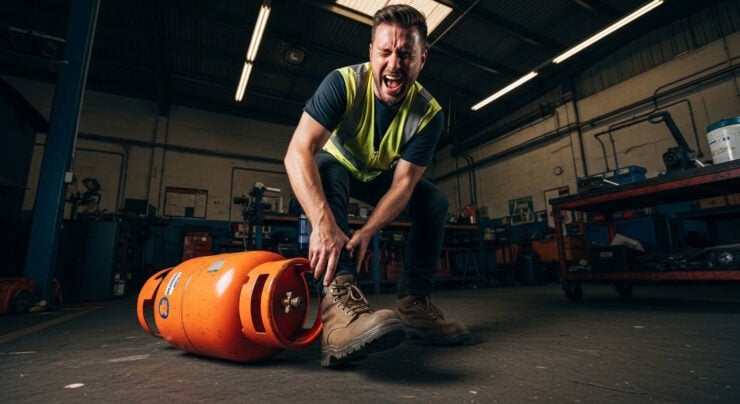
Dropping an LPG bottle can cause:
- Foot fractures or severe bruising
- Damage to valves or fittings
- Uncontrolled gas release if the valve is compromised
A damaged valve can turn a dropped bottle into a serious hazard, not just an injury risk. This is why cylinders must always be handled carefully and stored securely. First aid training is advisable for team members who are exposed to this type of risk.
Cold Burns and Frostbite from LPG
LPG is stored as a liquid under pressure. When it escapes rapidly, it cools extremely fast.
This can cause:
- Cold burns to hands or skin
- Frostbite-type injuries
- Blistering and tissue damage
Cold burns commonly occur when:
- A valve or hose leaks during connection or disconnection
- A worker places their hand near a leaking fitting
- Gas vents unexpectedly during cylinder changeover.
These injuries can happen in seconds and may not be immediately painful, which increases the risk of severe damage.
Inhalation and Asphyxiation Risks
LPG itself is not toxic, but it displaces oxygen. In enclosed or poorly ventilated spaces, inhalation can lead to:
- Dizziness
- Headaches
- Nausea
- Shortness of breath
- Loss of consciousness in severe cases
This risk is higher when:
- Cylinders are handled indoors
- Leaks go unnoticed
- Gas accumulates in low areas.
Workers may not immediately recognise inhalation symptoms as an LPG issue, which delays response.
Secondary Injuries and Near Misses
LPG handling also contributes to indirect injuries, such as:
- Slips and trips while manoeuvring cylinders
- Sudden movements to avoid falling bottles
- Panic reactions when gas is heard or smelled.
Near misses involving LPG bottles should always be reported and reviewed, as they often indicate unsafe handling practices or inadequate controls.
Reducing Injury Risk from LPG Bottles
Workplaces can significantly reduce injury risk by:
- Using mechanical aids or bottle trolleys
- Ensuring two-person lifts where required
- Providing clear procedures for cylinder handling
- Training workers to recognise cold burn and inhalation risks
- Ensuring workers are authorised and competent to handle LPG by doing dangerous goods handler training or forklift LPG bottle swap training.
Key Takeaway
LPG bottle injuries are often preventable. Most occur during everyday handling, not emergencies. Treating LPG bottles as both a manual handling risk and a hazardous substance helps protect workers and keeps operations running smoothly.


Darren has written over 3000 articles about driving and vehicles, plus almost 500 vehicle reviews and numerous driving courses. Connect with him on LinkedIn by clicking the name above