• A TR Group Site
  • Help
  • Cart
Driving Tests DT logo small
Driving tests
  • Learner licence
    • Car
    • Motorbike
    • Heavy vehicle
    • Learner Licence Plus
  • Courses
  • Tourist
  • Resources
  • Learn
  • Resources
  • Learner licence
    • Car
    • Motorbike
    • Heavy Vehicle
    • Learner Licence Plus
  • Your courses
    • Enrolled courses
  • View all courses
  • Tourist
  • Resources home
  • iOS application
  • Android application
  • Contact us
  • Terms and conditions
  • Privacy
  • Home
  • /
  • Resources
  • / Advice ( / Page 12)

Advice Resources

Riding a motorbike in hot weather – staying cool

Skin versus the road is a argument the road will always win, but it doesn’t stop motorcyclists from riding around in summer wearing shorts, a t-shirt and jandals. Unfortunately summer is the time you really want to be outside on…

Read more ›

How hot does your car get in summer?

85 degrees Celsius is enough to burn your skin, and that’s how hot black surfaces in your car can reach if they are exposed to the sun when it’s just 35 degrees outside. The air temperature inside the car could…

Read more ›

Group riding on a motorbike – advice to stay safe

Group riding on motorbikes can be fun, but it can also make riding more dangerous and frustrating. Group size Groups should be kept small and always make sure that all riders are at a similar level otherwise the slowest tend…

Read more ›

Company driver training

What is company driver training? Company driver training (or ‘fleet driver training’) is where you provide information and upskilling to drivers that drive while working for your company. Companies have a legal obligation under the Health and Safety at Work Act 2015…

Read more ›

mobile phone use while driving

Online driver safety course

How do you improve the safety of your employee drivers? There are six main areas you can improve driver safety: Reducing distractions Improving driver health and fitness Eliminating drug and alcohol usage Improving awareness of dangers so that drivers drive to…
Read more ›

Driving for work

What type of drivers are most at risk of accidents?

People who drive at work People who drive at work are more likely to have an accident than people that don’t. There are a number of factors that contribute to the risk: Driving for work means you are on the…

Read more ›

off-road minibus

Driving at Work: Reducing Risks

People who drive for work spend more time on the road in stressful situations while multitasking and therefore increase their risk of having an accident. In fact, according to NZTA and ACC, up to 25% of work vehicles will be…

Read more ›

carbon dioxide emissions

Fuel CO2 calculator: carbon dioxide emissions in kg

The approximate CO2 per litre of diesel fuel is 2.68kg, and for petrol it is approximately 2.31kg. LPG produces around 1.51kg per litre. There is not much variation in this, even with new vs old vehicles; the main factor that…

Read more ›

Safe driving policy

How to create a safe driving policy Every company or entity that has employees, volunteers or contractors drive its vehicles or use their own vehicles directly for work purposes must have a safe driving policy. You can create your own,…

Read more ›

Methods used to encourage sensible lawful driving

The government, police and road authorities traditionally use a variety of fear-based techniques to encourage people to stick to the road rules. Rules and laws are created for safety and/or convenience, and breaking these rules results in some kind of…

Read more ›

Smashed BMW

How to avoid being the victim of an insurance scam accident (cash for crash)

This is a very rare occurrence in New Zealand because we have ACC, but it pays to understand what happens because it’s common in some other countries (particularly eastern European countries and Russia). In fact, it’s so common in Russia…

Read more ›

Can you drive in New Zealand on an overseas licence?

Any visitor to New Zealand with a current, valid overseas private driving licence can drive for 12 months using that licence before they have to change it to a New Zealand licence. Occasionally these timeframes are temporarily changed by the…

Read more ›

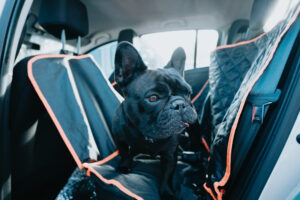
How to transport pets

Transporting pets in your car Brake heavily with an unrestrained dog in the back of your car, and a canine missile will be projected into you, your passenger, or through the windscreen. This is not good for the pet or…

Read more ›

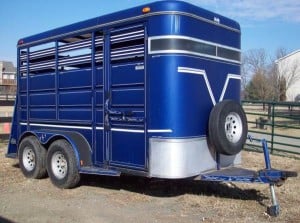
horse float

Towing a horse float

Towing a normal trailer is much easier than towing a horse in a trailer. A horse is several hundred kilos of unstable, top-heavy mass that can move around in your trailer and it makes driving a challenge as you will…

Read more ›

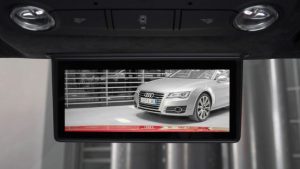
Will we need wing mirrors in the future?

Wing mirrors – also called side mirrors or door mirrors – help the driver or rider see what’s at the side and behind them. Despite their usefulness in reversing and changing lanes, cars and bikes didn’t used to have them…

Read more ›

Should the New Zealand speed limit be raised?

New Zealand’s maximum speed limit is 100km/h except for a couple of stretches of motorway which are 110km/h. It was introduced at a time when cars didn’t have anti-lock brakes, tyres were poor-performing radial cross-plies, and our roading system had…

Read more ›

mobile phone use while driving

Streaming while driving

Broadcasting live video of yourself is now easy with apps such as Periscope and Facebook Livestream on your smartphone. Even YouTube is getting in on it. The possibilities are endless, from enabling relatives across the world to see a special…

Read more ›

Overtaking a long vehicle that’s turning

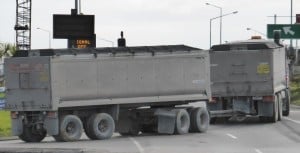
What’s the meaning of swept path? When a long vehicle turns a corner the rear wheels follow a path with a tighter arc than the front wheels as the trailer is pulled around. The area between the innermost wheel’s path…

Read more ›

in-car camera

Can you record a driving test?

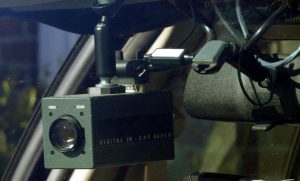
You are allowed to record a driving test using a video camera or audio recorder in the following situations: If the camera records what is happening in the car both the testing officer and the person taking the test must…

Read more ›

Medical requirements for driving

In order to drive you must meet a minimum level of health. Every time you renew or replace your driver’s licence you must either declare yourself fit to drive or, in some cases, supply a medical or eyesight certificate. Some…

Read more ›

‹ Older posts
Newer posts ›
Recent Resources
  • Interpreting Manufacturer Load Capacity Specifications
  • PPE, safety equipment and hazardous substances in permitted work
  • How to find your real driving triggers (and why most drivers get it wrong)
  • PPE Requirements for Truck Loader Crane Operators and Ground Crew
  • Atmospheric testing for Permit Issuers as part of the permit to work system
  • The pre-drive routine: why the first few minutes of your driving shift matter most
  • What are outriggers or straddle legs on a forklift or electric pallet jack?
  • Preparing the worksite
  • What is a forklift paper roll clamp, and how does it work?
  • Manual vs Automatic: Which Works Best in Rural Driving

Licences and Courses

  • Car
  • Motorbike
  • Heavy Vehicles
Car
  • Core
  • Behaviour
  • Parking
  • Emergencies
  • Road position
  • Intersection
  • Theory
  • Signs
Motorbike
  • Bike-specific questions
  • Core
  • Behaviour
  • Parking
  • Emergencies
  • Road position
  • Intersection
  • Theory
  • Signs
Heavy Vehicles
  • Class 2
  • Class 3-5
  • Core
  • Behaviour
  • Parking
  • Emergencies
  • Road position
  • Intersection
  • Theory
  • Signs

Vehicle and workplace training

  • About
  • Resources
DT Driver Training TR Group
About
  • About us
  • Contact us
  • Privacy Policy
  • Terms and Conditions
Resources
  • Homepage
  • Driving Tests Android App
  • Driving Tests iPhone App
  • Getting your learner licence
DT Driver Training TR Group
Copyright 2010-2026 DT Driver Training Ltd, PO Box 12541, Penrose, Auckland, 1642. All rights reserved. Questions and images are used with permission from NZTA; question answers are proprietary.