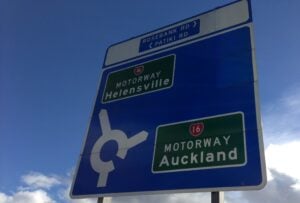
Although they can come in different colours and shapes and can be permanent, temporary or even on a moving vehicle, New Zealand road signs still aren't difficult to understand. In fact, most of the signs positioned on Kiwi roads are universal symbols and shapes that are used all around the world.
Signs that have prominent symbols are very common in NZ, they are effective because they are quick to read and easy for all drivers to understand.
Almost all road signs fit into three main groups, these are:
There are examples of each type of sign below but these are only a select sample of the many different signs on NZ roads.
Important: Local road authorities may have special rules for drivers in specific areas. These restrictions should be indicated by special signs or markings and must be obeyed in that area.
Compulsory signs tell you what you absolutely must or must not do.
They are usually red or blue in colour.
Turn right
Continue going straight ahead
Keep left
You must not go faster than 50 km/h
You must not drive into this road
You must not turn left
You must not make a U-turn
You must reach a complete stop and then give way
You must slow down(or stop, if required) and give way
School patrol – you must stop
Warning signs are there to alert drivers to a specified hazard on the road ahead or in the area. They warn you so that you can be careful for your own safety, the safety of other road users, the safety of nearby animals or the safety of road workers carrying out maintenance.
There are two types of warning signs:
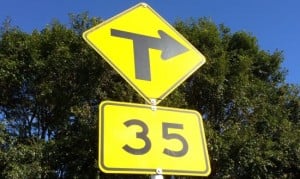
Both types of warning signs are usually diamond shaped.
Permanent warning signs are yellow and black. They are usually placed at the beginning of an area of particular caution.
Pedestrian crossing
Look out for children
Slippery surface
Road narrows
Temporary warning signs are orange and black. They are always placed at the beginning of an area where extra caution is presently required.
Road works
Left lane closed
Slips
Metal or loose surface
Stop on road workers request
Other hazard - this sign will always be displayed with another sign explaining the hazard
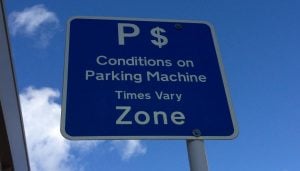
Information signs inform you of relevant information for your journey, like distances to the next town or state highway numbers. They are generally rectangular and come in a range of colours and sizes.
Shows the state highway number and the distance in kilometres to places listed
Shows directions to places at the upcoming intersection
Shows the way to the nearest information centre
When oversize vehicles or vehicles carrying very large loads use public roads, they must have special signage mounted on them. They may also be accompanied by pilot vehicles to warn other road users to be careful.
If you see one of these signs or a pilot vehicle when you are driving, you should slow down till it's safe to resume a normal speed. If the oversize vehicle or load is coming towards you, you may need to pull over and stop to allow it to pass by your vehicle.
Pilot vehicles
Extremely large loads