• A TR Group Site
  • Help
  • Cart
Driving Tests DT logo small
Driving tests
  • Learner licence
    • Car
    • Motorbike
    • Heavy vehicle
    • Learner Licence Plus
  • Courses
  • Tourist
  • Resources
  • Learn
  • Resources
  • Learner licence
    • Car
    • Motorbike
    • Heavy Vehicle
    • Learner Licence Plus
  • Your courses
    • Enrolled courses
  • View all courses
  • Tourist
  • Resources home
  • iOS application
  • Android application
  • Contact us
  • Terms and conditions
  • Privacy
  • Home
  • /
  • Resources
  • / Forklift ( / Page 3)

Forklift Resources

Can a forklift speed limiter improve safety?

We wrote about options for managing forklift speed in your workplace, and what a forklift speed limit should be for your workplace. One of the methods to restrict forklift speed is to use a speed limiter. What is a forklift…

Read more ›

Can you use two forklifts to lift a load?

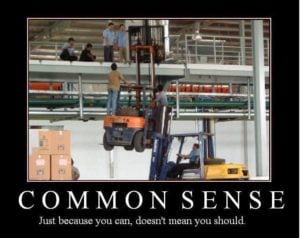
While there’s nothing in the Approved Code of Practice that says you cannot use two forklifts to lift a load, it is not advisable as a lot can go wrong. The scenario is quite common: a load arrives on a…

Read more ›

How can you control forklift speed in your workplace?

Forklifts can become unstable when driven in excess of a safe speed, goods can be damaged and wear and tear is increased, so it’s essential that a forklift speed limit is established. There are many ways in which this can…

Read more ›

What’s the speed limit for a forklift?

The Approved Code of Practice notes one of the main causes of forklift accidents is ‘excessive speed’ and it encourages operators to operate at a ‘safe speed’. However, it isn’t prescriptive in terms of kilometres per hour. It talks about…

Read more ›

Forklifts and seatbelts

Does your forklift need a seatbelt? Forklifts do not, by law, require a seatbelt. In the current Approved Code of Practice from 1995, there is not even a mention of a seatbelt. However, it’s likely that a new code of…

Read more ›

Do you need a class 2 licence to drive a forklift?

If you only drive the forklift in areas which are not classed as roads, then you can drive any forklift, even without a current class 1 licence, as long as you have an appropriate qualification such as a forklift operator’s…

Read more ›

What do forklift drivers need to know about loading trucks and trailers?

Forklift and walkie stacker operators frequently load trucks. Truck loading is governed by the Truck Loading Code. It’s a document that outlines the legal requirements for load security on a truck or trailer. While the ultimate responsibility for the security…

Read more ›

Reach truck licence for forklift drivers

Many employers use the phrase forklift licence. There is no such thing (as we have discussed before): there is a forklift operator’s certificate and there is an F endorsement (also, you can do the two together). Those are the only…

Read more ›

If you have a forklift operator’s certificate, can you do an F endorsement separately?

If you already have an operator’s certificate (or OSH certificate) but you want to drive a forklift on the road, can you simply do the F endorsement qualification or do you have to do the whole operator’s certificate again? It…

Read more ›

Can you drive a forklift on a private road without an F endorsement?

To operate a forklift on a public road (see the definition of a road) a forklift operator must have an F endorsement. The forklift must have a current warrant of fitness and registration, lights and indicators. However, there is an…

Read more ›

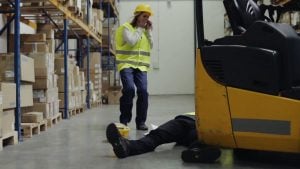
Types of forklift accidents

There are five main types of forklift accident: tipping, speed, vehicle impact, fumes and reckless driving. These can result in injury or death to the driver or any pedestrians that the forklift or its load impacts, plus damage to property.…

Read more ›

What are forklift proximity detection systems?

Every year, a large number of injuries are caused by pedestrians being hit by forklifts. As forklifts are extremely heavy, they can create fatal crush injuries quite easily. The best solution is to completely separate pedestrians and forklifts but this…

Read more ›

Can you use an Australian forklift licence in New Zealand?

In general, forklift training in Australia is more rigorous than in New Zealand. The courses are longer and cover a broader range of topics, plus much more driving. Operators are not required to do a refresher every three years like…

Read more ›

How to recognise potential forklift accidents

Thousands of forklift incidents happen each year, from minor scrapes to fatalities. Forklift accidents can happen in many ways. To get an idea of how vigilant you need to be when evaluating your yard or warehouse and your operating procedures…

Read more ›

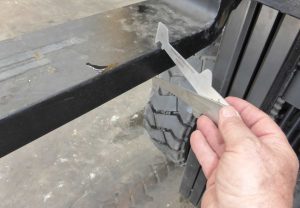
How to measure wear on a forklift’s forks

Your forks will wear out as you use them – abrasion against pallets, racking, the ground and other objects will gradually make them thinner and thinner. They can also suffer distortion through accidents and overloading. A fork can have up…

Read more ›

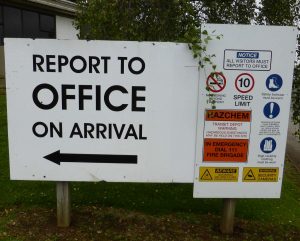
What health and safety rules should you enforce for truck drivers visiting your workplace?

If you have pedestrian and heavy machinery traffic alongside truck movements in your warehouse or yard, you must have a set of health and safety rules and a site induction to ensure that accidents don’t happen. Truck drivers and pedestrian…

Read more ›

Do you need to train and assess your employees on every type of forklift or pallet jack they use?

Different types of forklifts and pallet jacks serve different purposes and it’s not uncommon for a company to have at least two types. The main types of forklift are: Counterbalance Reach truck Walkie and electric-powered hand truck Side loader Order…

Read more ›

What’s the difference between an F endorsement and an operator’s (OSH) forklift certificate?

To get an F endorsement, you need to do an F endorsement course. An F endorsement allows you to drive a forklift on a public road, as long as the forklift has a warrant of fitness and a current registration.…

Read more ›

Can you use a New Zealand forklift licence in Australia?

In Australia you need a high-risk work licence (HRWL) to operate a forklift. The course to get the licence is 2.5 days and is much more intense than New Zealand courses, covering a broader range of topics and much more…

Read more ›

Forklift and pallet truck abbreviations and acronyms

This list can be useful for newer operators or operators who have come from overseas as it explains common abbreviations and acronyms used on and around forklifts. 4-D: Capable of travel forwards/backwards/left/right AC: Alternating Current ACOP: Approved Code of Practice…

Read more ›

‹ Older posts
Newer posts ›
Recent Resources
  • What happens to your licence and insurance after a careless or dangerous driving conviction?
  • What a good fleet road rage policy looks like (and how to ask for one if yours doesn’t have one)
  • Electronic Traction Control Systems: How They Help Rural Workers
  • Supporting documents for permit issuers – how to create, assemble and manage them
  • The Future of Gantry Cranes: AI, IoT and Other Integrations
  • Roles and responsibilities in a permit-to-work system
  • Risk Assessment Methods for Gantry Crane Operations
  • Hazard identification and risk assessment for permit issuers
  • What is a permit to work?
  • Restricted licences could be delayed if you get demerit points

Licences and Courses

  • Car
  • Motorbike
  • Heavy Vehicles
Car
  • Core
  • Behaviour
  • Parking
  • Emergencies
  • Road position
  • Intersection
  • Theory
  • Signs
Motorbike
  • Bike-specific questions
  • Core
  • Behaviour
  • Parking
  • Emergencies
  • Road position
  • Intersection
  • Theory
  • Signs
Heavy Vehicles
  • Class 2
  • Class 3-5
  • Core
  • Behaviour
  • Parking
  • Emergencies
  • Road position
  • Intersection
  • Theory
  • Signs

Vehicle and workplace training

  • About
  • Resources
DT Driver Training TR Group
About
  • About us
  • Contact us
  • Privacy Policy
  • Terms and Conditions
Resources
  • Homepage
  • Driving Tests Android App
  • Driving Tests iPhone App
  • Getting your learner licence
DT Driver Training TR Group
Copyright 2010-2026 DT Driver Training Ltd, PO Box 12541, Penrose, Auckland, 1642. All rights reserved. Questions and images are used with permission from NZTA; question answers are proprietary.