
• A TR Group Site
  • Help
  • Cart
Driving Tests DT logo small
Driving tests
  • Learner licence
    • Car
    • Motorbike
    • Heavy vehicle
    • Learner Licence Plus
  • Courses
  • Tourist
  • Resources
  • Learn
  • Resources
  • Learner licence
    • Car
    • Motorbike
    • Heavy Vehicle
    • Learner Licence Plus
  • Your courses
    • Enrolled courses
  • View all courses
  • Tourist
  • Resources home
  • iOS application
  • Android application
  • Contact us
  • Terms and conditions
  • Privacy
  • Home
  • /
  • Resources
  • / Driver and operator health

Driver and operator health requirements in New Zealand

Health and safety law covers health, not just safety, and driver health is where most businesses do least. Section 36 of the Health and Safety at Work Act 2015 requires a PCBU to ensure the health of workers, and for drivers and machine operators that includes fatigue, musculoskeletal injury, noise, air quality and exposure to aggression. Two things in this area are hard requirements with dates attached: medical certification for commercial licence classes and endorsements, and work time limits for most commercial drivers.

What the law requires: the health of workers is ensured so far as is reasonably practicable (HSWA 2015, section 36).

Hard requirements: a medical certificate for class 2, 3, 4 and 5 licences and some endorsements (e.g. I [instructor]). Work time limits are 13 hours maximum in a work day, 70 hours in a work period (Land Transport Rule: Work Time and Logbooks 2007).

Is driver and operator health actually a legal responsibility?

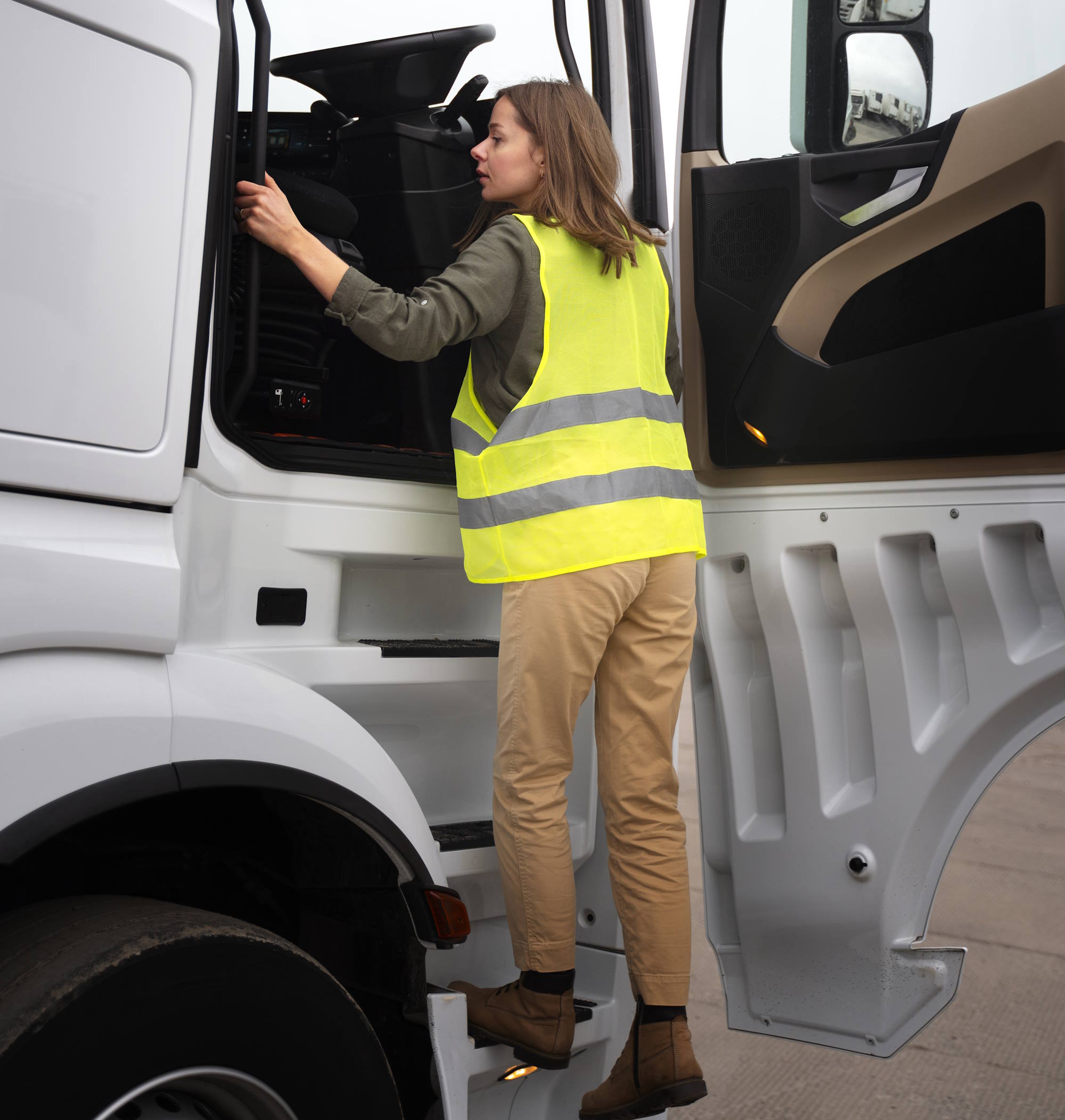
Yes, and the wording matters. Section 36 of HSWA 2015 refers to health and safety, not just safety. That means fatigue, back and shoulder injuries, noise exposure, air quality in enclosed spaces, and exposure to aggression from the public are all within the duty. Most businesses manage the safety half well and the health half barely at all, partly because the harm is slow. A crush injury generates an investigation; ten years of shoulder damage from climbing in and out of a cab generates an ACC claim and a quiet resignation.

Do commercial drivers need a medical certificate?

Yes. Medical certification is required for class 2, 3, 4 and 5 licences and for some endorsements, and it’s also required for drivers over a certain age regardless of class. The certificate is completed by a doctor against NZTA’s medical standards, which set out how specific conditions affect fitness to drive and what stand-down periods apply. This is licensing law rather than health and safety law, but the employer feels the consequence when a driver’s certification lapses or a condition takes them off the road.

Can you still drive with a health condition or disability?

Usually, often with conditions attached. Monocular vision, deafness, limb amputation and pregnancy don’t automatically disqualify anyone from holding a licence. A doctor may require vehicle modifications, an automatic transmission, additional mirrors, or a restriction on the class of vehicle.

Is manual handling training a legal requirement?

The HSWA has a duty to manage risks to health, and musculoskeletal injury is one of the most common sources of harm for drivers and operators. Manual handling training is the usual way businesses discharge that duty, alongside changing the task itself (better access to cabs, mechanical aids, load positioning, and job rotation). Training on its own is not usually a sufficient intervention.

Does complying with work time mean you've managed fatigue?

No, and this is the gap that catches operators out. Work time rules are a licensing requirement with a maximum; the HSWA duty is to manage the risk. A driver can be entirely legal at hour twelve of a work day and still be too tired to drive safely, particularly on a night shift, after poor sleep, or with untreated sleep apnoea. Meeting the 13-hour limit is the floor, not the ceiling. WorkSafe and NZTA both expect fatigue to be managed as a risk, which means rosters, sleep opportunity, journey planning and a culture where a driver can say they’re not fit to continue.

Do you have to drug and alcohol test drivers?

No general law requires workplace drug and alcohol testing in New Zealand. What exists is the HSWA duty to manage risk, which is why many transport operators test anyway, and why client contracts and site access rules frequently require it. If you do test, the process matters: a documented policy, worker consultation, testing to the recognised standard, and a clear pathway for a positive result that distinguishes impairment from a policy breach. Testing badly is worse than not testing, because it generates employment disputes without reducing risk.

What are the requirements for a company to protect workers against excessive noise?

Noise is a health risk with actual exposure limits under the Health and Safety at Work (General Risk and Workplace Management) Regulations 2016, based on an eight-hour equivalent exposure plus a peak limit. Machine operators, particularly on older plant and in enclosed spaces, routinely exceed them. Where exposure can’t be reduced below the limits, hearing protection is required and health monitoring may be too — noise-induced hearing loss is permanent, gradual and one of the most commonly accepted occupational disease claims in New Zealand.

Is air quality in the cab or workspace a health issue?

Yes, and it’s under-recognised. Forklifts running on LPG, diesel or petrol emit carbon monoxide, and in an enclosed or poorly ventilated space levels can rise to the point of harm. Symptoms (headache, nausea, confusion, drowsiness) look like fatigue, which is exactly why they get dismissed. Electric machines remove the problem entirely, which is one of the strongest health arguments for them. Diesel exhaust exposure also carries longer-term risk for anyone working around running plant.

Is diet a workplace health matter?

Nothing requires an employer to address it, and yet it sits directly on top of two things that do. Blood sugar swings, dehydration and heavy meals affect alertness, reaction time and decision-making, which puts them squarely inside the fatigue risk you’re already required to manage. For drivers, the practical problem is that the food available at three in the morning at a truck stop is the food that makes the second half of the shift worse. This is one of the few areas where a cheap intervention has a measurable effect on risk.

Is road rage and aggression a health and safety issue?

Yes. Exposure to violence, threats and aggression is a workplace risk like any other, and drivers, delivery workers and anyone dealing with the public are among the most exposed. The employer duty covers it, which means having a policy on de-escalation and disengagement, being clear that a driver won’t be penalised for withdrawing from a confrontation, having a reporting route, and providing support afterwards. The psychological effect of a serious incident outlasts the incident by a long way.

What it’s also called

Driver health, operator health, driver wellbeing, fitness to drive, medical fitness, driver medical, medical certificate, manual handling, safe lifting, musculoskeletal injury, MSD, overuse injury, fatigue management, driver fatigue, work time, occupational health, health monitoring, drug and alcohol testing, wellbeing and human factors.

Sources

  • Health and Safety at Work Act 2015, section 36
  • Health and Safety at Work (General Risk and Workplace Management) Regulations 2016 — noise exposure and health monitoring
  • Land Transport Rule: Work Time and Logbooks 2007 (Rule 62001)
  • NZTA, medical standards for fitness to drive and medical certificate requirements
  • WorkSafe New Zealand, guidance on musculoskeletal injury and manual handling
  • AS/NZS 4308, for workplace drug testing procedure

Driver and operator health is the half of health and safety that gets managed last, because nothing happens on any given day. Nobody files an incident report about a shoulder that has been getting worse for two years, or about the fifth night shift in a row, or about the food at the truck stop. But the injuries that end careers in this industry are mostly slow ones, and the two hard requirements – medical certification and work time – only cover a fraction of the risk.

Additional resources and reading

The pre-drive routine: why the first few minutes of your driving shift matter most

Whatever’s going on at home doesn’t stop when you arrive at work. The research knows that, but most drivers don’t have a deliberate routine to reset before they start the engine. Five minutes of structure at the start of a…
Read more ›

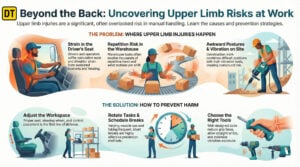
Shoulders, Wrists, and Necks: Injuries that Drivers and Operators Get

When people talk about manual handling injuries, they almost always talk about backs. And fair enough -back injuries are common, they’re serious, and they can end careers. But if you’re only thinking about lower back problems, you’re missing a significant…

Read more ›

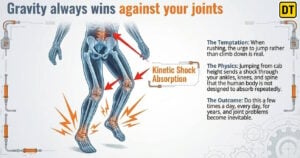
Getting In and Out of Cabs and Cockpits: Access Hazards for Operators

Here’s a statistic that might surprise you: a significant number of injuries to truck drivers, forklift operators, and heavy machinery operators happen before they even start the engine. It’s not the driving that gets them. It’s getting in and out.…

Read more ›

What Mental Shortcuts Affect Your Driving? 20 Heuristics That Impact Road Safety

Mental shortcuts, or heuristics, play a crucial role in how we make decisions behind the wheel, and that can be a big problem. Here’s a comprehensive look at how these cognitive patterns affect driving skills and safety, with real-world examples.…

Read more ›

How manual handling creates risks for drivers and machine operators

The importance of manual handling safety is often discussed in the context of the farming, healthcare and construction sectors. However, it’s equally critical to address the risks faced by truck drivers and machine operators, such as forklift operators. These professions…

Read more ›

How to avoid trapping and crushing injuries when using a scissor lift or boom lift

Trapping and crushing injuries are all too easy on scissor lifts and boom lifts. They have lots of moving parts, they can work in hazardous areas getting close to other objects, and they move with force (there’s some weight behind…

Read more ›

What impact does a driver’s diet have on their driving?

Food is your fuel. You wouldn’t put poor-quality fuel in your vehicle and expect it to run properly. The same applies to your body. Your food choices affect your thinking, your reactions, your energy and your alertness. This applies whether…

Read more ›

To reduce pain, what is the correct posture when driving?

Sitting in the same position for a long period of time is a recipe for aches and pains, particularly in your back, hips, neck and shoulders. Setting your seat and steering wheel correctly can help minimise the risk that you’ll…

Read more ›

Can you drive if you’re blind in one eye?

Being blind in one eye means you have monocular vision. This makes it much more difficult to: Judge depth (3D vision) – this is worse within around 10 metres of the vehicle, which makes parking an issue Judge the speed…

Read more ›

Can you drive a car or truck after having a stroke or TIA?

Around ten thousand people a year have a stroke or a transient ischaemic attack (a mini-stroke) every year. A stroke can be caused by a blockage, such as a blood clot, stopping blood flow to part of the brain, or…

Read more ›

Human factors for keeping your forklift operators and warehouse team safe

Forklifts are used in environments which can be challenging for the operator, both physically and mentally. Even if you’re not using a forklift, you’re exposed to many of the same environmental and work conditions. Employers (PCBUs) must take measures to…

Read more ›

Common injuries in car accidents, and how to prevent them

Despite dramatic safety improvements in cars, drivers and passengers continue to be injured because the laws of physics and biology cannot always be overcome. Rapid deceleration while being restrained by the seatbelts puts a huge strain on the human body.…

Read more ›

Can you drive if you are deaf?

There is no law preventing a deaf driver from driving a private motor car or motorbike in New Zealand. However, deaf drivers may want to consider additional features to help them, where possible: Additional mirrors – these can be set…

Read more ›

How far should you be able to see ahead while driving?

The distance you should be able to see ahead relates to the amount of time you need to stop and how you can perceive the danger. This is affected by: Your eyesight Your speed The characteristics of the road ahead…

Read more ›

What health and safety rules should you enforce for truck drivers visiting your workplace?

If you have pedestrian and heavy machinery traffic alongside truck movements in your warehouse or yard, you must have a set of health and safety rules and a site induction to ensure that accidents don’t happen. Truck drivers and pedestrian…

Read more ›

Carbon monoxide poisoning when using forklifts

Forklifts that operate using LPG, diesel or petrol emit carbon monoxide when running; electric forklifts don’t have any emissions. If you operate a forklift in an enclosed space without any ventilation, carbon monoxide levels can rise to the point where…

Read more ›

How can meditation help you pass your driving test?

Taking your driving test can stress you out, whether it’s a practical test or the theory test. You’ve paid money to take the test and your freedom is riding on it. So, how do you keep your nerves under control…

Read more ›

Can you drive if you have had a limb amputated?

It is still possible to drive with one arm, no arms, one leg, or no legs. Having a limb amputated does not invalidate your current driver licence. However, a doctor may require that you drive a specific type of vehicle…

Read more ›

Can you drive when you are pregnant?

The law does not prevent you from driving when you are pregnant unless you can’t do so safely, i.e. you cannot control the car. The physical changes and challenges you face when being pregnant might encourage you (or force you)…

Read more ›

Fatigue and sleepiness: how it affects your driving

There’s only so long you can fight the urge to sleep before your eyes will close and you’ll run off the road, probably with serious consequences. Accidents where drivers fall asleep tend to be at high speed because the driver doesn’t…

Read more ›

‹ Older posts
Recent Resources
  • How to use an AED in a workplace cardiac arrest
  • Confined space entry under a permit to work system
  • Adult CPR: technique and what actually matters
  • What’s changed in WorkSafe’s 2026 working at height guidelines
  • When to call 111 from your workplace
  • Workplace First Aid Responsibilities in New Zealand
  • Creating permits for working at height
  • Using SAMPLE to gather patient information for a first aid assessment
  • The recovery position: when and how to use it
  • Isolation and lockout/tagout explained

Licences and Courses

  • Car
  • Motorbike
  • Heavy Vehicles
Car
  • Core
  • Behaviour
  • Parking
  • Emergencies
  • Road position
  • Intersection
  • Theory
  • Signs
Motorbike
  • Bike-specific questions
  • Core
  • Behaviour
  • Parking
  • Emergencies
  • Road position
  • Intersection
  • Theory
  • Signs
Heavy Vehicles
  • Class 2
  • Class 3-5
  • Core
  • Behaviour
  • Parking
  • Emergencies
  • Road position
  • Intersection
  • Theory
  • Signs

Vehicle and workplace training

  • About
  • Resources
DT Driver Training TR Group
About
  • About us
  • Contact us
  • Privacy Policy
  • Terms and Conditions
Resources
  • Homepage
  • Driving Tests Android App
  • Driving Tests iPhone App
  • Getting your learner licence
DT Driver Training TR Group
Copyright 2010-2026 DT Driver Training Ltd, PO Box 12541, Penrose, Auckland, 1642. All rights reserved. Questions and images are used with permission from NZTA; question answers are proprietary.